Organic Chemistry

ICSE Class 10 Chemistry · Viraf J Dalal Chemistry · 124 solved questions

Exercise
1(2008)Questions

The formation of 1, 2-dibromoethane from ethene and bromine is an example of :

Show SolutionHide Solution↓

Addition

Formation of 1, 2-dibromoethane from ethene and bromine

The formation of 1, 2-dibromoethane from ethene and bromine is an example of. Organic Chemistry, Simplified Chemistry Dalal Solutions ICSE Class 10
2(2008)Questions

Name the organic compound prepared by each of the following reactions :

(i) C2H5COONa + NaOH ⟶

(ii) CH3I + 2[H]⟶

(iii) C2H5Br + KOH (alcoholic soln.) ⟶

(iv) CaC2 + 2H2O ⟶

Show SolutionHide Solution↓

(i) Ethane

$\underset{\text{sodium propionate}}{\text{C}_2\text{H}_5\text{COONa}} + \underset{\text{sodalime}}{\text{NaOH}} \underset{\Delta}{\xrightarrow{\text{CaO}}} \underset{\text{ethane}}{\text{C}_2\text{H}_6} + \text{Na}_2\text{CO}_3$

(ii) Methane

$\underset{\text{methyl iodide}}{\text{CH}_3\text{I}} + \underset{\text{nascent hydrogen}}{2\text{[H]}} \xrightarrow[\text{alcohol}]{\text{Zn/Cu couple}} \underset{\text{methane}}{\text{CH}_4} +\text{HI}$

(iii) Ethene [ethylene]

$\underset{\text{ Bromo ethane [ethyl bromide]}}{\text{C}_2\text{H}_5\text{Br}} + \underset{\text{alcoholic}}{\text{KOH}} \xrightarrow{\text{boil}} \underset{\text{ethene [ethylene]}}{\text{H}_2\text{C}=\text{C}\text{H}_2} + \text{KBr} + \text{H}_2\text{O}$

(iv) Ethyne [Acetylene]

$\underset{\text{calcium carbide}}{\text{CaC}_2} + \underset{\text{water}}{2\text{H}_2\text{O}} \longrightarrow \underset{\text{ethyne [acetylene]}}{\text{C}_2\text{H}_2} + \text{Ca(OH)}_2$

3(2008)Questions

Write the equation for the following :

(i) Calcium carbide and water

(ii) Ethene and water (steam)

(ii) Bromoethane and an aqueous solution of sodium hydroxide

Show SolutionHide Solution↓

(i) Calcium carbide and water: forms ethyne [acetylene]

$\underset{\text{calcium carbide}}{\text{CaC}_2} + \underset{\text{water}}{2\text{H}_2\text{O}} \longrightarrow \underset{\text{ethyne [acetylene]}}{\text{C}_2\text{H}_2} + \text{Ca(OH)}_2$

(ii) Ethene and water (steam): form Ethanol [ethyl alcohol]

$\underset{\text{Ethene}}{\text{C}_2\text{H}_4} + \underset{\text{water[steam]}}{\text{H}_2\text{O}} \xrightarrow[\text{acid}]{\text{H}^+} \underset{\text{ethanol}}{\text{C}_2\text{H}_5\text{OH}}$

(iii) Bromoethane and an aqueous solution of sodium hydroxide: form Ethanol [ethyl alcohol]

$\underset{\text{bromoethane}}{\text{C}_2\text{H}_5\text{Br}} + \underset{\text{aq. sodium hydroxide}}{\text{NaOH}} \longrightarrow \underset{\text{Ethanol [ethyl alcohol]}}{\text{C}_2\text{H}_5\text{OH}} + \text{NaBr}$

4(2008)Questions

Distinguish between ethane [saturated] and ethene [unsaturated] by drawing their structural formulae.

Show SolutionHide Solution↓

Structural formula of Ethane [saturated]:

Structural formula of Ethane. Organic Chemistry, Simplified Chemistry Dalal Solutions ICSE Class 10

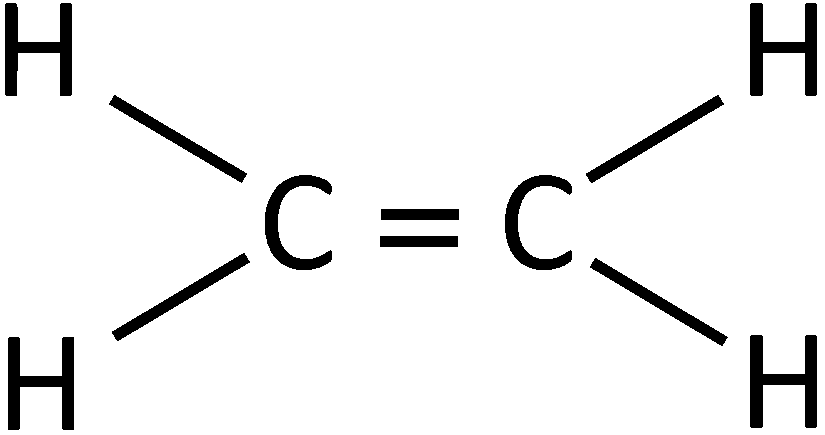
Structural formula of Ethene [unsaturated]:

Structural formula of Ethene. Organic Chemistry, Simplified Chemistry Dalal Solutions ICSE Class 10
5(2008)Questions

Which type of reaction i.e. addition or substitution is shown by ethane and ethene ?

Show SolutionHide Solution↓

Ethane ⟶ Substitution reaction

The non-availability of electrons in the single covalent bond makes them less reactive and therefore undergo characteristic substitution reaction only.

Ethene ⟶ Addition reaction

The availability of electrons in the double or triple bond makes them more reactive and therefore undergo characteristic addition reactions only.

6(2008)Questions

Write the equation for the complete combustion of ethane.

Show SolutionHide Solution↓

2C2H6 + 7O2 [excess] ⟶ 4CO2 + 6H2O + Δ

7(2008)Questions

Name the alcohol, aldehyde and acid formed when ethane is oxidized.

Show SolutionHide Solution↓

Alcohol ⟶ Ethyl alcohol [C2H5OH]

Aldehyde ⟶ Acetaldehyde [CH3CHO]

Acid ⟶ Acetic acid [CH3COOH]

8(2008)Questions

Why is pure acetic acid known as glacial acetic acid ?

Show SolutionHide Solution↓

Anhydrous acetic acid on cooling below 16.5°C, crystallizes out in the pure form, forming a crystalline mass resembling ice [m.p. around 17 °C] . Hence, pure acetic acid is called glacial acetic acid.

9(2008)Questions

What type of compound is formed by the reaction between acetic acid and an alcohol ?

Show SolutionHide Solution↓

Ester is formed by the reaction between acetic acid and an alcohol.

$\underset{\text{ethyl alcohol}}{\text{C}_2\text{H}_5\text{OH}} + \underset{\text{acetic acid}}{\text{CH}_3\text{COOH}} \xrightarrow{\text{Conc. H}_2\text{SO}_4} \underset{\text{ethyl ethanoate}}{\text{CH}_3-\text{COO}-\text{C}_2\text{H}_5} + \text{H}_2\text{O}$

10(2008)Questions

By what type of reaction could a compound containing C, H and Cl be obtained from ethyne ?

Show SolutionHide Solution↓

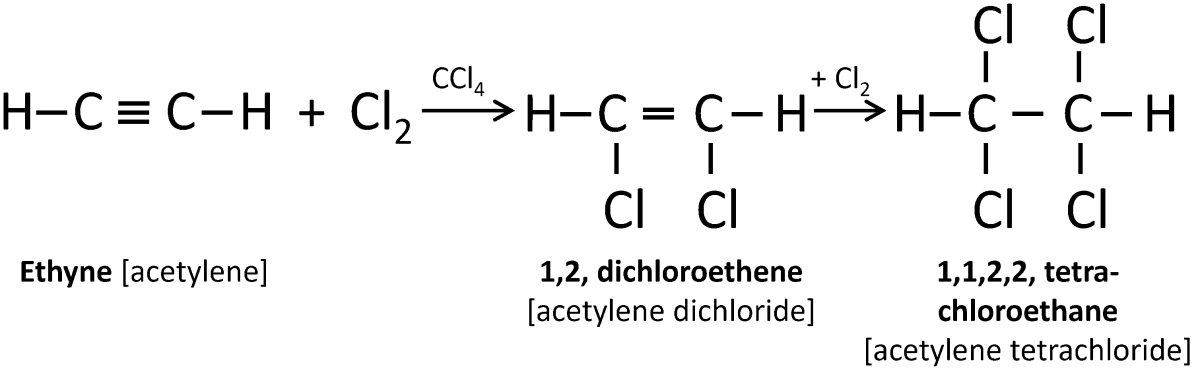
Addition reaction

Reaction of ethyne with chlorine:

By what type of reaction could a compound containing C, H and Cl be obtained from ethyne. Organic Chemistry, Simplified Chemistry Dalal Solutions ICSE Class 10
11(2008)Questions

State the term for the reaction in which the hydrogen of an alkane is replaced by chlorine.

Show SolutionHide Solution↓

Substitution reaction

1(2009)Questions

Which of the following statements is wrong about alkanes ?

(A) They are all saturated hydrocarbons.
(B) They can undergo addition as well as substitution reactions.
(C) They are almost non polar in nature.
(D) On complete combustion give out carbon dioxide and water.

Show SolutionHide Solution↓

They can undergo addition as well as substitution reactions.

Reason — The non availability of electrons in the single covalent bond makes them less reactive and therefore they undergo characteristic substitution reactions only.

2(2009)Questions

Write balanced equation for : Acetic acid is warmed with ethanol in the presence of conc. H2SO4.

Show SolutionHide Solution↓

$\underset{\text{ethyl alcohol}}{\text{C}_2\text{H}_5\text{OH}} + \underset{\text{acetic acid}}{\text{CH}_3\text{COOH}} \xrightarrow{\text{Conc. H}_2\text{SO}_4} \underset{\text{ethyl ethanoate}}{\text{CH}_3-\text{COO}-\text{C}_2\text{H}_5} + \text{H}_2\text{O}$

3(2009)Questions

Find the odd one out in each case and explain your choice.

(i) C3H8 , C5H10, C2H6, CH4

(ii) Formic acid, Nitric acid, Acetic acid, Propanoic acid.

Show SolutionHide Solution↓

(i) C5H10 [Rest all are alkanes and this is an alkene]

(ii) Nitric acid [Rest all are organic acids and this is inorganic acid]

4(2009)Questions

Identity 'S' : Reddish brown liquid 'S' is dissolved in water. When ethyne is passed through it, turns colourless.

Show SolutionHide Solution↓

Bromine solution

Identity S : Reddish brown liquid S is dissolved in water. When ethyne is passed through it, turns colourless. Organic Chemistry, Simplified Chemistry Dalal Solutions ICSE Class 10
5(2009)Questions

Fill in the blanks with the correct words from the brackets:

Generally ionic compounds exist in (i) ............... [solid/liquid/gas] state. Melting and boiling points of covalent compounds are generally (ii) ............... [low/high]. The general formula for alkane is (iii) ............... (CnH2n/CnH2n-2/CnH2n+2). For alkynes the general formula is (iv) ............... (CnH2n/ CnH2n-2/CnH2n+2)

Show SolutionHide Solution↓

Generally ionic compounds exist in solid state. Melting and boiling points of covalent compounds are generally low. The general formula for alkane is CnH2n+2. For alkynes the general formula is CnH2n-2

6(2009)Questions

Give chemical equation for :

(i) The laboratory preparation of methane from sodium acetate.

(ii) The reaction of one mole of ethene with one mole of chlorine gas.

(iii) The preparation of ethyne from 1, 2 – dibromoethane.

Show SolutionHide Solution↓

(i) methane from sodium acetate :

$\underset{\text{sodium acetate}}{\text{CH}_3\text{COONa}} + \underset{\text{sodalime}}{\text{NaOH}} \underset{\Delta}{\xrightarrow{\text{CaO}}} \underset{\text{methane}}{\text{CH}_4} + \text{Na}_2\text{CO}_3$

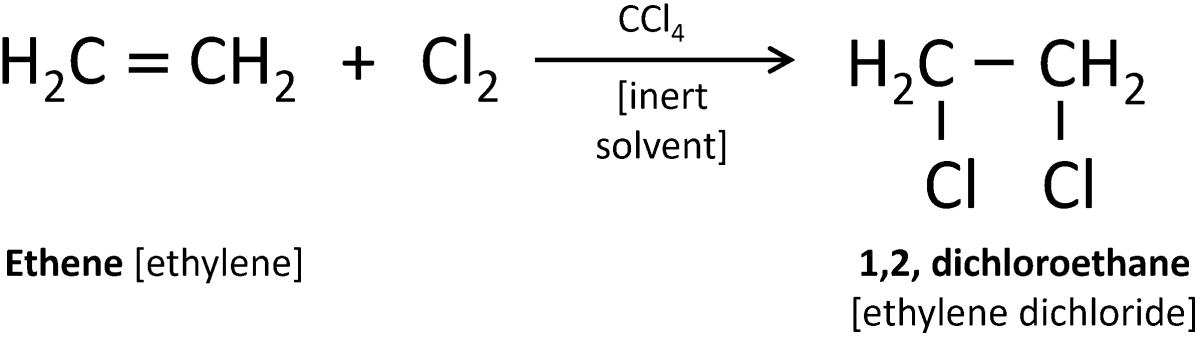
(ii) one mole of ethene with one mole of chlorine gas:

Give chemical equation for the reaction of one mole of ethene with one mole of chlorine gas. Organic Chemistry, Simplified Chemistry Dalal Solutions ICSE Class 10

(iii) ethyne from 1, 2 – dibromoethane.

Give chemical equation for the preparation of ethyne from 1, 2 – dibromoethane. Organic Chemistry, Simplified Chemistry Dalal Solutions ICSE Class 10
7(2009)Questions

How are the following conversions carried out:

(i) Ethyl chloride to Ethyl alcohol.

(ii) Ethyl chloride to Ethene.

(iii) Ethene to Ethyl alcohol.

(iv) Ethyl alcohol to Ethene.

Show SolutionHide Solution↓

(i) By boiling ethyl chloride with aqueous NaOH.

$\underset{\text{ Chloroethane [ethyl chloride]}}{\text{C}_2\text{H}_5\text{-Cl}} + \text{NaOH [aq.]} \xrightarrow{\text{boil}} \underset{\text{ Ethanol [ethyl alcohol]}}{\text{C}_2\text{H}_5\text{OH}} + \text{NaCl}$

(ii) By boiling ethyl chloride with alcoholic KOH.

$\underset{\text{ Chloroethane [ethyl chloride]}}{\text{C}_2\text{H}_5\text{-Cl}} + \underset{\text{ alcoholic KOH}}{\text{KOH [aq.]}} \xrightarrow{\text{boil}} \underset{\text{ Ethene [ethylene]} }{\text{C}_2\text{H}_4} + \text{KCl} +\text{H}_2\text{O}$

(iii) Ethene is absorbed in conc. sulphuric acid at 80 °C under 30 atmos. to give ethyl hydrogen sulphate, which on hydrolysis with steam gives ethanol.

$\underset{\text{ Ethene} }{\text{C}_2\text{H}_4} + \underset{\text{conc.}}{\text{H}_2\text{SO}_4} \underset{30 \text{ atmos.}}{\xrightarrow{80 ^{\circ} \text{C}}} \underset{\text{ Ethyl hydrogen sulphate} }{\text{C}_2\text{H}_5\text{-HSO}_4}$

$\underset{\text{ Ethyl hydrogen sulphate }}{\text{C}_2\text{H}_5\text{-HSO}_4} + \underset{\text{steam}}{\text{H}_2\text{O}} \longrightarrow \underset{ \text{ Ethanol [ethyl alcohol]} }{\text{C}_2\text{H}_5\text{-OH}} + \text{H}_2\text{SO}_4$

(iv) By heating ethyl alcohol with concentrated H2SO4 at 170°C.

$\underset{\text{ ethyl alcohol}}{\text{C}_2\text{H}_5\text{OH}} \xrightarrow[170^{\circ}\text{C}]{\text{Conc. H}_2\text{SO}_4\text{[excess]}} \underset{ \text{ethene}}{\text{C}_2\text{H}_4} + \text{H}_2\text{O}\$

8(2009)Questions

Define isomerism. Give the IUPAC name of the isomer C4H10 which has a branched chain.

Show SolutionHide Solution↓

(1) Isomerism is the phenomenon due to which two or more compounds have the same molecular formula but differ in molecular arrangement or in structural formula.

Example : Isomers of pentane are (i) n pentane, (ii) isopentane and (iii) neo-pentane

IUPAC name of C4H10 is Butane.

1(2010)Questions

(i) Select the correct answer - The organic compound, which gives a red precipitate with ammoniacal cuprous chloride and undergoes an addition reaction –

A: Ethane
B: Ethene
C: Ethyne
D: Ethanol

(ii) Select the correct answer - The organic compound which when mixed with ethyl alcohol, [ethanol], makes it spurious.

A: Methanol
B: Methanoic acid
C: Methanal
D: Ethanoic acid

Show SolutionHide Solution↓

(i) Ethyne

(ii) Methanol

2(2010)Questions

Draw the structural formula of —

(i) Ethanoic acid (ii) But-2-yne

Show SolutionHide Solution↓

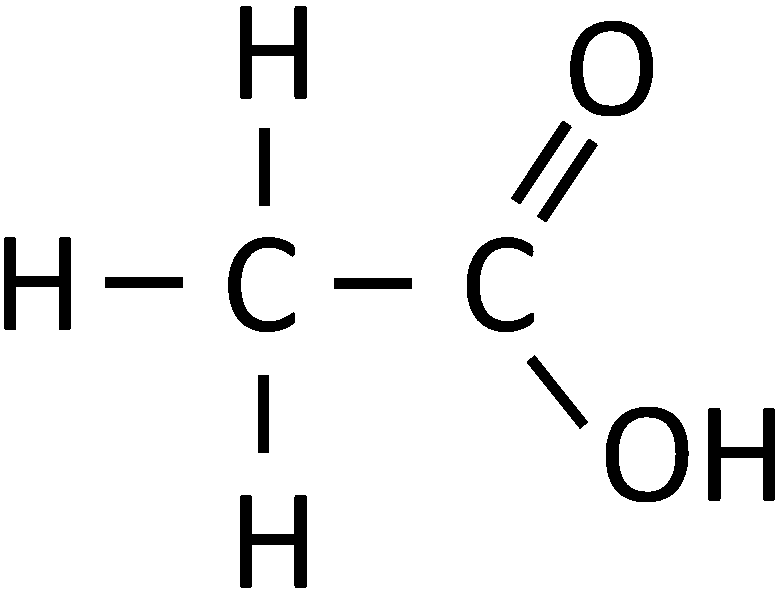
(i) Structural formula of Ethanoic acid is shown below:

Draw the structural formula of Ethanoic acid. Organic Chemistry, Simplified Chemistry Dalal Solutions ICSE Class 10

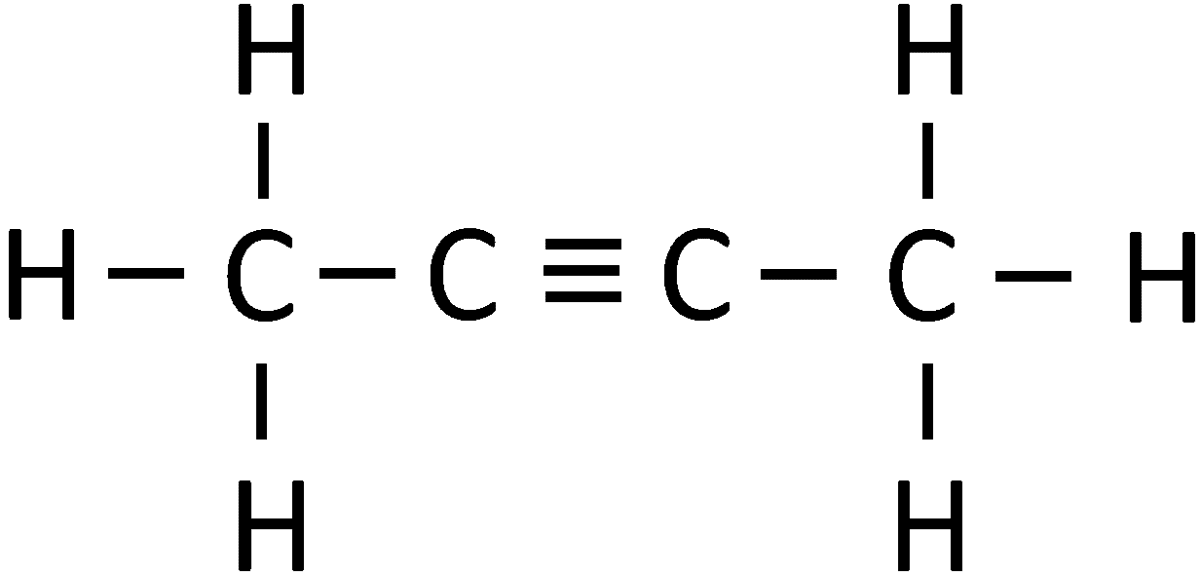
(ii) Structural formula of But-2-yne is shown below:

Draw the structural formula of But-2-yne. Organic Chemistry, Simplified Chemistry Dalal Solutions ICSE Class 10
3(2010)Questions

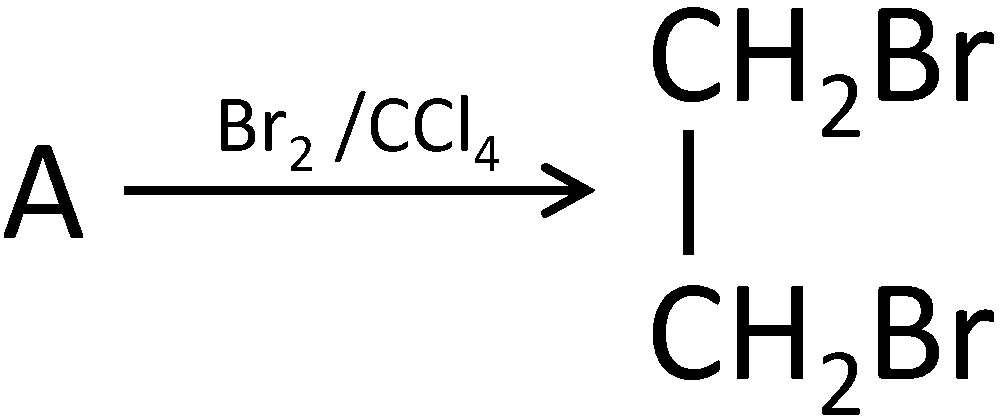
Compound 'X' is bubbled through bromine dissolved in CCl4 and the product formed is CH2Br – CH2Br.

i) Draw the structural formula of 'X' and state what type of reaction 'X' has undergone.

(ii) State your observation for the above reaction.

(iii) Name the compound formed when steam reacts with 'X' in the presence of an acid, eg. phosphoric acid.

(iv) What is the procedure for converting the product formed in (iii) above, back to 'X' ?

Show SolutionHide Solution↓

(i) Compound 'X' is Ethene (H2C=CH2). Its structural formula is shown below:

Compound X is bubbled through bromine dissolved in CCl4 and the product formed is CH2Br – CH2Br. Draw the structural formula of X and state what type of reaction X has undergone. Organic Chemistry, Simplified Chemistry Dalal Solutions ICSE Class 10

Ethene [CH2=CH2] has undergone addition reaction.

(ii) Brown colour of bromine is discharged.

(iii) Ethanol

$\underset{\text{Ethene}}{\text{C}_2\text{H}_4} + \underset{\text{ water} }{\text{H}_2\text{O}} \underset{\text{acid}}{\xrightarrow{\text{H}}^+} \underset{\text{ ethanol} }{\text{C}_2\text{H}_5\text{OH}}$

(iv) Ethanol can be converted into ethene, by dehydrating it with concentrated H2SO4 at 170°C.

$\underset{\text{ ethyl alcohol}}{\text{C}_2\text{H}_5\text{OH}} \xrightarrow[170^{\circ}\text{C}]{\text{Conc. H}_2\text{SO}_4\text{[excess]}} \underset{ \text{ethene}}{\text{C}_2\text{H}_4} + \text{H}_2\text{O}\$

1(2011)Questions

Name a gaseous hydrocarbon commonly used for welding purposes.

Show SolutionHide Solution↓

Ethyne [Acetylene]

2(2011)Questions

Give reasons for the following –

(i) almost 90% of all known compounds are organic in nature.

(ii) it is dangerous to burn methane in an insufficient supply of air.

Show SolutionHide Solution↓

(i) Due to unique nature of carbon atoms, which includes tetravalency, catenation and leading to formation of isomers, millions of organic compounds are known. Hence, almost 90% of all known compounds are organic in nature.

(ii) When methane burns in an insufficient supply of air, carbon monoxide is produced which is extremely poisonous for human beings as it cuts off the oxygen supply and forms carboxy haemoglobin in the blood, leading to death.

3(2011)Questions

Choose the correct answer –

(i) The functional group present in acetic acid is -

A: Ketonic C = O
B: Hydroxyl - OH
C: Aldehydic – CHO
D: Carboxyl – COOH

(ii) Unsaturated hydrocarbons undergo :

A: substitution reaction
B: oxidation reaction
C: addition reaction
D: none of the above

(iii) The number of C – H bonds in ethane molecule are:

A: Four
B: Six
C: Eight
D: Ten

Show SolutionHide Solution↓

(i) Carboxyl – COOH

CH3-COOH

(ii) addition reaction

The availability of electrons in the double or triple bond makes them more reactive and therefore undergo characteristic addition reactions only.

(iii) Six
Below is the structural formula of Ethane:

The number of C – H bonds in ethane molecule are? Organic Chemistry, Simplified Chemistry Dalal Solutions ICSE Class 10
4(2011)Questions

Select the correct answer from the choices given :

(i) The catalyst used for conversion of ethene to ethane is commonly .............. [nickel/iron/cobalt]

(ii) Acetaldehyde when oxidized with acidified potassium dichromate, forms .............. [ester/ethanol/acetic acid]

(iii) Ethanoic acid reacts with ethanol in presence of conc. H2SO4, so as to form a compound and water. The chemical reaction which takes place is called .............. [dehydration/hydrogenation/esterification]

Show SolutionHide Solution↓

(i) The catalyst used for conversion of ethene to ethane is commonly nickel.

(ii) Acetaldehyde when oxidized with acidified potassium dichromate, forms acetic acid.

(iii) Ethanoic acid reacts with ethanol in presence of conc. H2SO4, so as to form a compound and water. The chemical reaction which takes place is called esterification

5(2011)Questions

Write balanced chemical equations for the following :

(i) Reaction between 1, 2 – dibromoethane and alcoholic potassium hydroxide.

(ii) Monochloro ethane is hydrolysed with aqueous KOH.

(iii) A mixture of sodalime and sodium acetate is heated.

(iv) Ethanol under high pressure and low temperature is treated with acidified potassium dichromate.

(v) Water is added to calcium carbide.

(vi) Ethanol reacts with sodium at room temperature.

Show SolutionHide Solution↓

(i) Reaction between 1, 2 – dibromoethane and alcoholic potassium hydroxide:

Write balanced chemical equation for the reaction between 1, 2 – dibromoethane and alcoholic potassium hydroxide. Organic Chemistry, Simplified Chemistry Dalal Solutions ICSE Class 10

(ii) Monochloro ethane is hydrolysed with aqueous KOH:

$\underset{\text{ Chloroethane [ethyl chloride]}}{\text{C}_2\text{H}_5\text{-Cl}} + \text{KOH [aq.]} \xrightarrow{\text{boil}} \underset{\text{ Ethanol [ethyl alcohol]} }{\text{C}_2\text{H}_5\text{-OH}} + \text{KCl}$

(iii) A mixture of sodalime and sodium acetate is heated:

$\underset{\text{sodium acetate}}{\text{CH}_3\text{COONa}} + \underset{\text{sodalime}}{\text{NaOH}} \underset{\Delta}{\xrightarrow{\text{CaO}}} \underset{\text{methane}}{\text{CH}_4} + \text{Na}_2\text{CO}_3$

(iv) Ethanol under high pressure and low temperature is treated with acidified potassium dichromate:

$\underset{ \text{ ethanol[ethyl alcohol]}}{\text{C}_2\text{H}_5\text{OH}} \xrightarrow[\text{K}_2\text{Cr}_2\text{O}_7]{\text{[O]}} \underset{\text{ethanal [acetaldehyde] }}{\text{CH}_3\text{CHO}} \xrightarrow[\text{K}_2\text{Cr}_2\text{O}_7]{\text{[O]}} \underset{ \text{ethanoic acid[acetic acid]} }{\text{CH}_3\text{COOH}}$

(v) Water is added to calcium carbide:

$\underset{\text{calcium carbide}}{\text{CaC}_2} + \underset{\text{water}}{2\text{H}_2\text{O}} \longrightarrow \underset{\text{ethyne [acetylene]}}{\text{C}_2\text{H}_2} + \text{Ca(OH)}_2$

(vi) Ethanol reacts with sodium at room temperature:

$\underset{\text{ ethanol} }{2\text{C}_2\text{H}_5\text{OH}} + 2\text{Na} \longrightarrow \underset{\text{ sodium ethoxide} }{2\text{C}_2\text{H}_5\text{ONa}} + \text{H}_2$

1(2012)Questions

State the observation : Bromine vapours are passed into a soln. of ethyne in carbon tetrachloride.

Show SolutionHide Solution↓

Reddish brown bromine dissolved in water turns colourless when ethyne is passed through it.

State the observation when Bromine vapours are passed into a soln. of ethyne in carbon tetrachloride. Organic Chemistry, Simplified Chemistry Dalal Solutions ICSE Class 10
2(2012)Questions

From – Ethyne, ethanol, acetic acid, ethene, methane. Choose the one which relates to (i) to (iv).

(i) An unsaturated hydrocarbon used for welding purposes.

(ii) An organic compound whose functional group is carboxyl.

(iii) A hydrocarbon which on catalytic hydrogenation gives a saturated hydrocarbon.

(iv) An organic compound used as a thermometric liquid.

Show SolutionHide Solution↓

(i) Ethyne

(ii) Acetic acid

(iii) Ethene

(iv) Ethanol

3(2012)Questions

(i) Why is pure acetic acid known as glacial acetic acid?

(ii) Give a chemical equation for the reaction between ethyl alcohol and acetic acid.

Show SolutionHide Solution↓

(i) Anhydrous acetic acid on cooling below 16.5°C, crystallizes out in the pure form, forming a crystalline mass resembling ice [m.p. around 17°C] . Hence, pure acetic acid is called glacial acetic acid.

(ii) Reaction between ethyl alcohol and acetic acid:

$\underset{\text{ethyl alcohol}}{\text{C}_2\text{H}_5\text{OH}} + \underset{\text{acetic acid}}{\text{CH}_3\text{COOH}} \xrightarrow{\text{Conc. H}_2\text{SO}_4} \underset{\text{ethyl acetate}}{\text{CH}_3-\text{COO}-\text{C}_2\text{H}_5} + \text{H}_2\text{O}$

4(2012)Questions

Rewrite with the missing word/s:

Ethyl alcohol is dehydrated by sulphuric acid at a temperature of about 170°C.

Show SolutionHide Solution↓

Ethyl alcohol is dehydrated by concentrated sulphuric acid at a temperature of about 170°C.

5(2012)Questions

Give the structural formula for the following :

(i) Methanoic acid

(ii) Ethanal

(iii) Ethyne

(iv) Acetone

(v) 2-methyl propane.

Show SolutionHide Solution↓

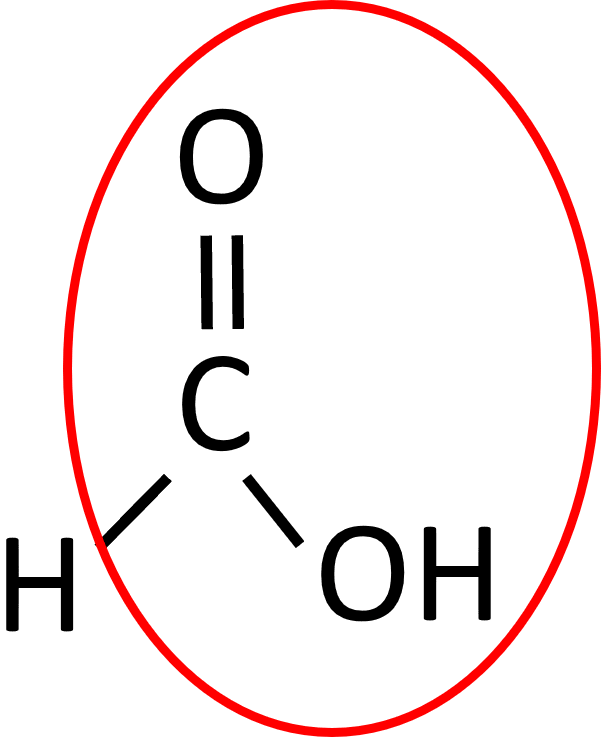
(i) Methanoic acid:

Draw the structural formula of Methanoic acid. Organic Chemistry, Simplified Chemistry Dalal Solutions ICSE Class 10

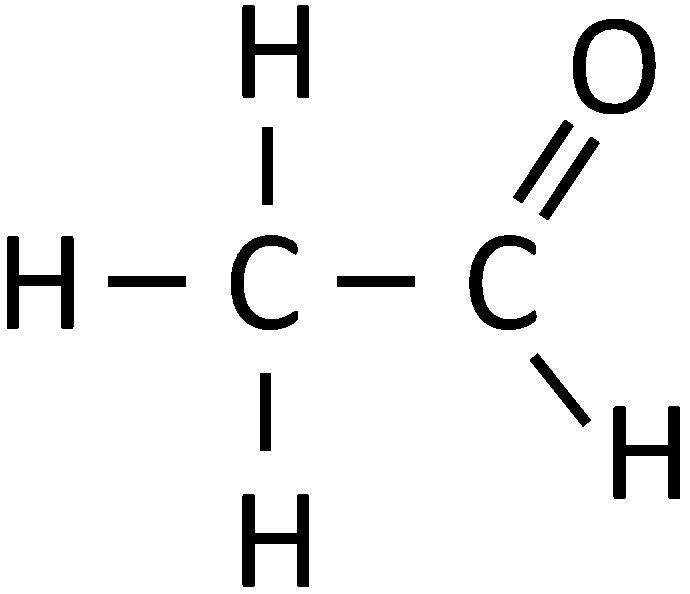
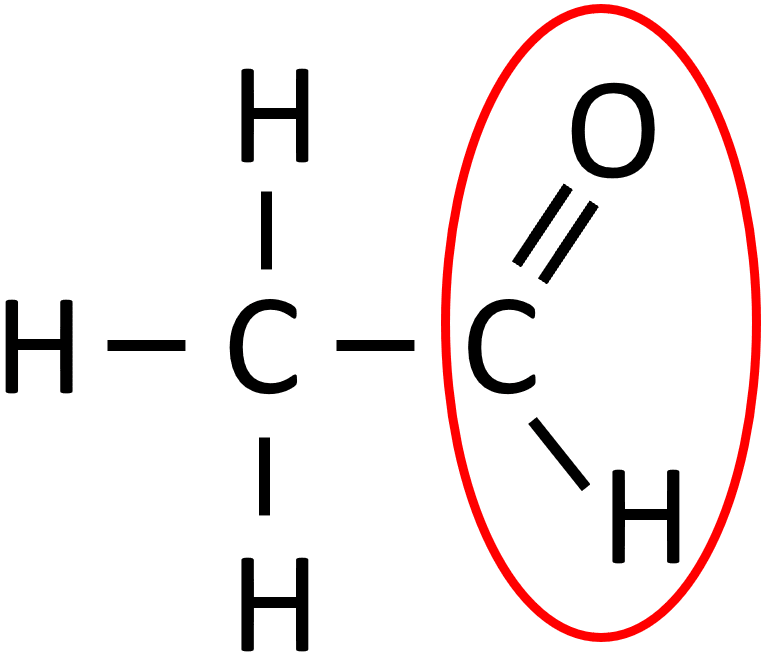
(ii) Ethanal:

Draw the structural formula of Ethanal. Organic Chemistry, Simplified Chemistry Dalal Solutions ICSE Class 10

(iii) Ethyne:

Draw the structural formula of Ethyne. Organic Chemistry, Simplified Chemistry Dalal Solutions ICSE Class 10

(iv) Acetone:

Draw the structural formula of Acetone. Organic Chemistry, Simplified Chemistry Dalal Solutions ICSE Class 10

(v) 2-methyl propane:

Draw the structural formula of 2-methyl propane. Organic Chemistry, Simplified Chemistry Dalal Solutions ICSE Class 10
1(2013)Questions

Identify the gas evolved when : sodium propionate is heated with soda lime.

Show SolutionHide Solution↓

Ethane gas

$\underset{\text{sodium propionate}}{\text{C}\text{H}_3\text{-C}\text{H}_2\text{.COONa}} + \underset{\text{sodalime}}{\text{NaOH}} \xrightarrow[\Delta]{\text{CaO}} \underset{\text{ethane}}{\text{C}_2\text{H}_6} + \text{Na}_2\text{CO}_3$

2(2013)Questions

Give suitable chemical term for:
A reaction in which hydrogen of an alkane is replaced by a halogen.

Show SolutionHide Solution↓

Subsitution reaction

3(2013)Questions

Give a chemical test to distinguish between : Ethene gas and ethane gas.

Show SolutionHide Solution↓

When bromine is passed through solutions of each of the gases in an inert solvent [CCl4] at room temperature, incase of ethene gas, brown colour of bromine is discharged whereas in case of ethane gas brown colour remains brown.

4(2013)Questions

Identify the statement that is incorrect about alkanes :

A: They are hydrocarbons.

B: There is a single covalent bond between carbon and hydrogen.

C: They can undergo both substitution as well as addition reactions.

D: On complete combustion they produce carbon dioxide and water.

Show SolutionHide Solution↓

They can undergo both substitution as well as addition reactions.

Reason — The non availability of electrons in the single covalent bond makes them less reactive and therefore alkanes undergo characteristic substitution reactions only.

5(2013)Questions

Give balanced equations for the laboratory preparations of:

(i) A saturated hydrocarbon from iodomethane.

(ii) An unsaturated hydrocarbon from an alcohol.

(iii) An unsaturated hydrocarbon from calcium carbide.

(iv) An alcohol from ethyl bromide.

Show SolutionHide Solution↓

(i) Methane is produced

$\underset{\text{ methyl iodide}}{\text{CH}_3\text{I}} + \underset{ \text{ nascent hydrogen}}{2\text{[H]}} \underset{\text{alcohol}}{\xrightarrow{\text{Zn/Cu couple}}} \underset{ \text{ methane}}{\text{CH}_4} + \text{HI}$

(ii) Ethene is formed

$\underset{\text{ ethyl alcohol}}{\text{C}_2\text{H}_5\text{OH}} \xrightarrow[170^{\circ}\text{C}]{\text{Conc. H}_2\text{SO}_4\text{[excess]}} \underset{ \text{ethene}}{\text{C}_2\text{H}_4} + \text{H}_2\text{O}\$

(iii) Ethyne is formed

$\underset{\text{calcium carbide}}{\text{CaC}_2} + \underset{\text{water}}{2\text{H}_2\text{O}} \longrightarrow \underset{\text{ethyne [acetylene]}}{\text{C}_2\text{H}_2} + \text{Ca(OH)}_2$

(iv) ethyl alcohol is formed.

$\underset{\text{ Bromoethane [ethyl bromide]}}{\text{C}_2\text{H}_5\text{-Br}} + \underset{\text{ alcoholic KOH}}{\text{KOH [aq.]}} \xrightarrow{\text{boil}} \underset{ \text{ ethyl alcohol}} {\text{C}_2\text{H}_5\text{OH}} + \text{KBr}$

6(2013)Questions

Give the structural formulae for :

(i) An isomer of n-butane.

(ii) 2-propanol.

(iii) Diethyl ether.

Show SolutionHide Solution↓

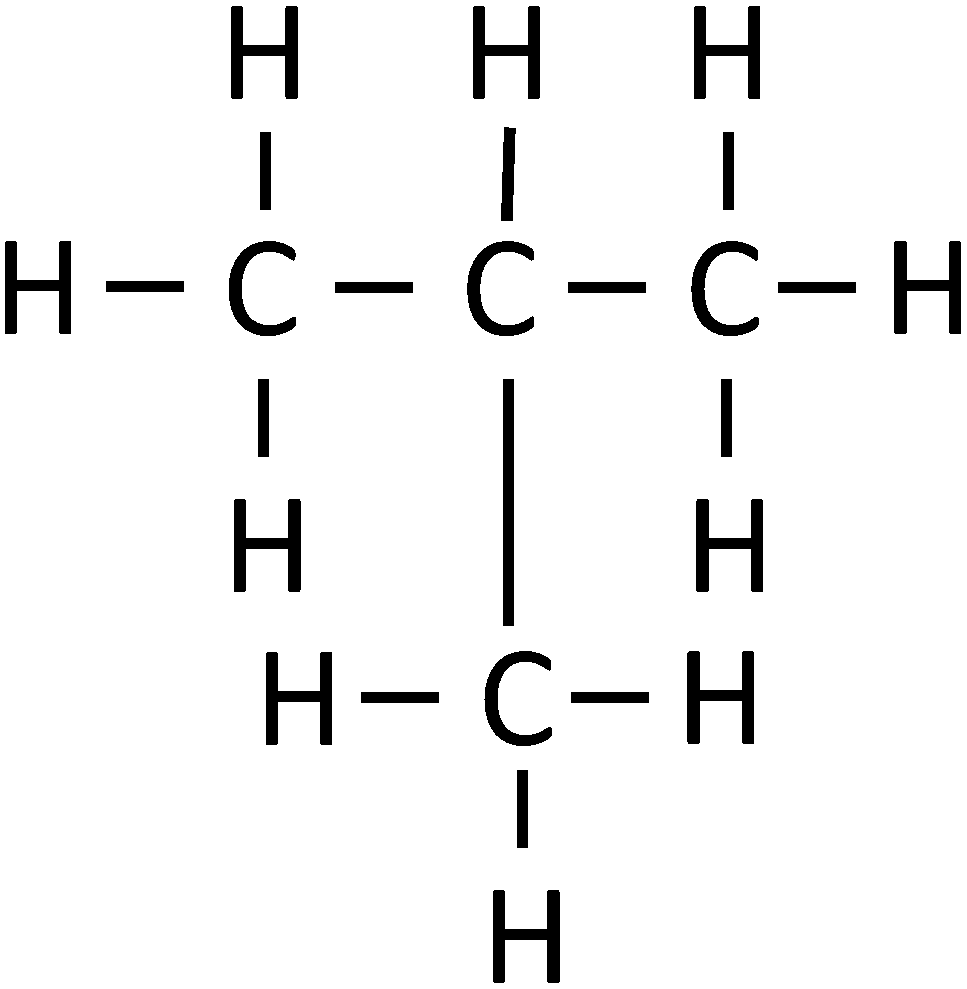
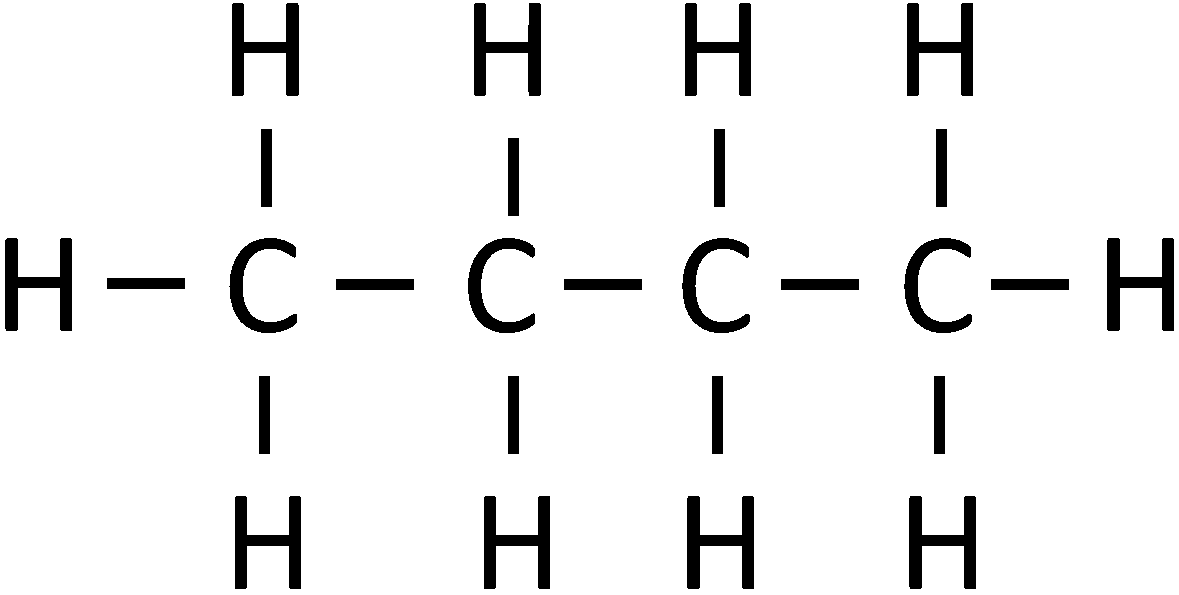
(i) Iso-butane is an isomer of n-butane. Its structure is shown below:

Give the structural formulae for an isomer of n-butane. Organic Chemistry, Simplified Chemistry Dalal Solutions ICSE Class 10

(ii) 2-propanol:

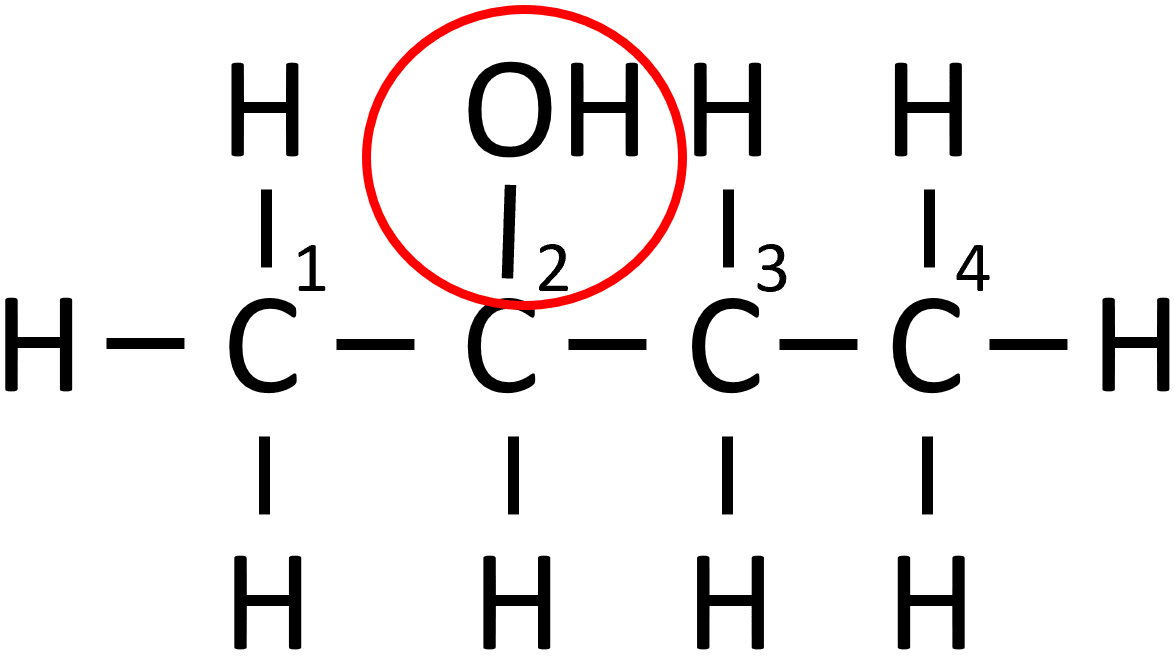
Give the structural formulae for 2-propanol. Organic Chemistry, Simplified Chemistry Dalal Solutions ICSE Class 10

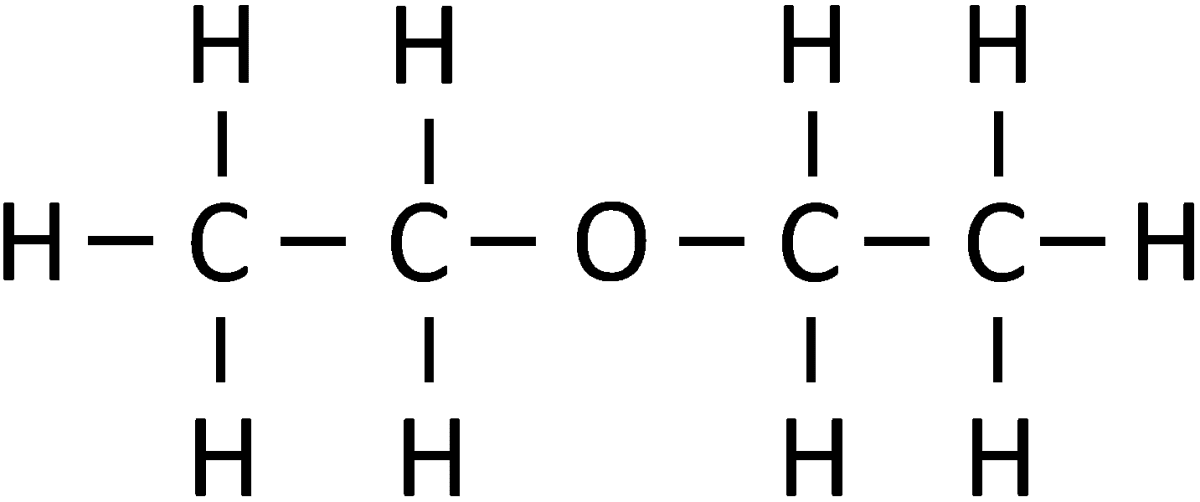
(iii) Diethyl ether:

Give the structural formulae for Diethyl ether. Organic Chemistry, Simplified Chemistry Dalal Solutions ICSE Class 10
7(2013)Questions

Give reasons for:

(i) Methane does not undergo addition reactions, but ethene does.

(ii) Ethyne is more reactive than ethane.

(iii) Hydrocarbons are excellent fuels.

Show SolutionHide Solution↓

(i) Methane is a saturated hydrocarbon whereas Ethene is an unsaturated hydrocarbon. In saturated hydrocarbons, all the four valencies of each carbon atom are satisfied by the hydrogen atoms, forming single covalent bond. Thus, due to non-availability of electrons methane is less reactive and hence does not undergo addition reactions.
On the other hand, ethene has two carbon atoms forming a double covalent bond as their valencies are not fully satisfied by hydrogen atoms. The availability of electrons in the double bond makes ethene more reactive and it undergoes addition reactions.

(ii) Ethyne is an unsaturated hydrocarbon having two carbon atoms forming a triple covalent bond as their valencies are not fully satisfied by hydrogen atoms whereas ethane is a saturated hydrocarbon containing only single bonds which are stronger and less reactive. The availability of electrons in the triple bond in case of ethyne makes it more reactive than ethane which does not have electrons available in the single covalent bond.

(iii) Hydrocarbons have high calorific value. They are easily combustible and the reaction is exothermic releasing heat energy. Hence, they are excellent fuels.

1(2014)Questions

The I.U.P.A.C. name of acetylene is -

A: propane
B: propyne
C: ethene
D: ethyne.

Show SolutionHide Solution↓

Ethyne

2(2014)Questions

Ethanol reacts with sodium to give ............... [sodium ethanoate, sodium ethoxide, sodium propanoate]

Show SolutionHide Solution↓

Ethanol reacts with sodium to give sodium ethoxide

$\underset{\text{ ethanol} }{2\text{C}_2\text{H}_5\text{OH}} + 2\text{Na} \longrightarrow \underset{\text{ sodium ethoxide} }{2\text{C}_2\text{H}_5\text{ONa}} + \text{H}_2$

3(2014)Questions

Give one word or phrase for hydrocarbons containing a $\overset{\underset{\text{||}}{\text{O}}}{\text{-C-}}$ functional group

Show SolutionHide Solution↓

Ketones

4(2014)Questions

Write balanced equation for preparation of:

(i) ethane from sodium propionate.

(ii) ethanol from monochloroethane and aq. sodium hydroxide.

Show SolutionHide Solution↓

(i) Preparation of ethane from sodium propionate.

$\underset{\text{sodium propionate}}{\text{C}\text{H}_3\text{-C}\text{H}_2\text{.COONa}} + \underset{\text{sodalime}}{\text{NaOH}} \xrightarrow[\Delta]{\text{CaO}} \underset{\text{ethane}}{\text{C}_2\text{H}_6} + \text{Na}_2\text{CO}_3$

(ii) Preparation of ethanol from monochloroethane and aq. sodium hydroxide.

$\underset{\text{ monochloroethane}}{\text{C}_2\text{H}_5\text{-Cl}} + \underset{ \text{ aq. sodium hydroxide}}{\text{NaOH[aq]}} \xrightarrow{\text{boil}} \underset{ \text{ Ethanol [ethyl alcohol]} }{\text{C}_2\text{H}_5\text{-OH}} + \text{NaCl}\$

5(2014)Questions

Distinguish between Ethane and ethene (using alkaline potassium permanganate solution)

Show SolutionHide Solution↓

When ethene is passed through alkaline potassium permanganate solution (cold dil. KMnO4), it decolourizes the purple coloured solutions whereas on passing Ethane, alkaline potassium permanganate solution remains purple.

6(2014)Questions

State the conditions required for :

(i) Catalytic hydrogenation of ethyne.

(ii) Preparation of ethyne from ethylene dibromide.

Show SolutionHide Solution↓

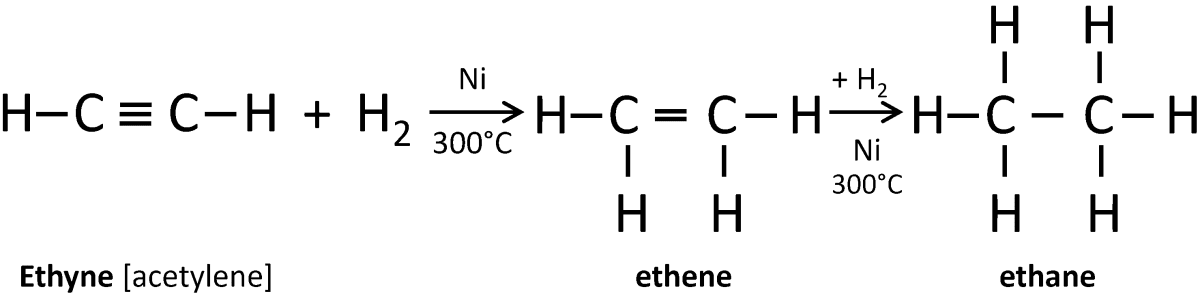
(i) Vapours of ethyne mixed with hydrogen are passed over a catalyst eg., nickle [Pd. or Pt.] at high temperatures of around 300°C.

(ii) Ethylene dibromide is boiled with conc. alcoholic KOH soln. in a round bottom flask. Ethyne is collected by downward displacement of water.

7(2014)Questions

Write structural formula of:

(i) ethanol

(ii) 1-propanal.

(iii) ethanoic acid.

(iv) 1, 2, dichloroethane.

Show SolutionHide Solution↓

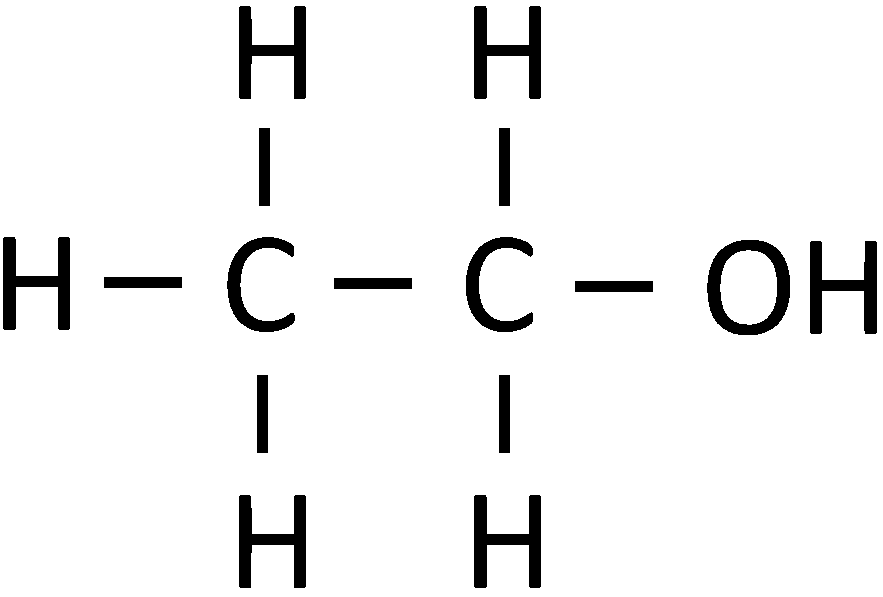
(i) Structural formula of ethanol is shown below:

Write structural formula of ethanol. Organic Chemistry, Simplified Chemistry Dalal Solutions ICSE Class 10.

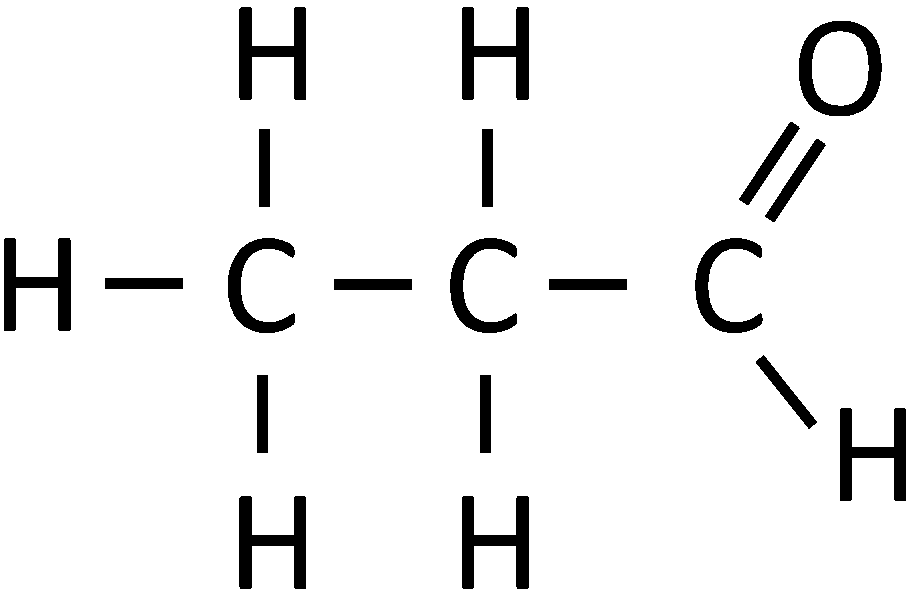
(ii) Structural formula of 1-propanal is shown below:

Write structural formula of 1-propanal. Organic Chemistry, Simplified Chemistry Dalal Solutions ICSE Class 10.

(iii) Structural formula of ethanoic acid is shown below:

Write structural formula of ethanoic acid. Organic Chemistry, Simplified Chemistry Dalal Solutions ICSE Class 10.

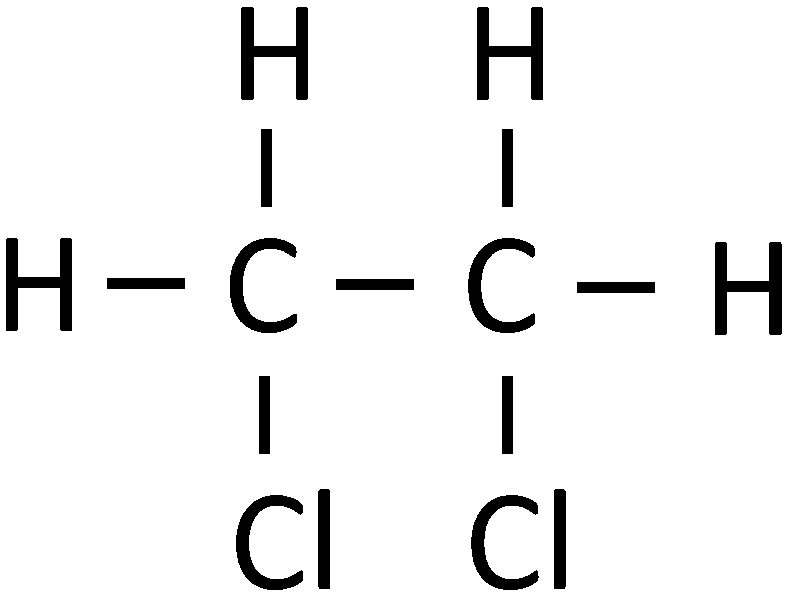
(iv) Structural formula of 1, 2, dichloroethane is shown below:

Write structural formula of 1, 2, dichloroethane. Organic Chemistry, Simplified Chemistry Dalal Solutions ICSE Class 10.
8(2014)Questions

Match A and B with (i) and (ii) :

Column IColumn II
A: alkynes(1) CnH2n+2
B: alkane(2) CnH2n-2
Show SolutionHide Solution↓
Column IColumn II
A: alkynes(2) CnH2n-2
B: alkane(1) CnH2n+2
1(2015)Questions

Select from the list — Ammonia, ethane, hydrogen chloride, hydrogen sulphide, ethyne

(i) The gas is used for welding purposes.

(ii) This gas is also a saturated hydrocarbon.

Show SolutionHide Solution↓

(i) Ethyne

(ii) Ethane

2(2015)Questions

State which of the following statements does not describe the property of alkenes :

A: They are unsaturated hydrocarbons
B: They decolourise bromine water
C: They can undergo addition as well as substitution reactions
D: They undergo combustion with oxygen forming carbon dioxide and water.

Show SolutionHide Solution↓

They can undergo addition as well as substitution reactions

Reason — The availability of electrons in the double or triple bond makes them more reactive and therefore they undergo characteristic addition reactions only.

3(2015)Questions

State the observation : The gaseous product from dehydration of ethanol is passed through bromine water.

Show SolutionHide Solution↓

When the gaseous product from dehydration of ethanol is passed through bromine water, the brown colour of bromine water is discharged.

4(2015)Questions

Give balanced chemical equations for the following con­versions:

(i) Ethanoic acid to ethyl ethanoate.

(ii) Calcium carbide to ethyne.

(iii) Sodium ethanoate to methane.

Show SolutionHide Solution↓

(i) Ethanoic acid to ethyl ethanoate. :

$\underset{\text{ethyl alcohol}}{\text{C}_2\text{H}_5\text{OH}} + \underset{\text{acetic acid}}{\text{CH}_3\text{COOH}} \xrightarrow{\text{Conc. H}_2\text{SO}_4} \underset{\text{ethyl ethanoate}}{\text{CH}_3-\text{COO}-\text{C}_2\text{H}_5} + \text{H}_2\text{O}$

(ii) Ethyne is formed

$\underset{\text{calcium carbide}}{\text{CaC}_2} + \underset{\text{water}}{2\text{H}_2\text{O}} \longrightarrow \underset{\text{ethyne [acetylene]}}{\text{C}_2\text{H}_2} + \text{Ca(OH)}_2$

(iii) Sodium ethanoate to methane

$\underset{\text{sodium acetate}}{\text{CH}_3\text{COONa}} + \underset{\text{sodalime}}{\text{NaOH}} \xrightarrow[\Delta]{\text{CaO}} \underset{\text{methane}}{\text{CH}_4} + \text{Na}_2\text{CO}_3$

5(2015)Questions

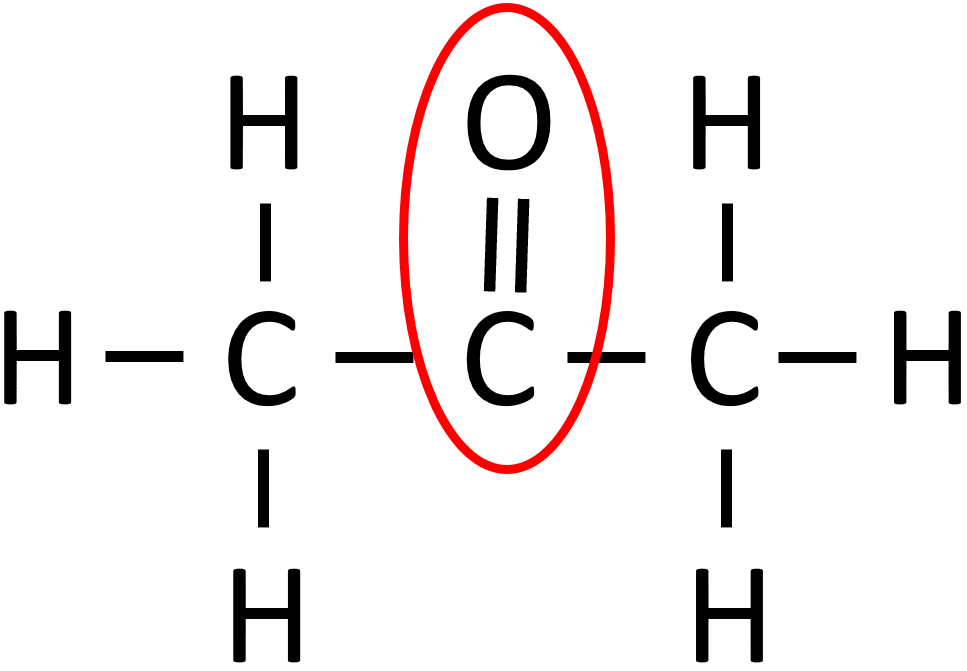
Using their structural formulae identify the functional group by circling them:

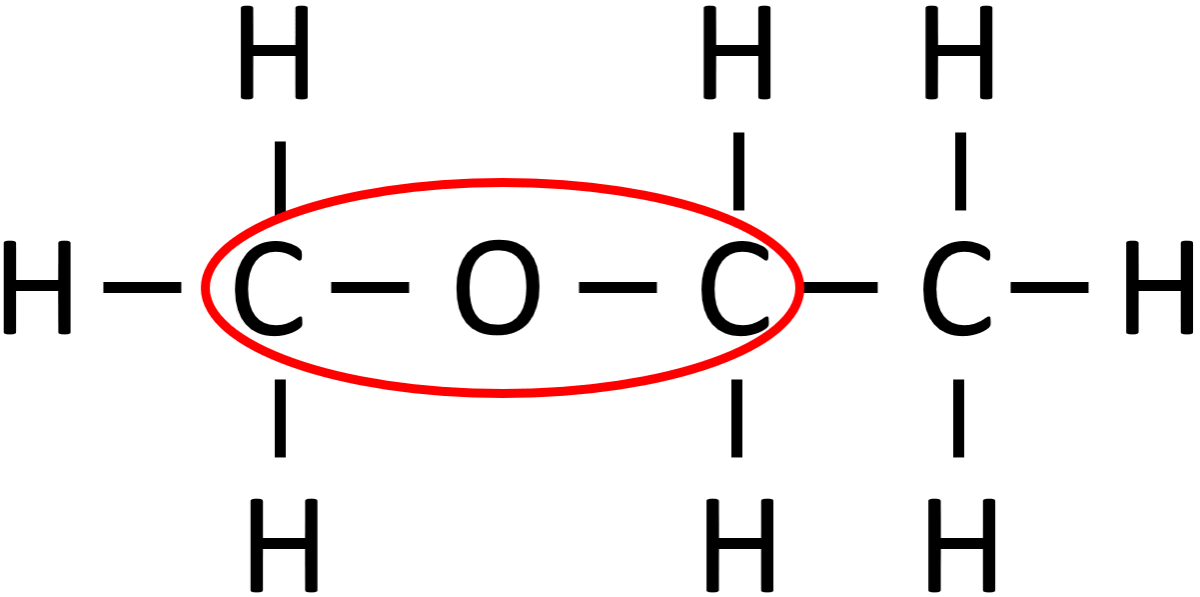
(i) Dimethyl ether.

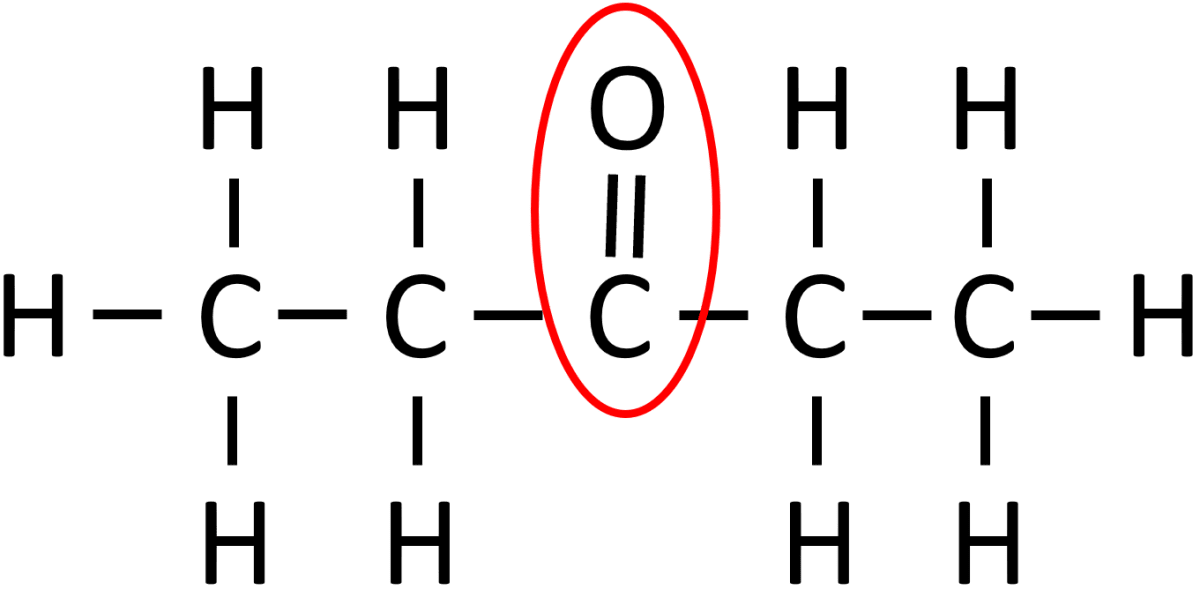
(ii) Propanone

Show SolutionHide Solution↓

(i) Dimethyl ether contains the functional group Alkoxy (ether). It is circled in its structural formula below:

Using their structural formulae identify the functional group by circling them - Dimethyl ether. Organic Chemistry, Simplified Chemistry Dalal Solutions ICSE Class 10.

(ii) Propanone contains the functional group Keto. It is circled in its structural formula below:

Using their structural formulae identify the functional group by circling them - Propanone. Organic Chemistry, Simplified Chemistry Dalal Solutions ICSE Class 10.
6(2015)Questions

Name the following :

(i) The process by which ethane is obtained from ethene.

(ii) A hydrocarbon which contributes towards the greenhouse effect.

(iii) The distinctive reaction that takes place when ethanol is treated with acetic acid.

(iv) The property of elements by virtue of which atoms of the element can link to each other in the form of a long chain or ring structure.

(v) The reaction when an alkyl halide is treated with alcoholic potassium hydroxide.

Show SolutionHide Solution↓

(i) Catalytic hydrogenation (addition)

(ii) Methane

(iii) Esterification

(iv) Catenation

(v) Dehydrohalogenation

1(2016)Questions

Fill in the blanks : Conversion of ethene to ethane is an example of ............... [hydration/hydrogenation].

Show SolutionHide Solution↓

Conversion of ethene to ethane is an example of hydrogenation.

2(2016)Questions

Write balanced chemical equation for : Preparation of ethanol from ethyl chloride.

Show SolutionHide Solution↓

$\underset{\text{ Chloroethane [ethyl chloride]}}{\text{C}_2\text{H}_5\text{-Cl}} + \text{NaOH [aq.]} \xrightarrow{\text{boil}} \underset{\text{ Ethanol [ethyl alcohol]}}{\text{C}_2\text{H}_5\text{-OH}} + \text{NaCl}$

3(2016)Questions

Identify the term/substance in each of the following :

(i) The catalyst used in the conversion of ethyne to ethane.

(ii) The type of reactions alkenes undergo.

Show SolutionHide Solution↓

(i) Nickel or platinum or palladium.

(ii) Addition reaction

4(2016)Questions

Write the IUPAC names of:

Write the IUPAC names. Organic Chemistry, Simplified Chemistry Dalal Solutions ICSE Class 10.
Show SolutionHide Solution↓

(a) Propene

(b) 2-butyne

(c) ethanal

5(2016)Questions

Write a balanced equation for :

(i) Burning of ethane in plentiful supply of air.

(ii) Action of water on calcium carbide.

(iii) Heating of ethanol at 170°C in the presence of conc. sulphuric acid.

Show SolutionHide Solution↓

(i) Carbon dioxide and water are produced:

$2\text{C}_2\text{H}_6 + 7\text{O}_2[\text{excess}] \longrightarrow 4\text{CO}_2 + 6\text{H}_2\text{O} + \Delta$

(ii) Calcium hydroxide and ethyne are produced

$\underset{\text{calcium carbide}}{\text{CaC}_2} + \underset{\text{water}}{2\text{H}_2\text{O}} \longrightarrow \underset{\text{ethyne [acetylene]}}{\text{C}_2\text{H}_2} + \text{Ca(OH)}_2$

(iii) Ethene and water are produced

$\underset{\text{ ethyl alcohol}}{\text{C}_2\text{H}_5\text{OH}} \xrightarrow[170^{\circ}\text{C}]{\text{Conc. H}_2\text{SO}_4\text{[excess]}} \underset{ \text{ethene}}{\text{C}_2\text{H}_4} + \text{H}_2\text{O}\$

6(2016)Questions

Give the structural formulae of:

(i) 2-methyl propane

(ii) Ethanoic acid

(iii) Butan-2-ol

Show SolutionHide Solution↓

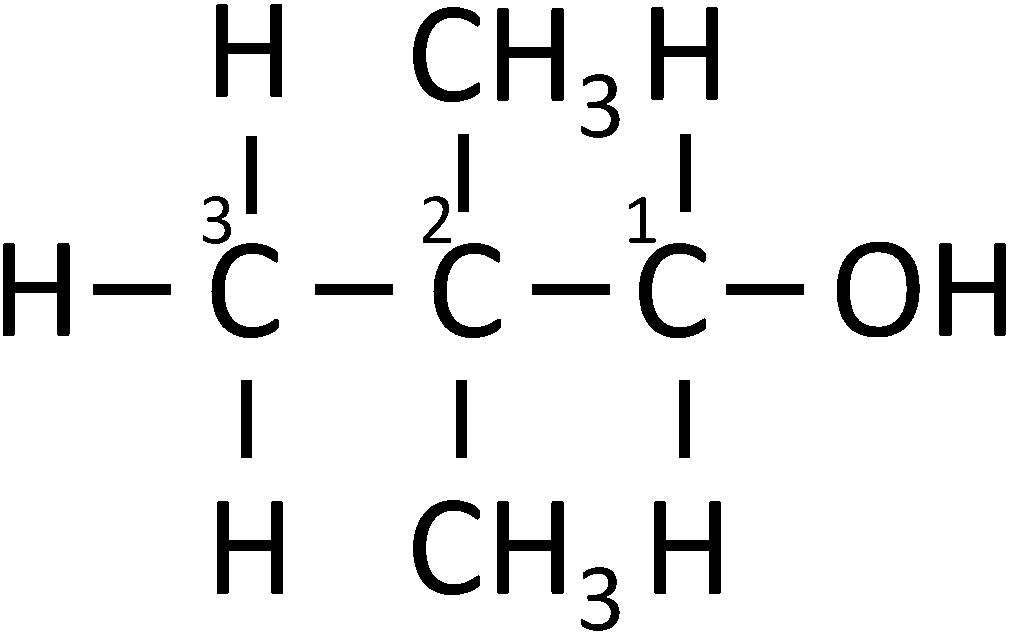
(i) 2-methyl propane :

Give the structural formulae of 2-methyl propane. Organic Chemistry, Simplified Chemistry Dalal Solutions ICSE Class 10

(ii) Ethanoic acid :

Write structural formula of ethanoic acid. Organic Chemistry, Simplified Chemistry Dalal Solutions ICSE Class 10.

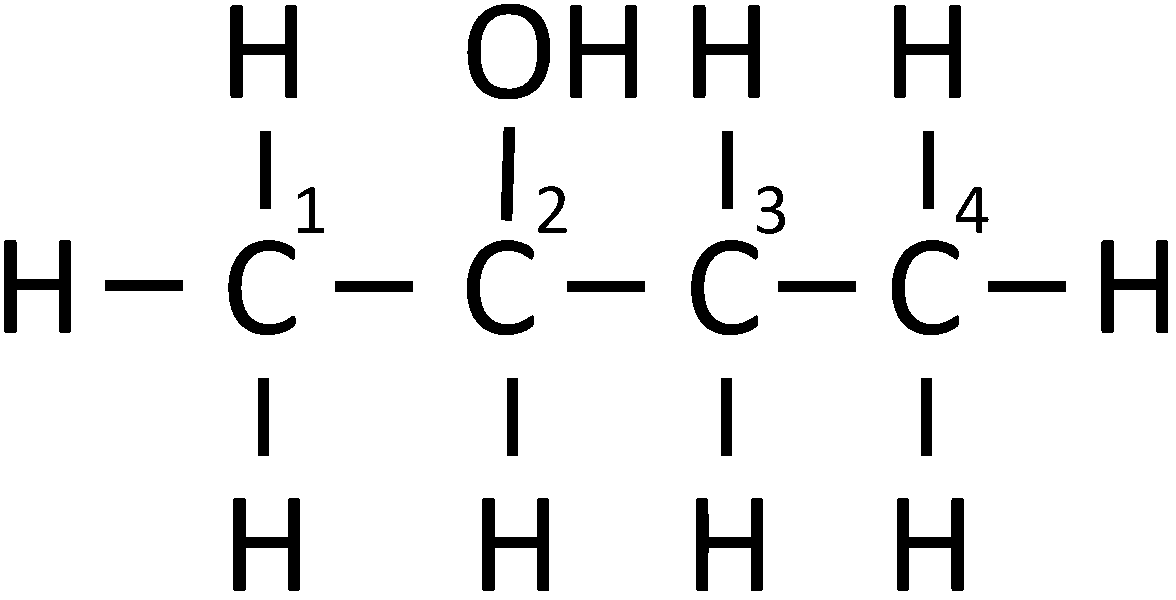
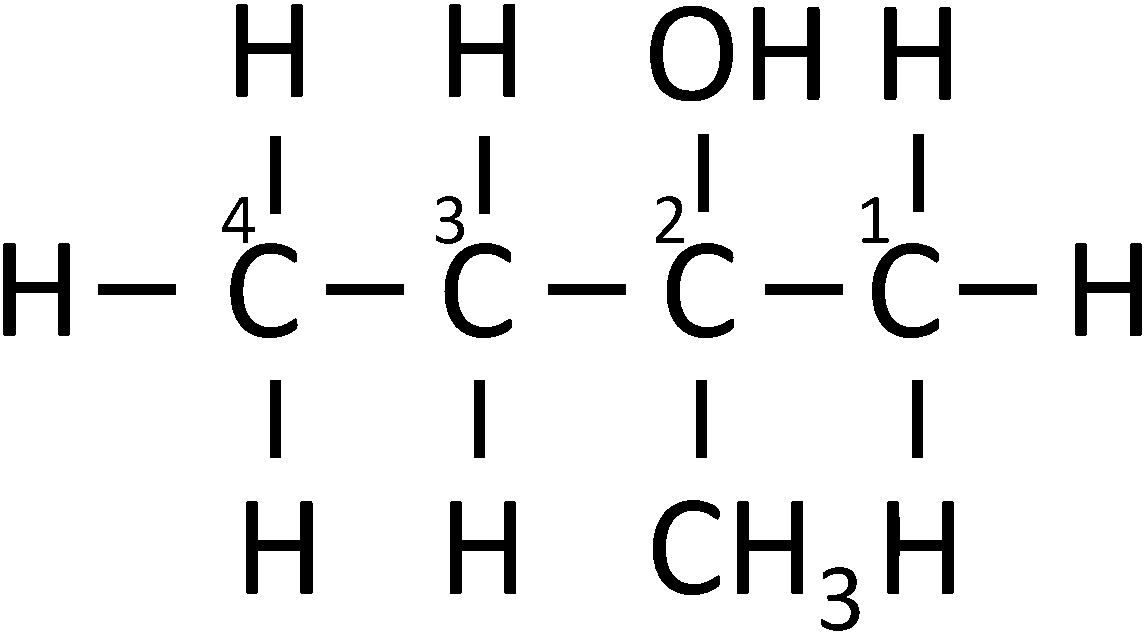
(iii) Butan – 2 – ol :

Write structural formula of Butan–2–ol. Organic Chemistry, Simplified Chemistry Dalal Solutions ICSE Class 10.
7(2016)Questions

Compound A is bubbled through bromine dissolved in carbon tetrachioride as follows :

Compound A is bubbled through bromine dissolved in carbon tetrachioride as follows. (i) Draw the structure of A. (ii) State your observation during this reaction. Organic Chemistry, Simplified Chemistry Dalal Solutions ICSE Class 10.

(i) Draw the structure of A.

(ii) State your observation during this reaction.

Show SolutionHide Solution↓

(i) Compound A is Ethene. Its structure is shown below:

Ethene structure. Organic Chemistry, Simplified Chemistry Dalal Solutions ICSE Class 10.

(ii) Brown colour of bromine is discharged.

1(2017)Questions

Fill in the blanks from the choices given in brackets – The compound formed when ethene reacts with hydrogen is ............... [CH4, C2H6, C3H8]

Show SolutionHide Solution↓

The compound formed when ethene reacts with hydrogen is C2H6

$\underset{\text{ ethene [ethylene]}}{\text{H}_2\text{C}=\text{C}\text{H}_2} + \text{H}_2 \xrightarrow[300^{\circ}\text{C}]{\text{Nickle}} \underset{\text{ethane}}{\text{C}_2\text{H}_6}$

2(2017)Questions

Choose the correct answer from the options given – If the molecular formula of an organic compound is C10H18 it is –

(i) Alkene
(ii) Alkane
(iii) Alkyne
(iv) Not a hydrocarbon

Show SolutionHide Solution↓

Alkyne
Reason — As the general formula for alkyne is CnH2n-2. Hence, when C is 10 then H is 18.

3(2017)Questions

Identify the substance underlined – An organic compound containing – COOH functional group.

Show SolutionHide Solution↓

Carboxylic acids

4(2017)Questions

Write the balanced chemical equation for – Preparation of methane from iodomethane

Show SolutionHide Solution↓

$\underset{\text{methyl iodide}}{\text{CH}_3\text{I}} + \underset{\text{nascent hydrogen}}{2\text{[H]}} \xrightarrow[\text{alcohol}]{\text{Zn/Cu couple}} \underset{\text{methane}}{\text{CH}_4} +\text{HI}$

5(2017)Questions

Identify the term or substance based on the descriptions given below:

(i) Ice like crystals formed on cooling an organic acid sufficiently.

(ii) Hydrocarbon containing a triple bond used for welding purposes.

(iii) The property by virtue of which the compound has the same molecular formula but different structural formulae.

(iv) The compound formed where two alkyl groups are linked by $\overset{\underset{\text{||}}{\text{O}}}{\text{-C-}}$ group.

Show SolutionHide Solution↓

(i) Glacial acetic acid

(ii) Ethyne or acetylene

(iii) Isomerism

(iv) Ketone or Alkanone

6(2017)Questions

Give a balanced chemical equation for each of the following –

(i) Preparation of ethane from sodium propionate.

(ii) Action of alcoholic KOH on bromoethane.

Show SolutionHide Solution↓

(i) ethane from sodium propionate : ethane is formed

$\underset{\text{sodium propionate}}{\text{C}_2\text{H}_5\text{COONa}} + \underset{\text{sodalime}}{\text{NaOH}} \underset{\Delta}{\xrightarrow{\text{CaO}}} \underset{\text{ethane}}{\text{C}_2\text{H}_6} + \text{Na}_2\text{CO}_3$

(ii) ethyl alcohol is formed.

$\underset{\text{ Bromoethane [ethyl bromide]}}{\text{C}_2\text{H}_5\text{-Br}} + \underset{\text{ alcoholic KOH}}{\text{KOH [aq.]}} \xrightarrow{\text{boil}} \underset{ \text{ ethyl alcohol}} {\text{C}_2\text{H}_5\text{OH}} + \text{KBr}$

7(2017)Questions

State one relevant observation for – Addition of ethyl alcohol to acetic acid in the presence of conc. H2SO4.

Show SolutionHide Solution↓

On warming, the mixture gives fruity smell. Acetic acid on heating with an alcohol and a dehydrating agent [conc. H2SO4] forms an ester-ethyl acetate.

$\underset{\text{ethyl alcohol}}{\text{C}_2\text{H}_5\text{OH}} + \underset{\text{acetic acid}}{\text{CH}_3\text{COOH}} \xrightarrow{\text{Conc. H}_2\text{SO}_4} \underset{\text{ethyl ethanoate}}{\text{CH}_3-\text{COO}-\text{C}_2\text{H}_5} + \text{H}_2\text{O}$

8(2017)Questions

Draw the structural formula for –

(i) 2, 3 – dimethyl butane

(ii) Diethyl ether

(iii) Propanoic acid

Show SolutionHide Solution↓

(i) 2, 3 – dimethyl butane :

Draw the structural formula for 2, 3 – dimethyl butane. Organic Chemistry, Simplified Chemistry Dalal Solutions ICSE Class 10

(ii) Diethyl ether :

Draw the structural formula for Diethyl ether. Organic Chemistry, Simplified Chemistry Dalal Solutions ICSE Class 10

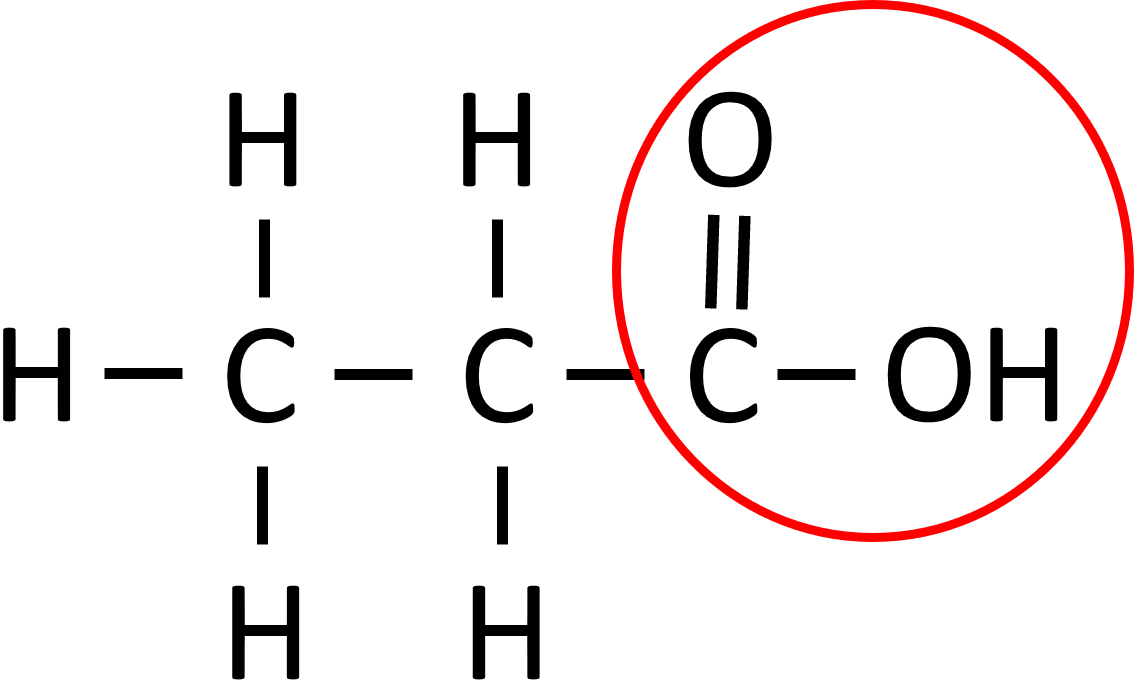
(iii) Propanoic acid :

Draw the structural formula for Propanoic acid. Organic Chemistry, Simplified Chemistry Dalal Solutions ICSE Class 10
1(2018)Questions

Choose the correct answer from the options given:

(i) The organic compound which undergoes substitution reaction is:

A: C2H2
B: C2H4
C: C10H18
D: C2H6

(ii) The IUPAC name of dimethyl ether is:

A: Ethoxy methane
B: Methoxy methane
C: Methoxy ethane
D: Ethoxy ethane

Show SolutionHide Solution↓

(i) C2H6

(ii) Methoxy methane

2(2018)Questions

Give one word or a phrase for: The tendency of an element to form chains of identical atoms.

Show SolutionHide Solution↓

Catenation

3(2018)Questions

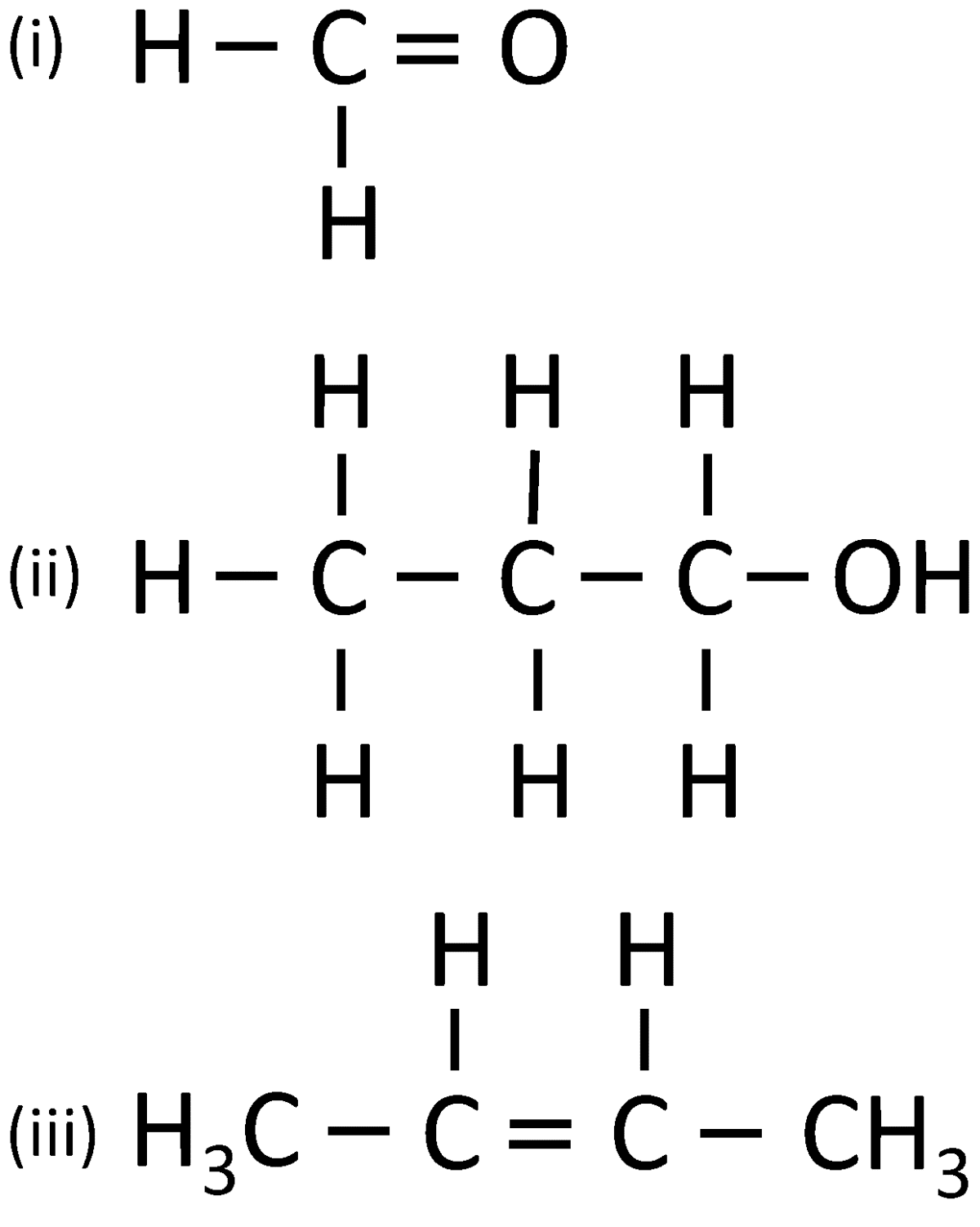
Give the IUPAC name for:

Give the IUPAC name for. Organic Chemistry, Simplified Chemistry Dalal Solutions ICSE Class 10
Show SolutionHide Solution↓

(i) Methanal

(ii) 1-Propanol

(iii) 2-Butene

Write the structural formula of the two isomers of butane.

Structural formula of the two isomers of butane are given below:

  1. Butane [n-butane]
Give the structural formulae of n-butane. Organic Chemistry, Simplified Chemistry Dalal Solutions ICSE Class 10
  1. 2-Methyl propane [iso-butane]
Give the structural formulae of 2-methyl propane. Organic Chemistry, Simplified Chemistry Dalal Solutions ICSE Class 10
5(2018)Questions

Name the gas that is produced during reaction of ethanol and sodium.

Show SolutionHide Solution↓

Hydrogen gas is produced during reaction of ethanol and sodium as shown below:

$\underset{\text{ ethanol} }{2\text{C}_2\text{H}_5\text{OH}} + 2\text{Na} \longrightarrow \underset{\text{ sodium ethoxide} }{2\text{C}_2\text{H}_5\text{ONa}} + \text{H}_2$

6(2018)Questions

Give the :

(i) IUPAC name of the homologous series.

(ii) Characteristic bond type.

(iii) IUPAC name of the first member of the series - in each case i.e., (a) and (b) relating to the homologous series of hydrocarbons - whose general formula is (a) CnH2n-2 (b) CnH2n+2

Show SolutionHide Solution↓

(a) Hydrocarbons with general formula CnH2n-2

  1. IUPAC name of the homologous series — Alkynes
  2. Characteristic bond type — Triple covalent bond
  3. IUPAC name of the first member of the series — Ethyne

(b) Hydrocarbons with general formula CnH2n+2

  1. IUPAC name of the homologous series — Alkanes
  2. Characteristic bond type — Single covalent bond
  3. IUPAC name of the first member of the series — Methane
7(2018)Questions

A compound X [having vinegar like smell] when treated with ethanol in the presence of the acid Z, gives a compound Y which has fruity smell. The reaction is $\text{C}_2\text{H}_5\text{OH} + \text{X} \xrightarrow{\text{Z}} \text{Y} + \text{H}_2\text{O}$

(i) Identify Y and Z

(ii) Write the structural formula of X.

(iii) Name the above reaction

Show SolutionHide Solution↓

$\underset{\text{ethyl alcohol}}{\text{C}_2\text{H}_5\text{OH}} + \underset{\text{acetic acid}}{\text{CH}_3\text{COOH}} \xrightarrow{\text{Conc. H}_2\text{SO}_4} \underset{\text{ethyl ethanoate}}{\text{CH}_3-\text{COO}-\text{C}_2\text{H}_5} + \text{H}_2\text{O}$

(i) Y is ethyl acetate and Z is conc. sulphuric acid

(ii) Structural formula of X (ethanoic acid) is shown below:

Write structural formula of ethanoic acid. Organic Chemistry, Simplified Chemistry Dalal Solutions ICSE Class 10.

(iii) Esterification reaction

1(2019)Questions

A hydrocarbon which is a greenhouse gas is:

A: Acetylene
B: Ethylene
C: Ethane
D: Methane

Show SolutionHide Solution↓

Methane

2(2019)Questions

Fill in the blanks with the choices given in the brackets:

(i) Conversion of ethanol to ethene by the action of conc. sulphuric acid is an example of ............... [dehydration/dehydrogenation/dehydrohalogenation]

(ii) Substitution reactions are characteristic reactions of ...............[alkynes/alkenes/alkanes].

Show SolutionHide Solution↓

(i) Conversion of ethanol to ethene by the action of conc. sulphuric acid is an example of dehydration

(ii) Substitution reactions are characteristic reactions of alkanes

3(2019)Questions

Write a balanced chemical equation for the following reactions: Chlorine gas is reacted with ethene.

Show SolutionHide Solution↓

The balanced chemical equation for the reaction of chlorine gas with ethene is given below:

Give chemical equation for the reaction of one mole of ethene with one mole of chlorine gas. Organic Chemistry, Simplified Chemistry Dalal Solutions ICSE Class 10
4(2019)Questions

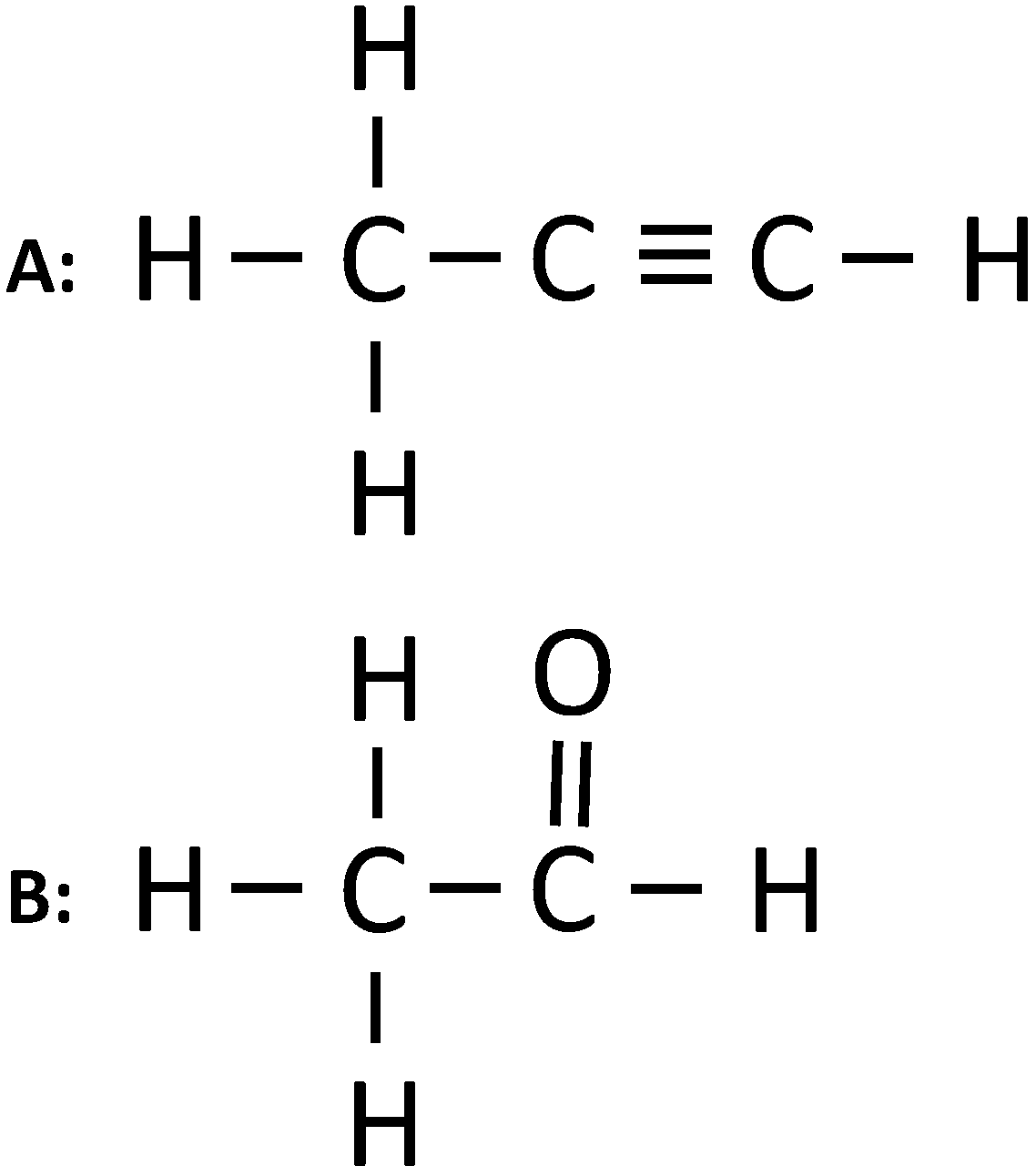
(i) Give the IUPAC name of the following organic compounds:

Give the IUPAC name of the following organic compounds. Organic Chemistry, Simplified Chemistry Dalal Solutions ICSE Class 10

(ii) What is the special feature of the structure of ethyne

(iii) Name the saturated hydrocarbon containing two carbon atoms.

(iv) Give the structural formula of acetic acid.

Show SolutionHide Solution↓

(i) The IUPAC names are:
     A: Propyne
     B: Ethanal

(ii) The special feature of the structure of ethyne is that the two carbon atoms are linked by triple covalent bond formed by sharing three pairs of electrons between the two carbon atoms. The availability of electrons on the triple bond makes ethyne more reactive and hence it undergoes characteristics addition reactions only.

(iii) Ethane [C2H6]

(iv) Structural formula of acetic acid is shown below:

Write structural formula of ethanoic acid. Organic Chemistry, Simplified Chemistry Dalal Solutions ICSE Class 10.
5(2019)Questions

Arrange - Ethane, methane, ethene, ethyne - in increasing order of molecular weight [H = 1, C = 12]

Show SolutionHide Solution↓

Ethane [C2H6] : M.W. = 2[12] + 6[1] = 30

Methane [CH4] : M.W. = 12 + 4[1] = 16

Ethene [C2H4] : M.W. = 2[12] + 4[1] = 28

Ethyne [C2H2] : M.W. = 2[12] + 2[1] = 26

Hence, increasing order of molecular weight :

Methane < Ethyne < Ethene < Ethane

6(2019)Questions

Give balanced chemical equations for the preparation of :

(i) Ethene from bromoethane

(ii) Ethyne using calcium carbide

(iii) Methane from sodium acetate.

Show SolutionHide Solution↓

(i) Ethene from bromoethane

$\underset{\text{ Bromoethane [ethyl bromide]}}{\text{C}_2\text{H}_5\text{-Br}} + \underset{\text{ alcoholic KOH}}{\text{KOH}} \xrightarrow{\text{boil}} \underset{ \text{ ethene [ethylene]} } {\text{H}_2\text{C}=\text{C}\text{H}_2} + \text{KBr} + \text{H}_2\text{O}$

(ii) Ethyne from calcium carbide

$\underset{\text{calcium carbide}}{\text{CaC}_2} + \underset{\text{cold water}}{2\text{H}_2\text{O}} \longrightarrow \underset{\text{ethyne [acetylene]}}{\text{C}_2\text{H}_2} + \text{Ca(OH)}_2$

(iii)

$\underset{\text{ sodium acetate}}{\text{CH}_3\text{.COONa}} + \underset{\text{sodalime}}{\text{NaOH}} \underset{\Delta}{\xrightarrow{\text{CaO}}} \underset{\text{methane}}{\text{C}\text{H}_4} + \text{Na}_2\text{CO}_3$

7(2019)Questions

Name the following organic compounds:

(i) The compound with three carbon atoms whose functional group is a carboxyl.

(ii) The first homologue whose general formula is CnH2n

(iii) The compound that reacts with acetic acid to form ethyl ethanoate

(iv) The compound formed by complete chlorination of ethyne.

Show SolutionHide Solution↓

(i) Propanoic acid [C3H7CHO]

(ii) Ethene [C2H4]

(iii) Ethyl alcohol

$\underset{\text{ethyl alcohol}}{\text{C}_2\text{H}_5\text{OH}} + \underset{\text{acetic acid}}{\text{CH}_3\text{COOH}} \xrightarrow{\text{Conc. H}_2\text{SO}_4} \underset{\text{ethyl ethanoate}}{\text{CH}_3-\text{COO}-\text{C}_2\text{H}_5} + \text{H}_2\text{O}$

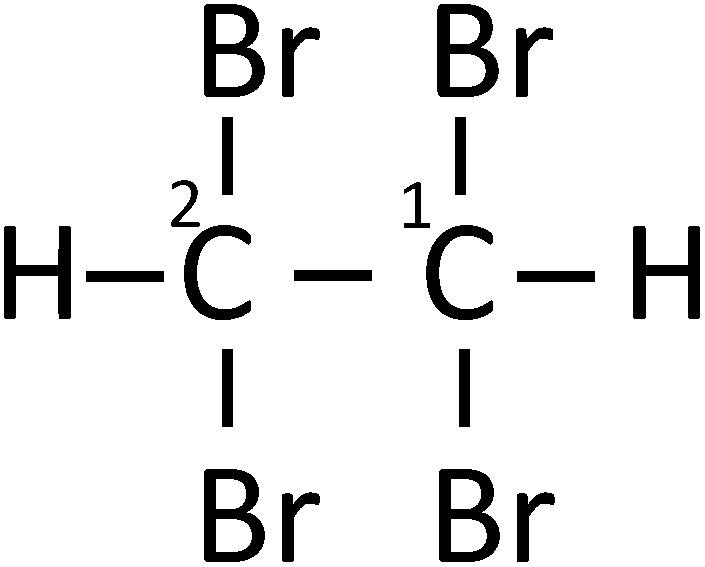
(iv) 1,1,2,2 tetrachloroethane

1,1,2,2 tetrachloroethane. Organic Chemistry, Simplified Chemistry Dalal Solutions ICSE Class 10
8(2019)Questions

Identify the substances italicised : The organic compound which when solidified, forms an ice like mass.

Show SolutionHide Solution↓

Glacial acetic acid

9(2019)Questions

Name the gas evolved: Ethene undergoes hydrogenation reaction.

Show SolutionHide Solution↓

Ethane gas

$\underset{\text{ ethene [ethylene]}}{\text{H}_2\text{C}=\text{C}\text{H}_2} + \text{H}_2 \xrightarrow[300^{\circ}\text{C}]{\text{Nickle}} \underset{\text{ethane}}{\text{C}_2\text{H}_6}$

1(2020)Questions

Choose the correct answer from the options: The organic compound having a triple carbon-carbon covalent bond, is

A: C3H4
B: C3H6
C: C3H8
D: C4H10

Show SolutionHide Solution↓

C3H4

Reason — C3H4 is an Alkyne as it follows the general formula CnH2n-2 and Alkynes contain a triple carbon-carbon covalent bond.

2(2020)Questions

State one relevant observation for the following reaction: A piece of sodium metal is put into ethanol at room temperature.

Show SolutionHide Solution↓

Effervesence of hydrogen gas is seen when a piece of sodium metal is put into ethanol at room temperature.

$\underset{\text{ ethanol} }{2\text{C}_2\text{H}_5\text{OH}} + 2\text{Na} \longrightarrow \underset{\text{ sodium ethoxide} }{2\text{C}_2\text{H}_5\text{ONa}} + \text{H}_2$

3(2020)Questions

Write a balanced chemical equation for each of the following:

(i) Producing ethane from bromoethane using Zn/Cu couple in alcohol.

(ii) Complete combustion of ethane

Show SolutionHide Solution↓

(i) Ethane from bromoethane using Zn/Cu couple in alcohol

$\underset{\text{bromoethane}}{\text{C}_2\text{H}_5\text{Br}} + \underset{\text{nascent hydrogen}}{2\text{[H]}} \xrightarrow[\text{alcohol}]{\text{Zn/Cu couple}} \underset{\text{ethane}}{\text{C}_2\text{H}_6} +\text{HBr}$

(ii) Complete combustion of ethane

$2\text{C}_2\text{H}_6 + 7\text{O}_2 \longrightarrow 4\text{CO}_2 + 6\text{H}_2\text{O} + \Delta$

4i(2020)Questions

Draw the structural formula for each of the following:

     A: 2,2 dimethyl pentane
     B: methanol

Show SolutionHide Solution↓

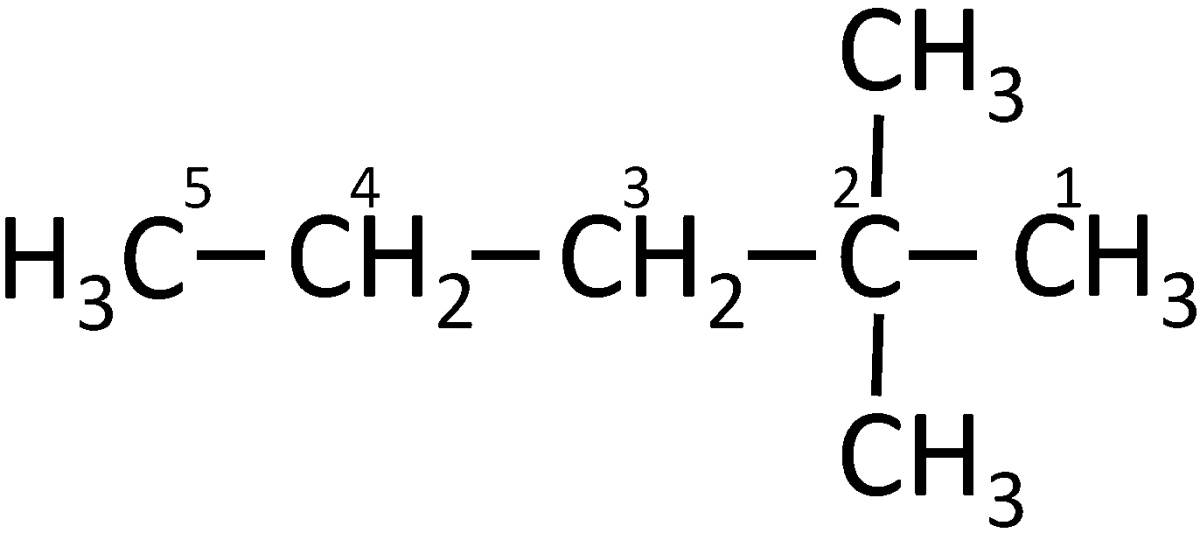
A: 2,2 dimethyl pentane

Draw the structural formula of 2,2 dimethyl pentane. Organic Chemistry, Simplified Chemistry Dalal Solutions ICSE Class 10

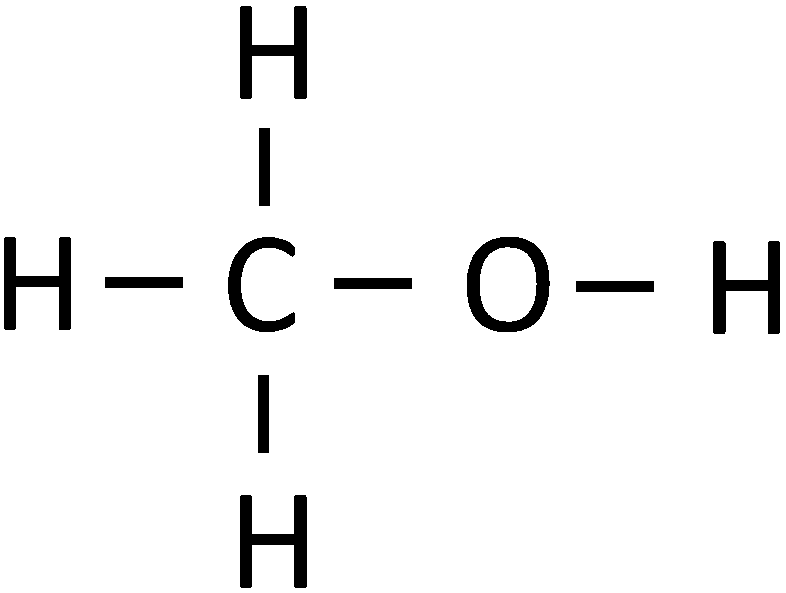
B: methanol

Draw the structural formula of methanol. Organic Chemistry, Simplified Chemistry Dalal Solutions ICSE Class 10
4ii(2020)Questions

Write the IUPAC name for the following compounds:

     A: acetaldehyde
     B: acetylene

Show SolutionHide Solution↓

A: acetaldehyde — Ethanal

B: acetylene — Ethyne

5(2020)Questions

State one relevant reason for the following: Sodalime is preferred to sodium hydroxide in the laboratory preparation of methane.

Show SolutionHide Solution↓

Sodalime is preferred to sodium hydroxide in the laboratory preparation of methane since it is not deliquescent and does not attack glass.

6(2020)Questions

Give one word or a phrase for the following statement:

The reaction in which carboxylic acid reacts with alcohol in the presence of conc. H2SO4, to form a substance having a fruity smell.

Show SolutionHide Solution↓

Esterification

7(2020)Questions

Draw the structures of isomers of pentane.

Show SolutionHide Solution↓

The structures of isomers of pentane are shown below:

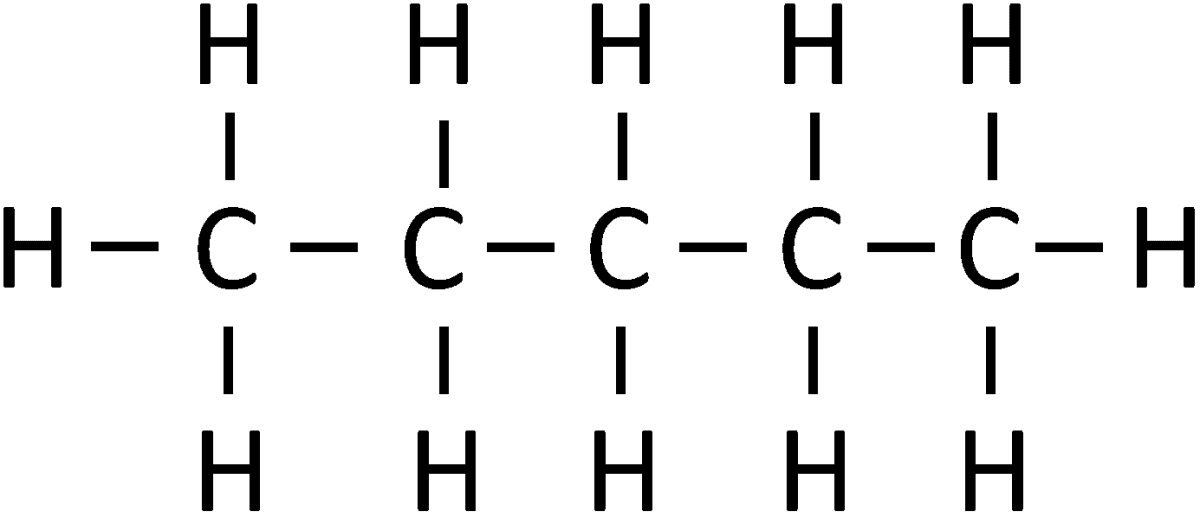
Pentane [n-pentane]

Draw the structures of isomers of pentane. Organic Chemistry, Simplified Chemistry Dalal Solutions ICSE Class 10

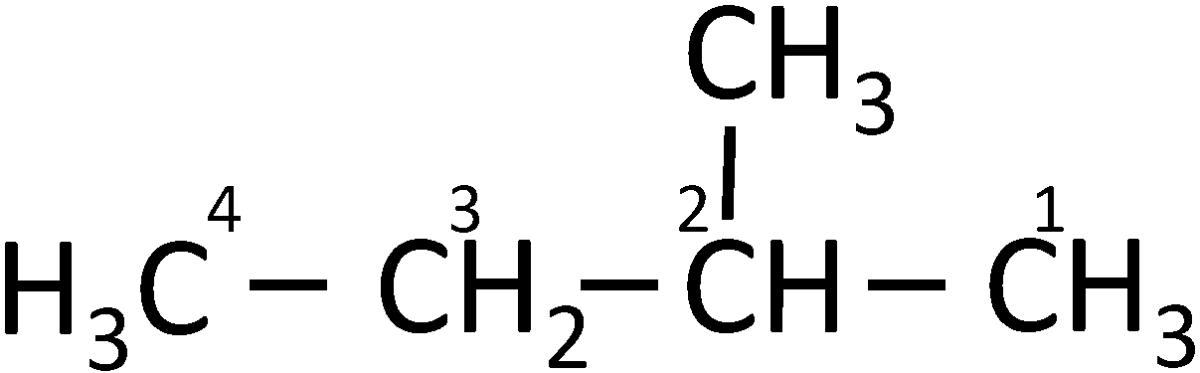
2-Methyl butane [iso-pentane]

Draw the structures of isomers of pentane. Organic Chemistry, Simplified Chemistry Dalal Solutions ICSE Class 10

2,2 Dimethyl Propane [neo-pentane]

Draw the structures of isomers of pentane. Organic Chemistry, Simplified Chemistry Dalal Solutions ICSE Class 10
8(2020)Questions

Copy and complete the following paragraph using the options given in brackets:

Alkenes are a homologous series of (i) ............... [saturated/unsaturated] hydrocarbons characterized by the general formula (ii) ............... [CnH2n+2/CnH2n]. Alkenes undergo (iii) ............... [addition/substitution] reactions and also undergo (iv) ............... [hydrogentaion/dehydrogenation] to form alkanes.

Show SolutionHide Solution↓

Alkenes are a homologous series of unsaturated hydrocarbons characterized by the general formula CnH2n. Alkenes undergo addition reactions and also undergo hydrogentaion to form alkanes.

1Additional Questions

Explain the term 'Organic Chemistry'. State the 'Natural sources' and 'Importance' of organic compounds.

Show SolutionHide Solution↓

Organic Chemistry is the study of carbon compounds excluding oxides of carbon, metallic carbonates and related compounds like metal cyanides, metal carbides.

Natural sources of organic compounds are:

  1. Plants
  2. Animals
  3. Coal
  4. Petroleum
  5. Fermentation
  6. Wood

Importance of organic compounds — Organic compounds are extremely useful to us in our daily life. The soaps and shampoos we use while taking bath, the powders, perfumes, we apply on the body, the clothes we wear, food we eat i.e., carbohydrates, proteins, fats, vitamins, etc., fuels we use, natural gas, petroleum products, medicines, explosives, dyes, insecticides, are all organic compounds.
There is hardly any walk of life where we do not need organic compounds.

2Additional Questions

Explain the 'unique nature of carbon atom' with reference to —

(a) 'Tetravalency' — of carbon
(b) 'Catenation' — leading to formation of single, double and triple bonds and straight chain, branched chain and cyclic compounds.

Show SolutionHide Solution↓

(a) Tetravalency of carbon atoms — Carbon has four valence electrons. It forms four covalent bonds by mutually sharing it's four electrons with other atoms. Carbon is hence tetravalent or exhibits tetravalency. [At. no. of C = 6; Elec. Config. = 2,4]

(b) Catenation — Carbon atoms possess a unique property to link together (self linking) to form very long chains. This property is known as catenation. Catenation is shown by other elements also but Carbon exhibits this property of the maximum extent. This is due to the greater strength of carbon-carbon bond and due to tetra-covalency of carbon.

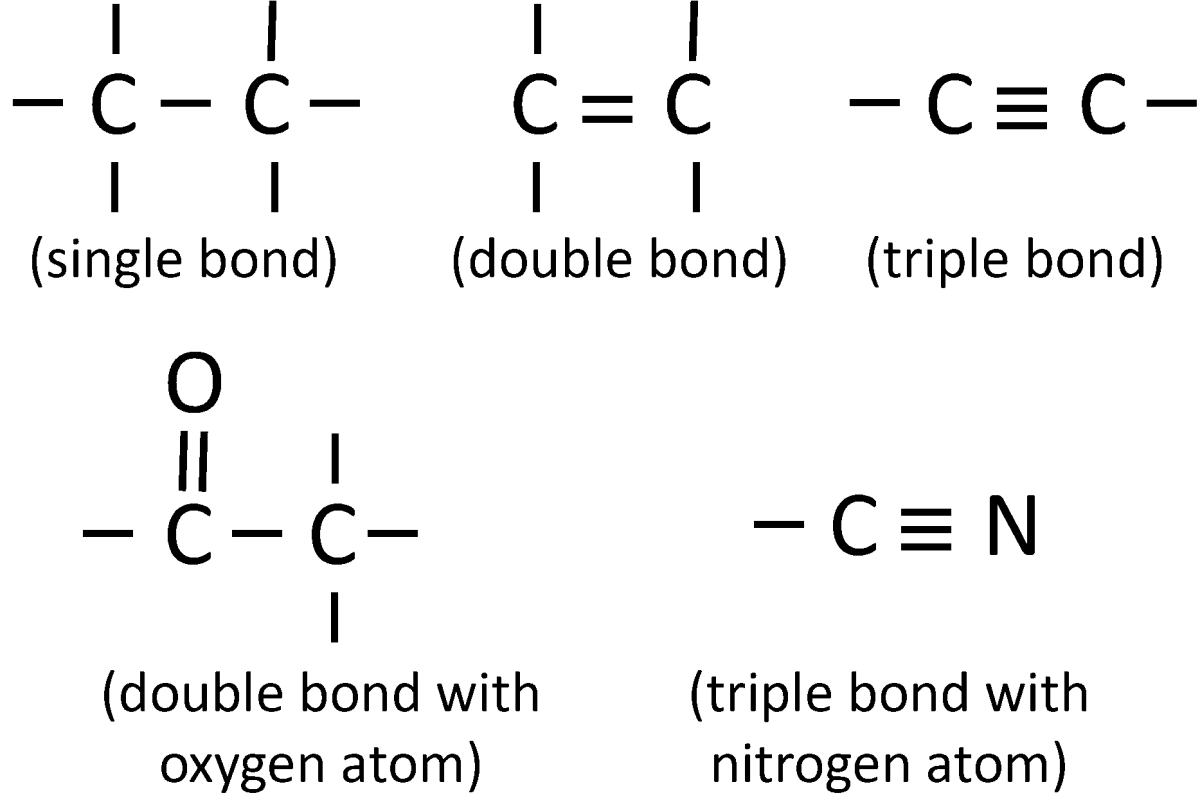
  1. Formation of single, double and triple covalent bonds — Carbon is tetravalent having a valency of four. In order to satisfy its valency, it forms single, double and triple covalent bonds by sharing one, two or three pairs of electrons respectively between two carbon atoms as well as with other atoms like oxygen, nitrogen and so on.
Unique nature of carbon atom - Formation of single, double and triple covalent bonds. Organic Chemistry, Simplified Chemistry Dalal Solutions ICSE Class 10
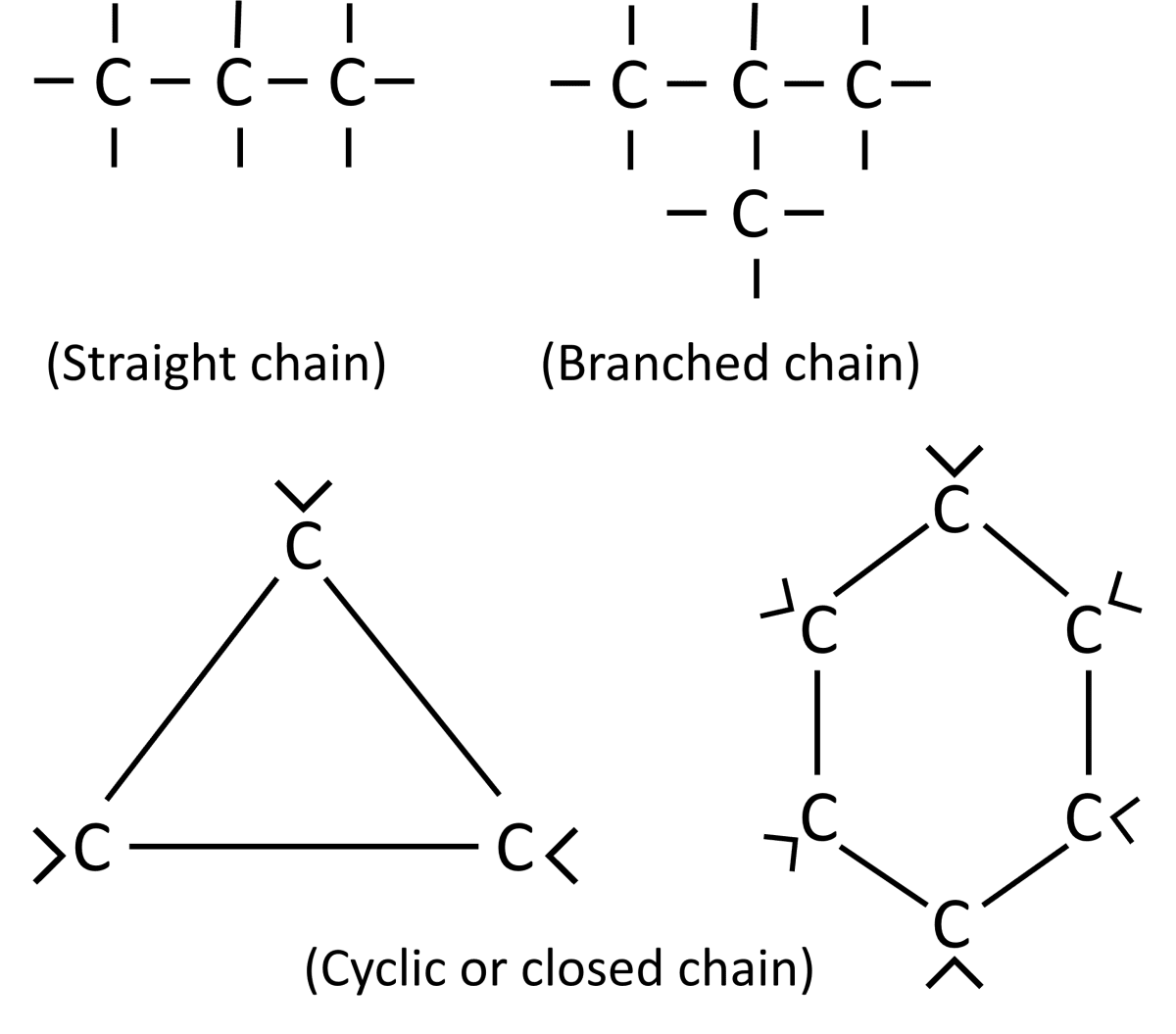
  1. Formation of straight chain, branched chain and cyclic compounds — The combination of carbon atoms with each other gives rise to straight or branched or cyclic and closed chains.
Unique nature of carbon atom - Formation of straight chain, branched chain and cyclic compounds. Organic Chemistry, Simplified Chemistry Dalal Solutions ICSE Class 10
3Additional Questions

State reasons for 'Justification of a separate branch' for 'Organic Chemistry'.

Show SolutionHide Solution↓

Due to unique nature of carbon atoms, which includes tetravalency, catenation and leading to formation of isomers, millions of organic compounds are known or synthesized [almost 90% of all known compounds are organic in nature]. Hence, a separate branch of chemistry called Organic Chemistry is required for the study of carbon and its compounds.

4Additional Questions

State five differences between the characteristics of organic and inorganic compounds. State how organic compounds are classified.

Show SolutionHide Solution↓

Five differences between the characteristics of organic and inorganic compounds:

CharacteristicOrganic CompoundInorganic Compound
Presence of carbonCarbon is a necessary element in every organic compound.Carbon is not an essential element in inorganic compounds.
Solubility in waterThey generally do not dissolve in water.They generally dissolve in water.
Solubility in organic solventsThey dissolve in organic solvents like alcohol, benzene and chloroform.All inorganic compounds do not dissolve in organic solvents.
Melting and boiling pointThey have low m.p. and b.p. and easily decompose on heating.They have high m.p. and b.p. and usually do not decompose on heating.
BondingThey form covalent bonds.Most of them form ionic bonds.

Classification of organic compounds:

Aliphatic : Open chain compoundsCyclic : Closed chain compounds
Hydrocarbons [compounds containing C & H only]Homocyclic - [only C atoms]
e.g., Aromatic compounds: Benzene
(a) Saturated - Alkanes e.g., EthaneHeterocyclic [C,O,N,S atoms]
e.g., Aromatic compounds - Pyridine
(b) Unsaturated - Alkenes e.g., Ethene,
Alkynes e.g., Ethyne
  
5Additional Questions

Explain the term 'Homologous series'. State the general characteristics of members of the series with special reference to molecular mass or molecular formula.

Show SolutionHide Solution↓

A Homologous series is a group of organic compounds having a similar structure and similar chemical properties in which the successive compounds differ by a CH2 group.

General Characteristics of members of homologous series are:

  1. General Formula — All members of a homologous series share the same general formula. (Same elements and same functional group). For example, the general formula for alkane is CnH2n+2, alkene is CnH2n, alkyne is CnH2n-2.
  2. Molecular Mass — Each member of the series differs from the preceding one by the addition of CH2 group and by molecular mass of 14 a.m.u [CH2 = 12 + 2 = 14].
  3. Physical Properties — The physical properties of the members change gradually showing gradation in properties as the number of carbon atoms per molecule increases, i.e. as molecular mass increases.
    For example, melting point, boiling point and the density of the successive members of the homologous series increase with increase in molecular mass.
  4. Chemical Properties — Members of a homologous series have similar chemical properties.
    For example, Methane reacts with chlorine to form methyl chloride:
    CH4 + Cl2 ⟶ CH3Cl + HCl
    Similarly, ethane reacts to form ethyl chloride
    C2H6 + Cl2 ⟶ C2H5Cl + HCl
  5. Preparation — All the members of a homologous series can be prepared by using the same general method of preparation.
6Additional Questions

Differentiate between — 'Molecular formula' and 'Structural formula' — of an organic compound. Write the 'condensed structural formula' and 'branched structural formula' of ethene.

Show SolutionHide Solution↓
Molecular FormulaStructural Formula
Indicates actual number of each kind of atoms in a molecule of the organic compound.Indicates arrangement of various atoms in a molecule of the organic compound.
Gives no information about the type and number of bonds.Chemical bonds are given along with the type of bonds for covalent bonds.

Condensed structural formula of ethene:

H2C=CH2

Branched structural formula of ethene:

Ethene structure. Organic Chemistry, Simplified Chemistry Dalal Solutions ICSE Class 10.
7Additional Questions

State what are 'Alkyl groups'. State the alkyl group of the parent alkane — methane and ethane.

Show SolutionHide Solution↓

All groups derived from parent alkane by loss of 'H' atom are called alkyl groups.

Alkyl group of Methane is Methyl (CH3)
Alkyl group of Ethane is Ethyl (C2H5)

8Additional Questions

State what are 'Functional groups'. Name the following functional groups —

C=C; -C≡C-; -OH; -CHO; -COOH; X = -F, -Cl, -Br, -I ; -C=O; -C-O-C-

with one example each of an organic compound with the respective functional group.

Show SolutionHide Solution↓

An atom, radical or bond which defines the structure of an organic compound and confers characteristic properties to it is known as a functional group.

GroupNameExample
C=Ccarbon-carbon
double bond
Ethene
(C2H4)
-C≡C-carbon-carbon
triple bond
Ethyne
(C2H2)
-OHHydroxylMethanol
(CH3OH)
-CHOAldehydicMethanal
(HCHO)
-COOHCarboxylicMethanoic acid
(HCOOH)
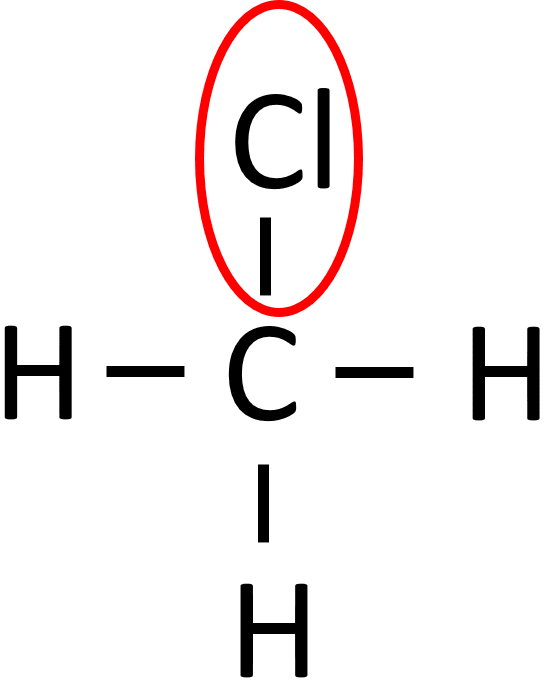
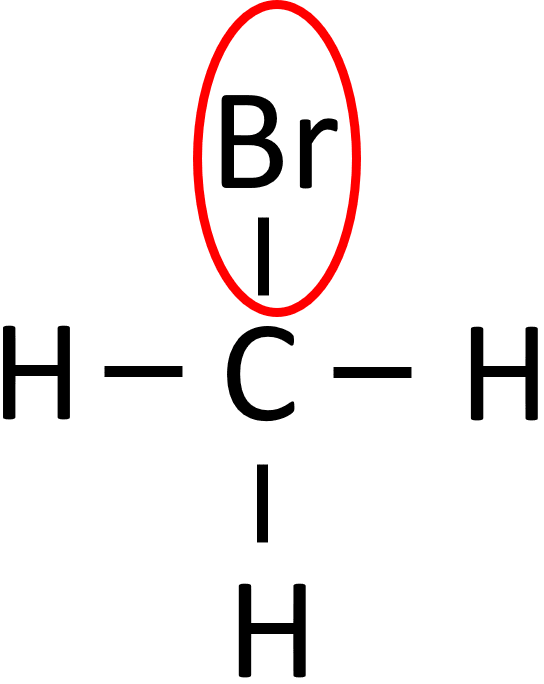
X = -F, -Cl, -Br, -IHaloChloro Methane
(CH3Cl)
-C=OKetonicPropanone
(CH3-CO-CH3)
-C-O-C-AlkoxyMethoxy Methane
(CH3-O-CH3)
9Additional Questions

Explain the terms — 'Isomers' and 'Isomerism'. State the 'Characteristics of isomers' with reference to —

Differentiate between — 'Chain isomerism' and 'Position isomerism ' — with suitable examples.

Show SolutionHide Solution↓

Isomers & Isomerism — Organic compounds having the same molecular formula but differing in molecular arrangement or in structural formula are called Isomers and the phenomenon is called Isomerism.

Characteristics of Isomers:

  1. Properties of Isomers — Isomers of the same homologous series have similar chemical properties but differ in physical properties.
  2. Number of Isomers — Number of Isomers increases with increase in number of carbon atoms. [e.g., C4H10 has two isomers, C5H12 has three isomers]

Difference between Chain Isomerism and Position Isomerism:
Chain Isomerism occurs due to the difference in arrangemnet of Carbon atoms in the chain whereas Position Isomerism occurs due to the difference in position of functional group.

Isomers of Pentane exhibit chain isomerism:

n-pentane

n-pentane isomer of Pentane exhibits chain isomerism. Organic Chemistry, Simplified Chemistry Dalal Solutions ICSE Class 10

iso-pentane

iso-pentane isomer of Pentane exhibits chain isomerism. Organic Chemistry, Simplified Chemistry Dalal Solutions ICSE Class 10

Isomers of Butyne exhibit position isomerism:

but-1-yne

but-1-yne isomer of Butyne exhibits position isomerism. Organic Chemistry, Simplified Chemistry Dalal Solutions ICSE Class 10

but-2-yne

but-2-yne isomer of Butyne exhibits position isomerism. Organic Chemistry, Simplified Chemistry Dalal Solutions ICSE Class 10
10Additional Questions

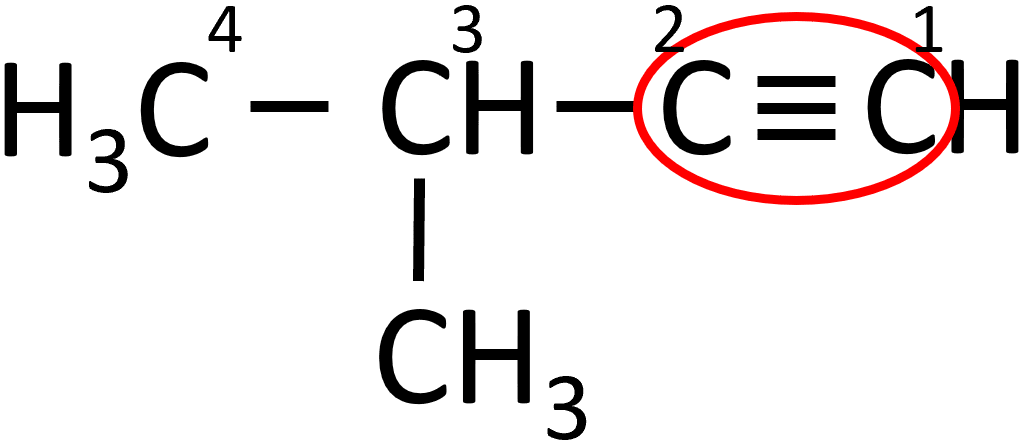
Explain the term – 'Nomenclature'. State it's need with reference to organic compounds. State the basic rules of Nomenclature by the trivial system with suitable examples. Explain the longest chain rule and the smallest number for functional groups rule of Nomenclature by the IUPAC system with suitable examples.

Show SolutionHide Solution↓

Nomenclature is the system of assignment of names to organic compounds.

Need for Nomenclature — Large number of organic compounds due to:

  1. Varying molecular structures of organic compounds.
  2. Isomerism in organic compounds

increases need for correct, methodical and systematic naming of each compound.

Basic rules of Nomenclature by the trivial system:

The basis of naming organic compounds by the trivial system is its :

  1. Source
  2. Properties
  3. Latin or greek origin of compounds

For example,
Methane (CH4) was named marsh gas since it was obtained from marshy places.
The name Acetic acid is derived from it's source 'vinegar' [Latin : acetum]

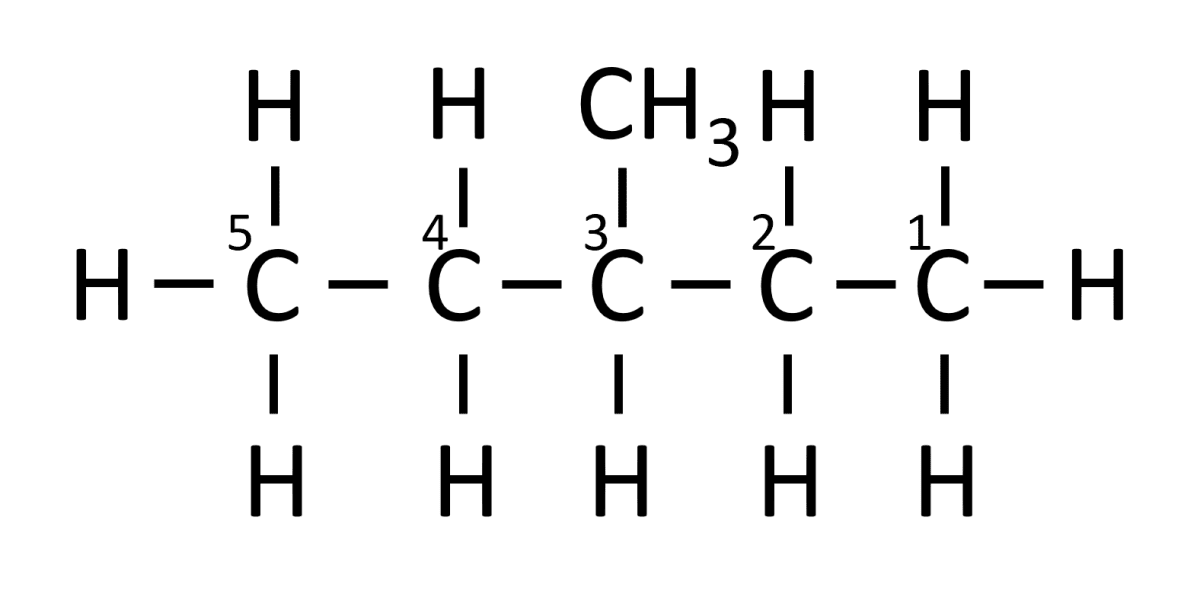
Longest Chain Rule — The longest continuous chain of 'C' atoms, known as parent chain is selected. The longest chain need not be straight.
For example,

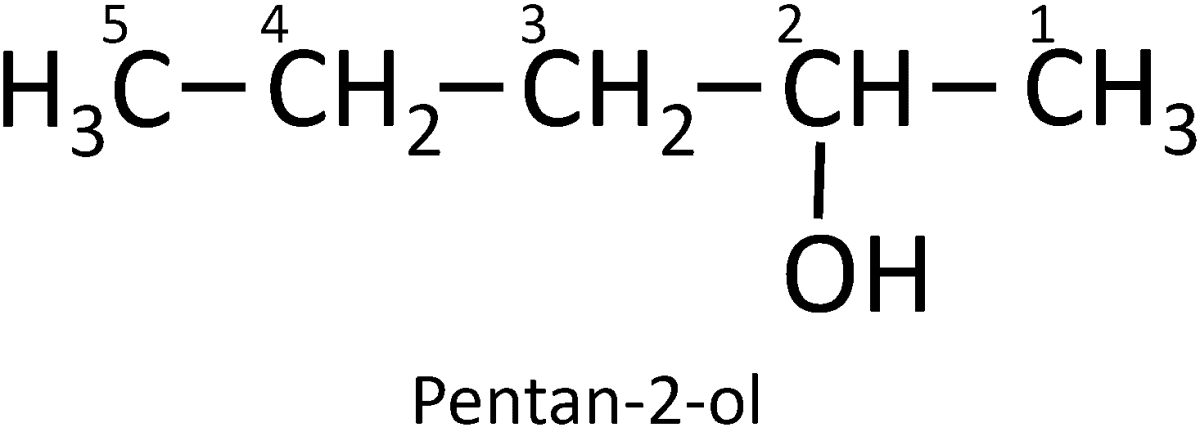
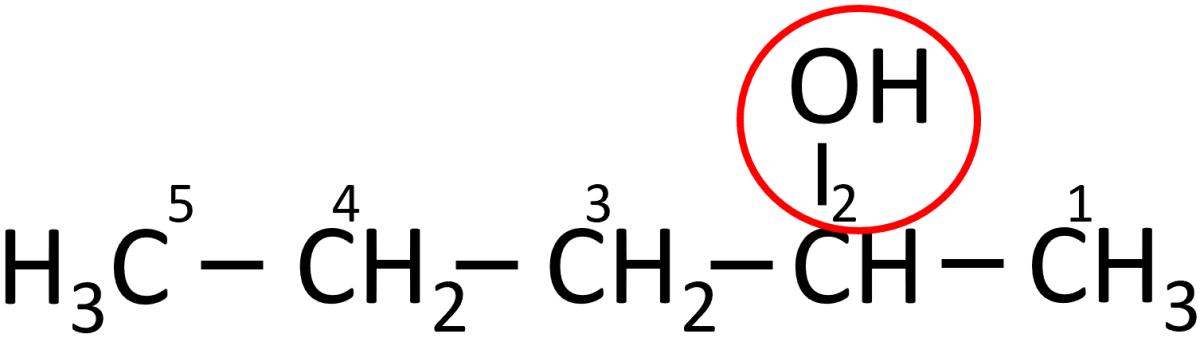
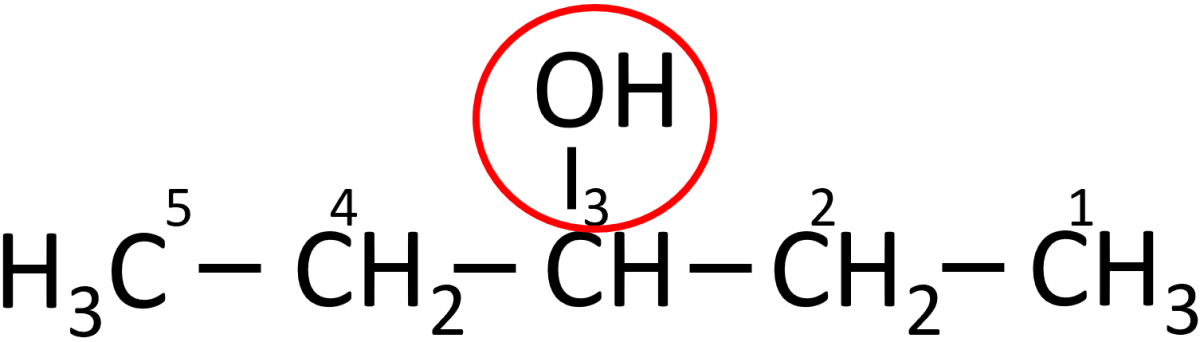
(i) The longest chain is of 5 carbon atoms, so root word is 'pent'

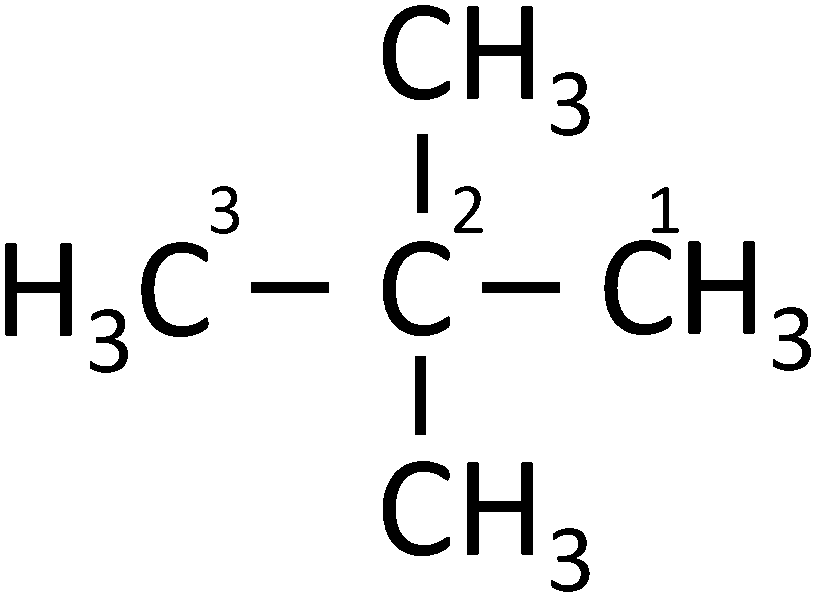
Explain the longest chain rule and the smallest number for functional groups rule of Nomenclature by the IUPAC system with suitable examples. Organic Chemistry, Simplified Chemistry Dalal Solutions ICSE Class 10

(ii) Longest chain is of 7 carbon atoms, so the root word is 'hept'. The reamining carbon atom (unnumbered) is considered a branch.

Explain the longest chain rule and the smallest number for functional groups rule of Nomenclature by the IUPAC system with suitable examples. Organic Chemistry, Simplified Chemistry Dalal Solutions ICSE Class 10

Smallest number for functional groups rule — In case, any functional group is also present in the chain, then the carbon atom are numbered in such a way that the functional group gets the smallest possible number.
For example,

Explain the longest chain rule and the smallest number for functional groups rule of Nomenclature by the IUPAC system with suitable examples. Organic Chemistry, Simplified Chemistry Dalal Solutions ICSE Class 10
11Additional Questions

Explain the term – 'Hydrocarbons'. State the two main groups of hydrocarbons with examples. Draw a chart differentiating — 'Alkanes, Alkenes and Alkynes' — with respect to:

Show SolutionHide Solution↓

Hydrocarbons — Hydrocarbons are compounds that are made up only of carbon and hydrogen atoms.

Classification of Hydrocarbons — Hydrocarbons are sub-divided into two main groups, the aliphatic (open) and cyclic (closed) chain compounds. The open chain compounds or aliphatic hydrocarbons are further sub-divided into saturated hydrocarbons and unsaturated hydrocarbons. Example of saturated hydrocarbons is the homologous series of Alkanes. Examples of unsaturated hydrocarbons are the homologous series of Alkenes and Alkynes.

   AlkanesAlkenesAlkynes
General formulaCnH2n+2CnH2nCnH2n-2
Characteristic bondContains a single C – C covalent bondContains a double C = C covalent bondContains a triple C≡C covalent bond
IUPAC Name of
first 3 members
Methane,
Ethane,
Propane
Ethene,
Propene,
1-Butene
Ethyne,
Propyne,
1-Butyne
Common Name of
first 3 members
Methane,
Ethane,
Propane
Ethylene,
Propylene,
1-Butylene
Acetylene,
Methyl acetylene,
Ethyl acetylene
Condensed
Structural
Formula
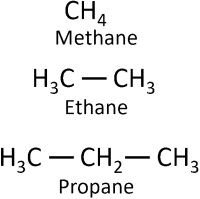
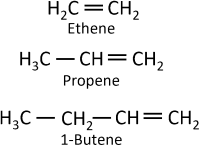
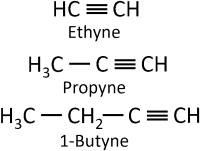
Condensed Structural Formula of Methane, Ethane, Propane Simplified Chemistry Dalal Solutions ICSE Class 10Condensed Structural Formula of Ethene, Propene, 1-Butene Simplified Chemistry Dalal Solutions ICSE Class 10Condensed Structural Formula of Ethyne, Propyne, 1-Butyne Simplified Chemistry Dalal Solutions ICSE Class 10
Branched
Structural
Formula
Branched Structural Formula of Methane, Ethane, Propane Simplified Chemistry Dalal Solutions ICSE Class 10Branched Structural Formula of Ethene, Propene, 1-Butene Simplified Chemistry Dalal Solutions ICSE Class 10Branched Structural Formula of Ethyne, Propyne, 1-Butyne Simplified Chemistry Dalal Solutions ICSE Class 10
Availability of electronsNot availableAvailableAvailable
ReactivityLess reactiveMore reactiveMost reactive
Characteristic ReactionSubstitution reactionAddition reactionAddition reaction
12Additional Questions

Draw the structural formula of each of the following :

AlkaneAlkeneAlkyne
(a) Methane(a) No corresponding alkene(a) No corresponding alkyne
(b) Ethane(b) Ethene(b) Ethyne
(c) Propane(c) Propene(c) Propyne
(d) Butane
-chain isomers
(i) 1-butane [n-butane]
(ii) 2-methyl propane [iso-butane]
(d) Butene
-Position isomers
(i) 1-butene (ii) 2-butene
- Chain isomer
(i) 2-methyl prop-1-ene
(d) Butyne
-Position isomers
(i) 1-butyne (ii) 2-butyne
(e) Pentane
- chain isomers
(i) 1-pentane [n-pentane]
(ii) 2-methyl butane [iso-pentane]
(iii) 2-2-dimethylpropane [neo-pentane]
Pentene
- Position isomers
(i) 1-pentene
(ii) 2-pentene
-Chain isomer
(i) 2-methyl but-1-ene
(ii) 3-methyl but-1-ene
(e) Pentyne
- Position isomers
(i) 1-pentyne
(ii) 2-pentyne
-Chain isomer
3-methyl but-1-yne
AlcoholsAldehydesCarboxylic acids
(a) Methanol [methyl alcohol](a) Methanal [formaldehyde](a) Methanoic acid [formic acid]
(b) Ethanol [ethyl alcohol](b) Ethanal [acetaldehyde](b) Ethanoic acid [acetic acid]
(c) Propanol
- Position isomers
(i) 1-propanol [n-propylalcohol]
(ii) 2-propanol [iso-propylalcohol]
(c) Propanal [propionaldehyde](c) Propanoic acid [propionic acid]
(d) Butanol
- Position isomers
(i) 1-butanol
(ii) 2-butanol
- Chain isomer
(i) 2-methyl propan 1 -ol
(ii) 2-methyl propan 2 -ol
(d) Butanal [butraldehyde](d) Butanoic acid [butyric acid]
- Chain isomer
(i) 2-methyl propanoic acid [iso-butyriac acid]
(e) Pentanol
-Position isomers
(i) 1-pentanol
(ii) 2-pentanol
(iii) 3-pentanol
  
KetonesAlkyl HalidesEtherEster
(a) Propanone [acetone](a) Monochloro methane [methyl chloride](a) Methoxy methane [dimethyl ether](a) Methyl methanoate [methyl formate]
(b) 2-Butanone [ethyl methyl ketone](b) Bromoethane [ethyl bromide](b) Methoxy ethane [ethyl methyl ether](b) Methyl ethanoate [methyl acetate]
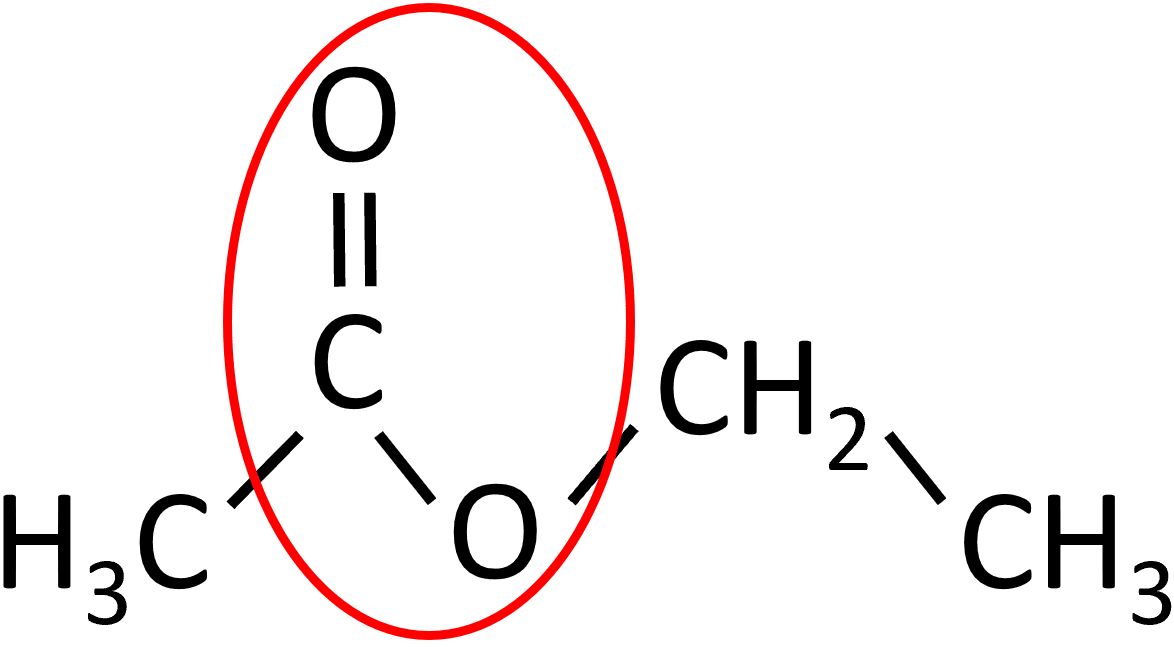
(c) 3-Pentanone [diethyl ketone](c) Iodomethane [methyl iodide](c) Ethoxy ethane [diethyl ether](c) Ethyl ethanoate [ethyl acetate]
Show SolutionHide Solution↓

The structural formulae are shown below:

Alkane

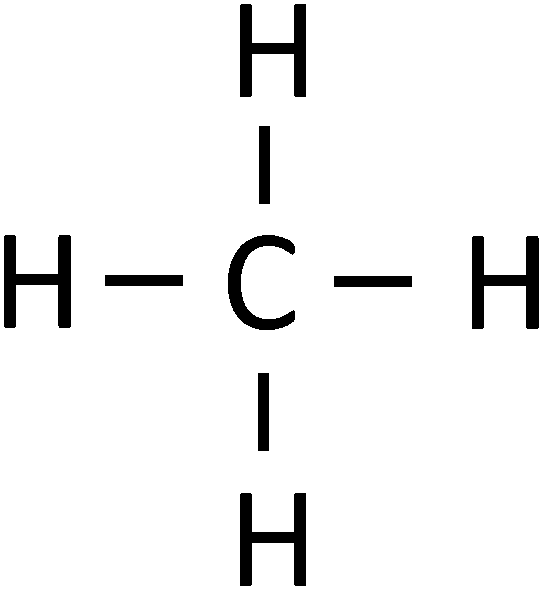
(a) Methane

Structural formula for Methane. Organic Chemistry, Simplified Chemistry Dalal Solutions ICSE Class 10

(b) Ethane

Structural formula for Ethane. Organic Chemistry, Simplified Chemistry Dalal Solutions ICSE Class 10

(c) Propane

Structural formula for Propane. Organic Chemistry, Simplified Chemistry Dalal Solutions ICSE Class 10

(d) Butane - Chain isomers

(i) 1-butane (n-butane)

Give the structural formulae of n-butane. Organic Chemistry, Simplified Chemistry Dalal Solutions ICSE Class 10

(ii) 2-methyl propane [iso-butane]

Give the structural formulae of 2-methyl propane. Organic Chemistry, Simplified Chemistry Dalal Solutions ICSE Class 10

(e) Pentane - Chain isomers

(i) 1-pentane [n-pentane]

Structural formula for n-pentane. Organic Chemistry, Simplified Chemistry Dalal Solutions ICSE Class 10

(ii) 2-methyl butane [iso-pentane]

Structural formula for 2-methyl butane. Organic Chemistry, Simplified Chemistry Dalal Solutions ICSE Class 10

(iii) 2-2-dimethylpropane [neo-pentane]

Structural formula for 2-2-dimethylpropane. Organic Chemistry, Simplified Chemistry Dalal Solutions ICSE Class 10

Alkene

(b) Ethene

Structural formula for Ethene. Organic Chemistry, Simplified Chemistry Dalal Solutions ICSE Class 10

(c) Propene

Structural formula for Propene. Organic Chemistry, Simplified Chemistry Dalal Solutions ICSE Class 10

(d) Butene - Position isomers

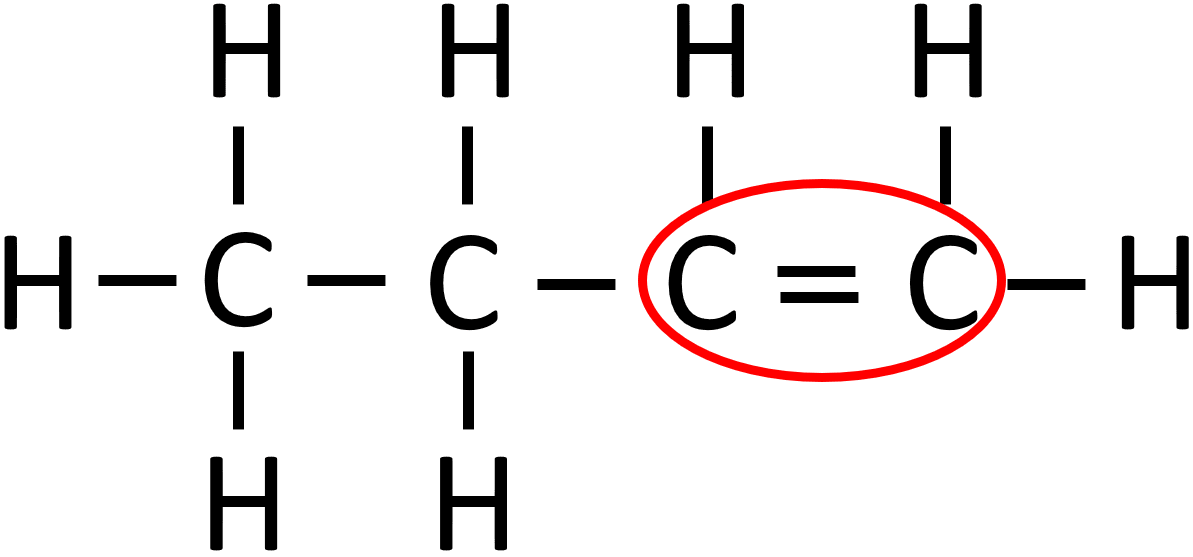
(i) 1-butene

Structural formula for 1-butene. Organic Chemistry, Simplified Chemistry Dalal Solutions ICSE Class 10

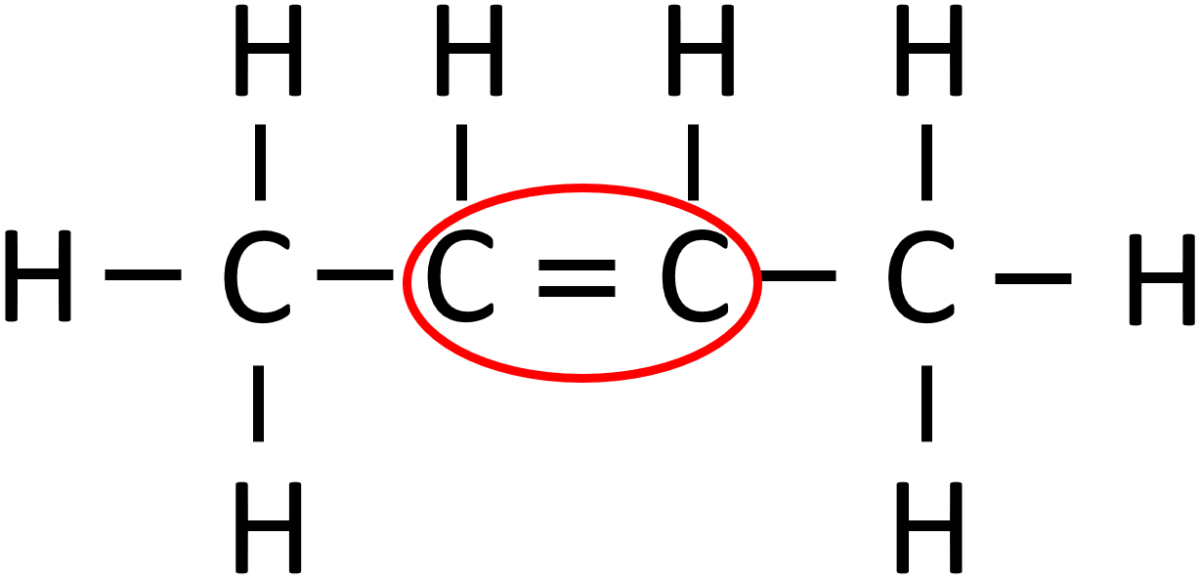
(ii) 2-butene

Structural formula for 2-butene. Organic Chemistry, Simplified Chemistry Dalal Solutions ICSE Class 10

(d) Butene - Chain isomers

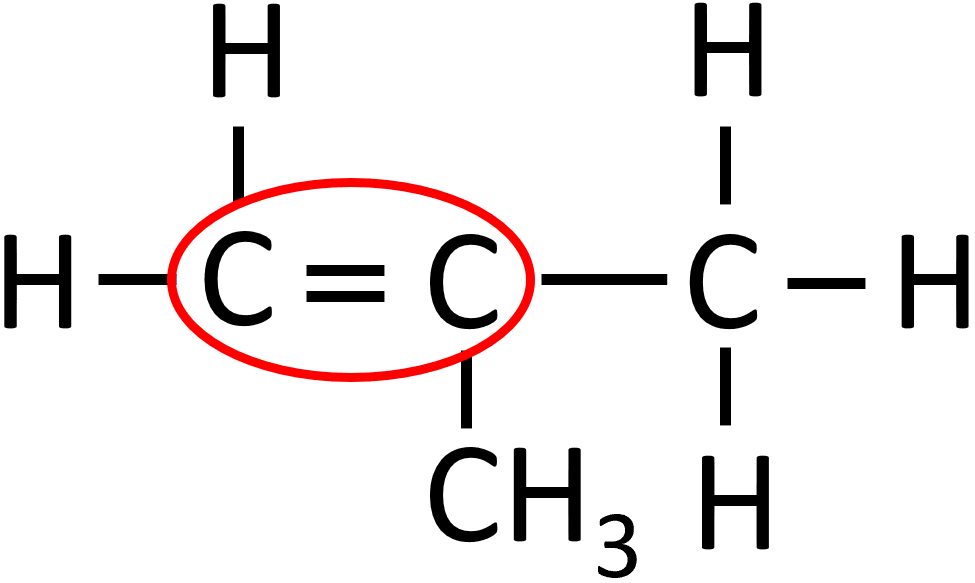
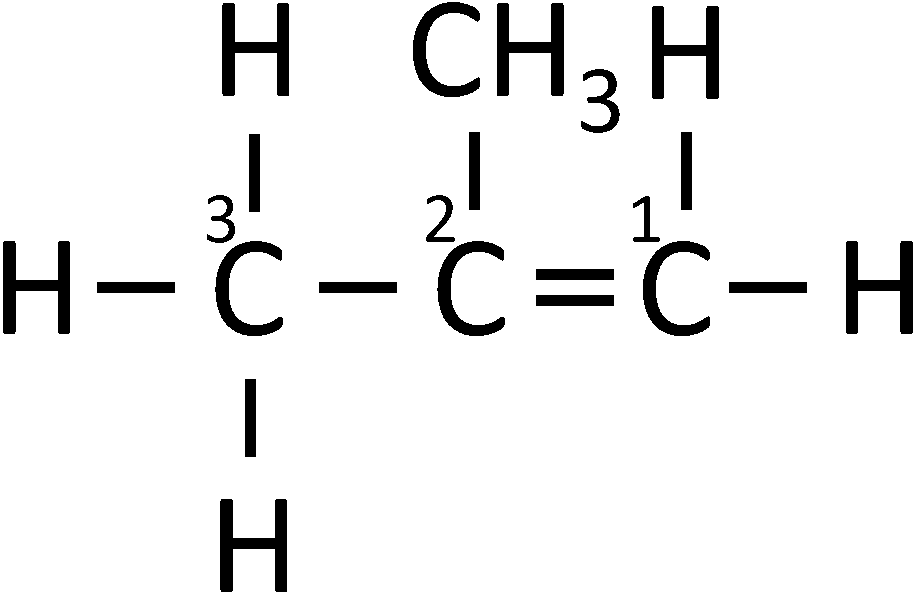
(i) 2-methyl prop-1-ene

Structural formula for 2-methyl prop-1-ene. Organic Chemistry, Simplified Chemistry Dalal Solutions ICSE Class 10

(e) Pentene - Position isomers

(i) 1-pentene

Structural formula for 1-pentene. Organic Chemistry, Simplified Chemistry Dalal Solutions ICSE Class 10

(ii) 2-pentene

Structural formula for 2-pentene. Organic Chemistry, Simplified Chemistry Dalal Solutions ICSE Class 10

(e) Pentene - Chain isomers

(i) 2-methyl but-1-ene

Structural formula for 2-methyl but-1-ene. Organic Chemistry, Simplified Chemistry Dalal Solutions ICSE Class 10

(ii) 3-methyl but-1-ene

Structural formula for 3-methyl but-1-ene. Organic Chemistry, Simplified Chemistry Dalal Solutions ICSE Class 10

Alkyne

(b) Ethyne

Structural formula for Ethyne. Organic Chemistry, Simplified Chemistry Dalal Solutions ICSE Class 10

(c) Propyne

Structural formula for Propyne. Organic Chemistry, Simplified Chemistry Dalal Solutions ICSE Class 10

(d) Butyne - Position isomers

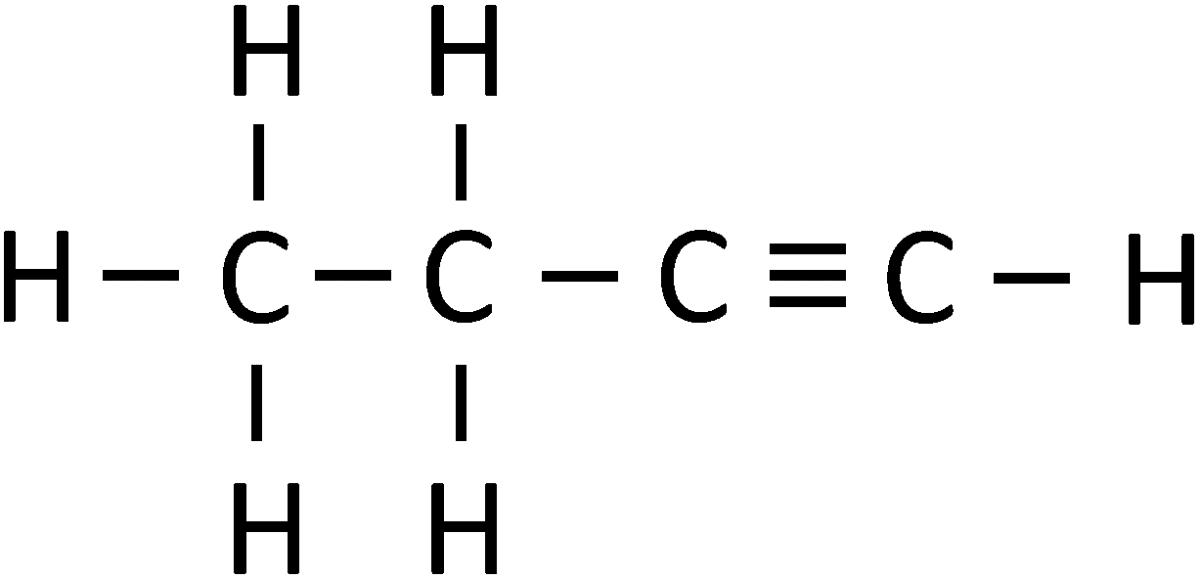
(i) 1-butyne

Structural formula of 1-butyne. Organic Chemistry, Simplified Chemistry Dalal Solutions ICSE Class 10

ii) 2-butyne

Structural formula of 2-butyne. Organic Chemistry, Simplified Chemistry Dalal Solutions ICSE Class 10

(e) Pentyne — Position isomers

(i) 1-pentyne

Structural formula of 1-pentyne. Organic Chemistry, Simplified Chemistry Dalal Solutions ICSE Class 10.

(ii) 2-pentyne

Structural formula of 2-pentyne. Organic Chemistry, Simplified Chemistry Dalal Solutions ICSE Class 10.

(e) Pentyne — Chain isomer

(i) 3-methyl but-1-yne

Structural formula of 3-methyl but-1-yne. Organic Chemistry, Simplified Chemistry Dalal Solutions ICSE Class 10.

Alcohol

(a) Methanol [methyl alcohol]

Structural formula of Methanol. Organic Chemistry, Simplified Chemistry Dalal Solutions ICSE Class 10.

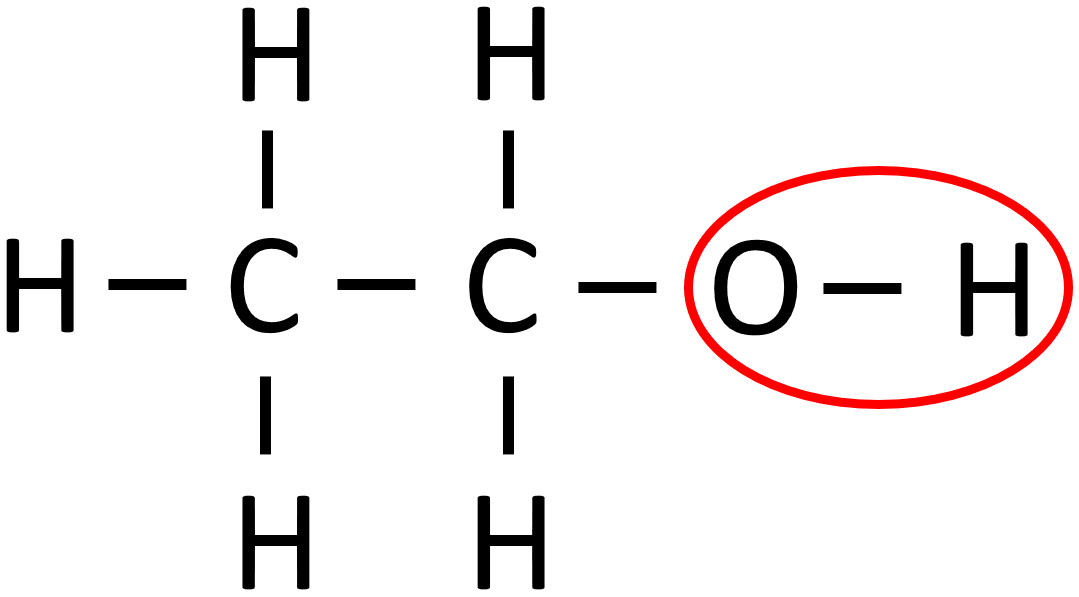
(b) Ethanol [ethyl alcohol]

Structural formula of Ethanol. Organic Chemistry, Simplified Chemistry Dalal Solutions ICSE Class 10.

(c) Propanol — Position isomers

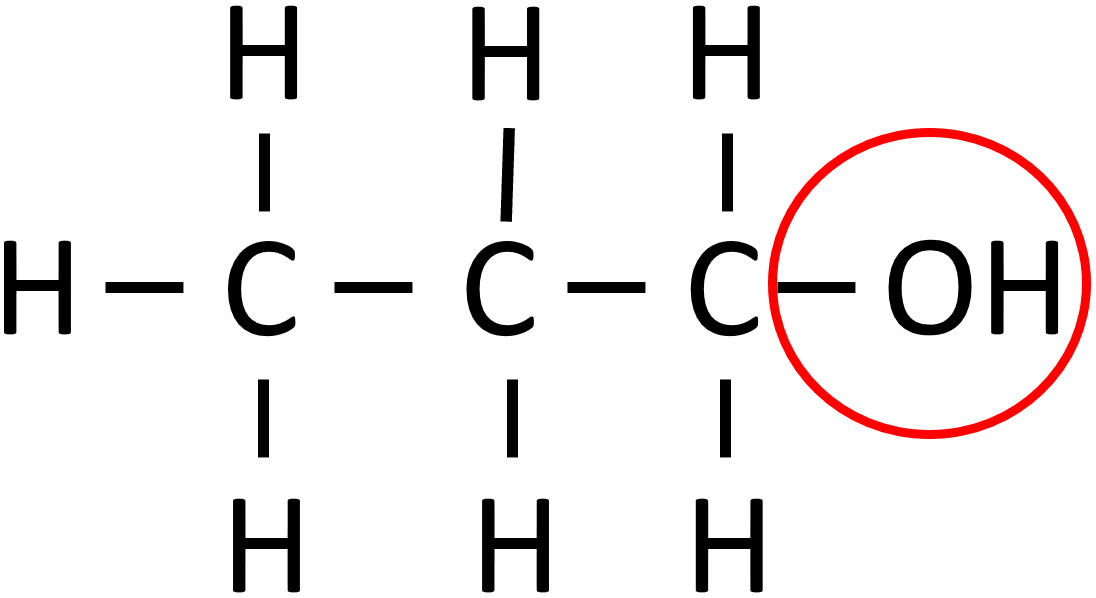
(i) 1-propanol [n-propylalcohol]

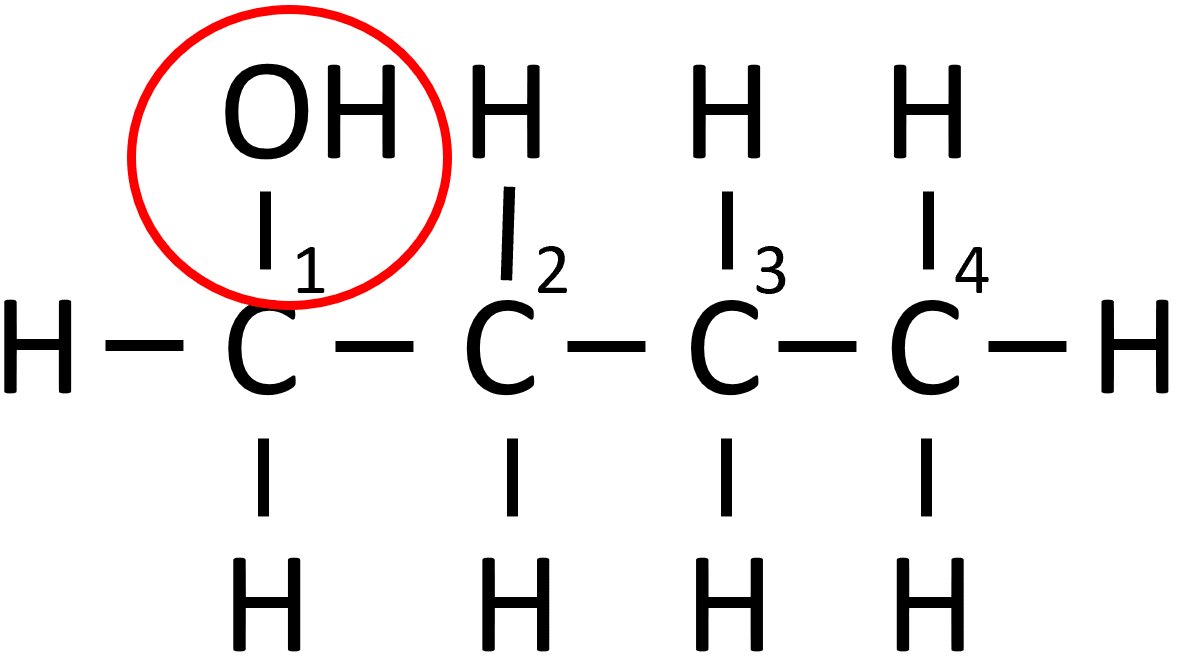
Structural formula of 1-propanol. Organic Chemistry, Simplified Chemistry Dalal Solutions ICSE Class 10.

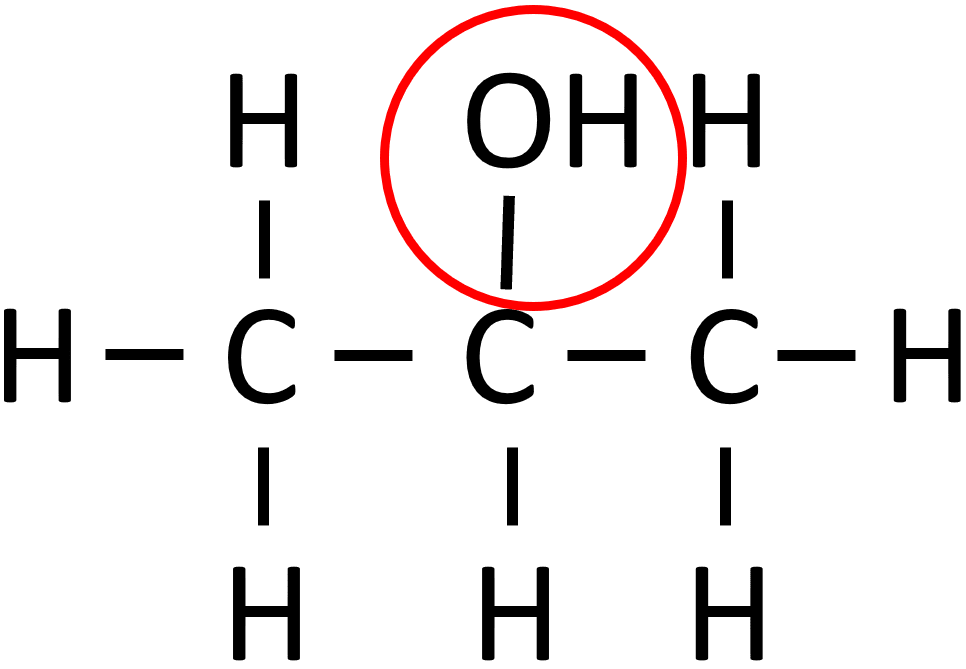
(ii) 2-propanol [iso-propylalcohol]

Structural formula of 2-propanol. Organic Chemistry, Simplified Chemistry Dalal Solutions ICSE Class 10.

(d) Butanol — Position isomers

(i) 1-butanol

Structural formula of 2-propanol. Organic Chemistry, Simplified Chemistry Dalal Solutions ICSE Class 10.

(ii) 2-butanol

Structural formula of 2-butanol. Organic Chemistry, Simplified Chemistry Dalal Solutions ICSE Class 10.

(d) Butanol — Chain isomers

(i) 2-methyl propan-1-ol

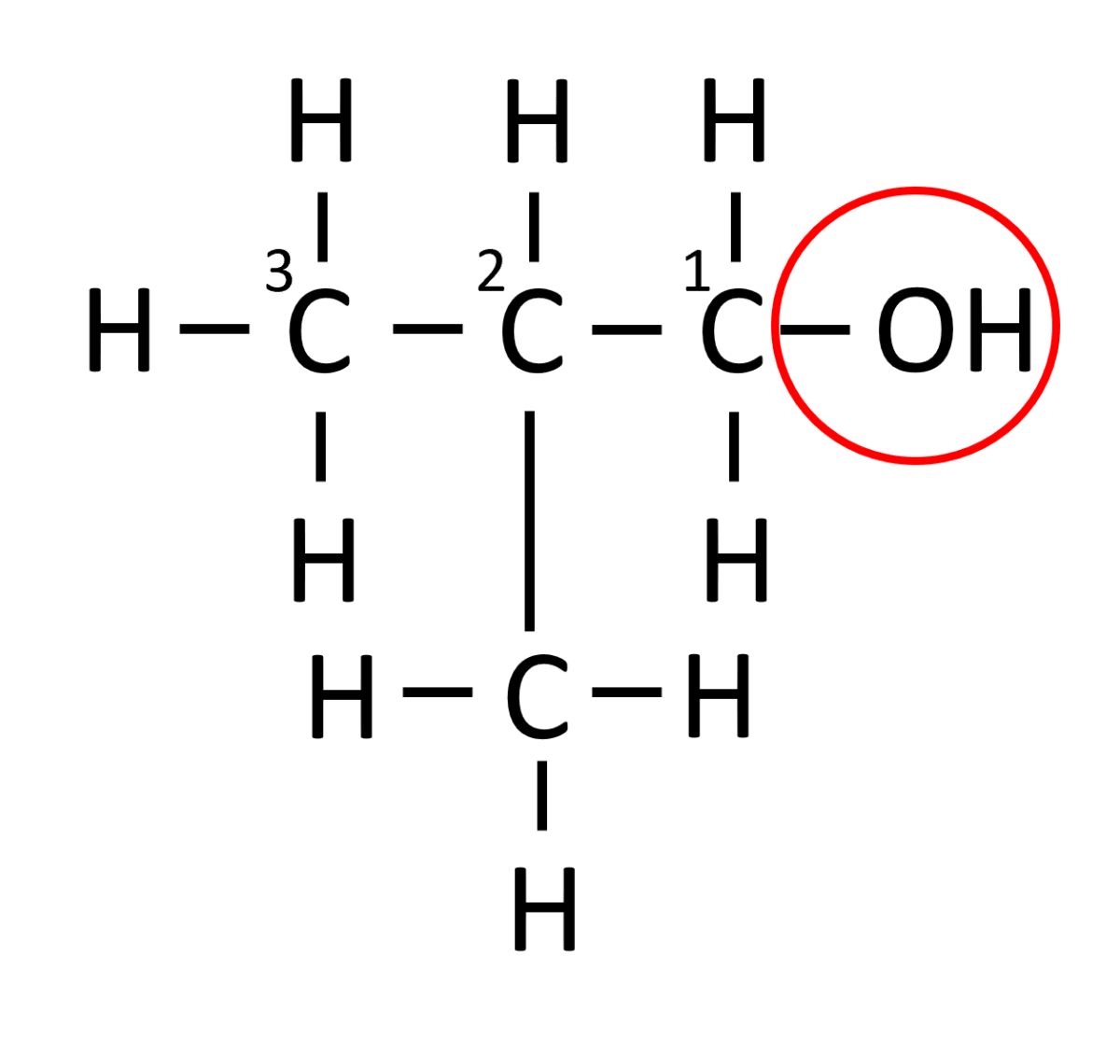
Structural formula of 2-methyl propan-1-ol. Organic Chemistry, Simplified Chemistry Dalal Solutions ICSE Class 10

(ii) 2-methyl propan-2-ol

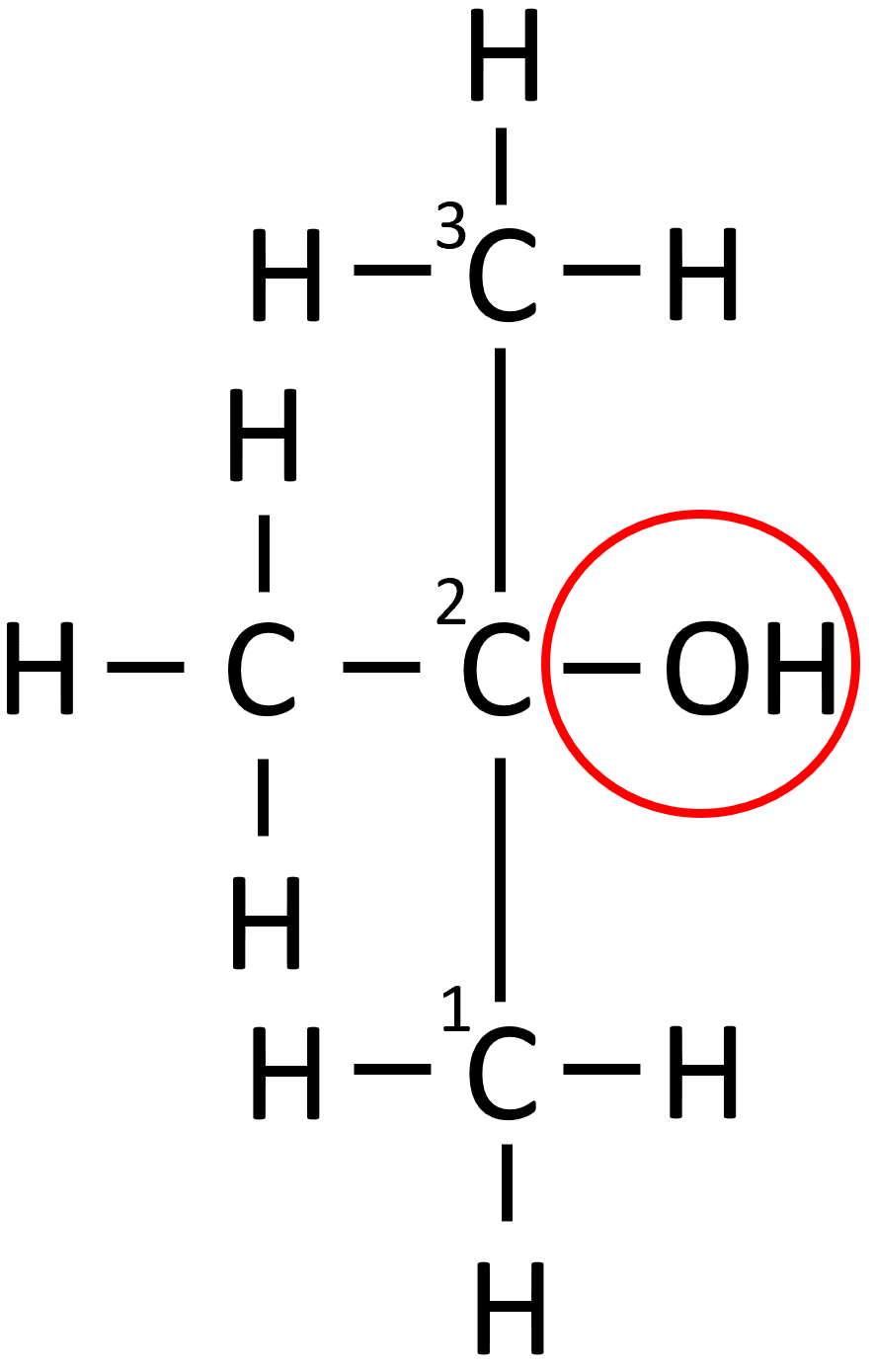
Structural formula of 2-methyl propan-2-ol. Organic Chemistry, Simplified Chemistry Dalal Solutions ICSE Class 10

(e) Pentanol — Position isomers

(i) 1-pentanol

Structural formula of 1-pentanol. Organic Chemistry, Simplified Chemistry Dalal Solutions ICSE Class 10

(ii) 2-pentanol

Structural formula of 2-pentanol. Organic Chemistry, Simplified Chemistry Dalal Solutions ICSE Class 10

(iii) 3-pentanol

Structural formula of 3-pentanol. Organic Chemistry, Simplified Chemistry Dalal Solutions ICSE Class 10

Aldehydes

(a) Methanal [formaldehyde]

Structural formula of Methanal. Organic Chemistry, Simplified Chemistry Dalal Solutions ICSE Class 10

(b) Ethanal [acetaldehyde]

Structural formula of Ethanal. Organic Chemistry, Simplified Chemistry Dalal Solutions ICSE Class 10

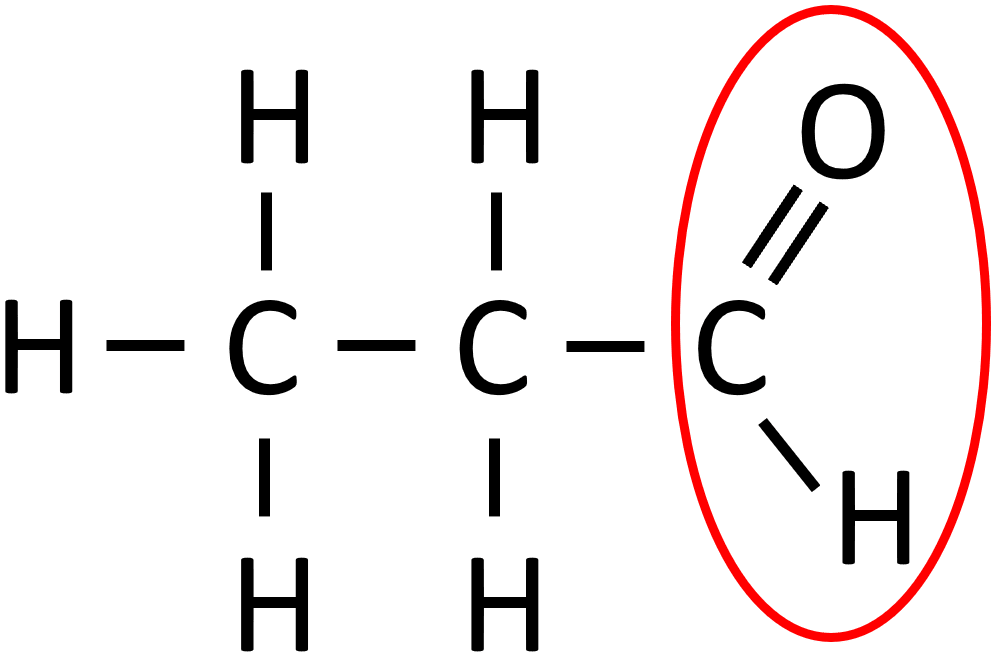
(c) Propanal [propionaldehyde]

Structural formula of Propanal. Organic Chemistry, Simplified Chemistry Dalal Solutions ICSE Class 10.

(d) Butanal [butraldehyde]

Structural formula of Butanal. Organic Chemistry, Simplified Chemistry Dalal Solutions ICSE Class 10.

Carboxylic acids

(a) Methanoic acid [formic acid]

Structural formula of Methanoic acid. Organic Chemistry, Simplified Chemistry Dalal Solutions ICSE Class 10.

(b) Ethanoic acid [acetic acid]

Structural formula of Ethanoic acid. Organic Chemistry, Simplified Chemistry Dalal Solutions ICSE Class 10.

(c) Propanoic acid [propionic acid]

Structural formula of Propanoic acid. Organic Chemistry, Simplified Chemistry Dalal Solutions ICSE Class 10.

(d) Butanoic acid [butyric acid] - Chain isomer

(i) 2-methyl propanoic acid [iso-butyriac acid]

Structural formula of 2-methyl Propanoic acid. Organic Chemistry, Simplified Chemistry Dalal Solutions ICSE Class 10.

Ketones

(a) Propanone [acetone]

Structural formula of Propanone. Organic Chemistry, Simplified Chemistry Dalal Solutions ICSE Class 10.

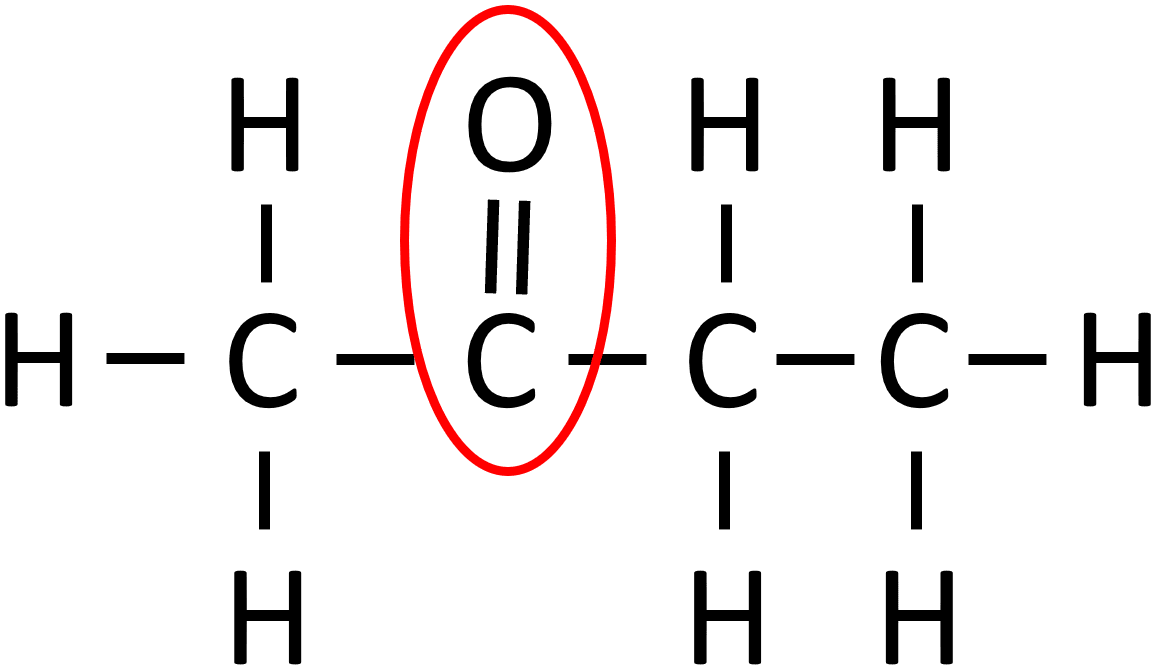
(b) 2-Butanone [ethyl methyl ketone]

Structural formula of 2-Butanone. Organic Chemistry, Simplified Chemistry Dalal Solutions ICSE Class 10.

(c) 3-Pentanone [diethyl ketone]

Structural formula of 3-Pentanone. Organic Chemistry, Simplified Chemistry Dalal Solutions ICSE Class 10.

Alkyl Halides

(a) Monochloro methane [methyl chloride]

Structural formula of Monochloro methane. Organic Chemistry, Simplified Chemistry Dalal Solutions ICSE Class 10.

(b) Bromoethane [ethyl bromide]

Structural formula of Bromoethane. Organic Chemistry, Simplified Chemistry Dalal Solutions ICSE Class 10.

(c) Iodomethane [methyl iodide]

Structural formula of Iodomethane. Organic Chemistry, Simplified Chemistry Dalal Solutions ICSE Class 10.

Ether

(a) Methoxy methane [dimethyl ether]

Structural formula of Methoxy methane. Organic Chemistry, Simplified Chemistry Dalal Solutions ICSE Class 10.

(b) Methoxy ethane [ethyl methyl ether]

Structural formula of Methoxy ethane. Organic Chemistry, Simplified Chemistry Dalal Solutions ICSE Class 10.

(c) Ethoxy ethane [diethyl ether]

Structural formula of Ethoxy ethane. Organic Chemistry, Simplified Chemistry Dalal Solutions ICSE Class 10.

Ester

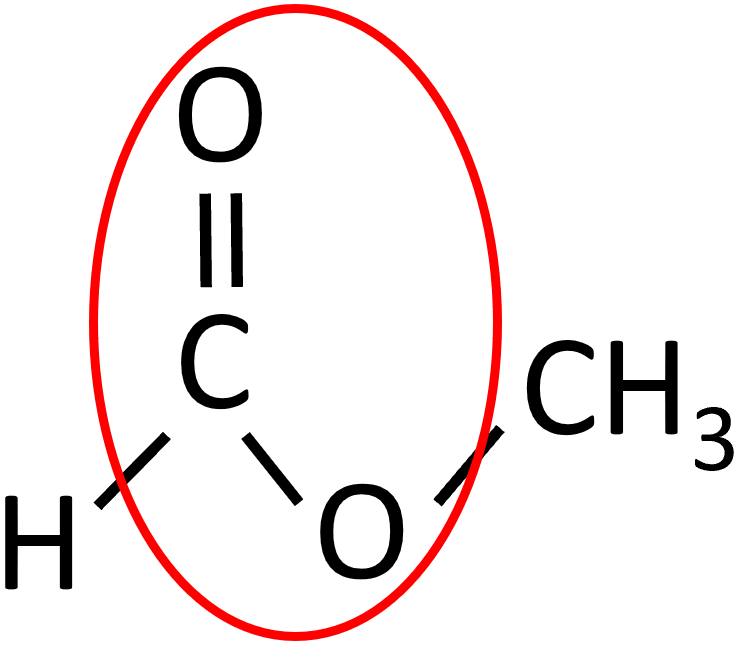
(a) Methyl methanoate [methyl formate]

Structural formula of Methyl methanoate. Organic Chemistry, Simplified Chemistry Dalal Solutions ICSE Class 10.

(b) Methyl ethanoate [methyl acetate]

Structural formula of Methyl ethanoate. Organic Chemistry, Simplified Chemistry Dalal Solutions ICSE Class 10.

(c) Ethyl ethanoate [ethyl acetate]

Structural formula of Methyl ethanoate. Organic Chemistry, Simplified Chemistry Dalal Solutions ICSE Class 10.
13Additional Questions

Give the IUPAC name of the compounds numbered (i) to (v).

Give the IUPAC name of the compounds numbered (i) to (v). Organic Chemistry, Simplified Chemistry Dalal Solutions ICSE Class 10.
Show SolutionHide Solution↓

(i) 3-Methyl butanol

(ii) 2, 2-dimethyl propanol

(iii) 3-Bromo 2-methyl butanoic acid

(iv) 3-Methyl butanal

(v) 3-Methyl butan 2-one

14Additional Questions

Give balanced equations for the laboratory preparations of - Alkanes, Alkenes, Alkynes, Alcohols and Acids.

Sl.
No.
Compoundfrom:by/from:
(a)Methane [CH4]Sodium ethanoate [sodium acetate]by -decarboxylation
(b)Methane [CH4]Iodo methane [methyl iodide]from -an alkylhalide
(c)Ethane [C2H6]Sodium propanoate [sodium propionate]by -decarboxylation
(d)Ethane [C2H6]Bromo ethane [ethyl bromide]from -alkylhalide
(e)Ethene [C2H4]from ethanol [ethyl alcohol]by -dehydration
(f)Ethene [C2H4]Bromo ethane [ethyl bromide]by - dehydrohalogenation
(g)Ethyne [C2H2]from calcium carbidefrom -a calcium compound
(h)Ethyne [C2H2]1,2, dibromoethane [ethylene dibromide]by -dehydrohalogenation
(i)Ethanol [C2H5OH]Bromo ethane [ethyl bromide]by - hydrolysis of alkylhalide
(j)Ethanol [C2H5OH]Ethene [ethylene]by - hydration of ethene
(k)Ethanoic acid [CH3COOH]Ethanol [ethyl alcohol]by - oxidation of alcohol
Show SolutionHide Solution↓

(a) Methane [CH4] by decarboxylation :

$\underset{\text{ sodium acetate}}{\text{CH}_3\text{.COONa}} + \underset{\text{sodalime}}{\text{NaOH}} \xrightarrow[\Delta]{\text{CaO}} \underset{\text{methane}}{\text{C}\text{H}_4} + \text{Na}_2\text{CO}_3$

(b) Methane [CH4] from alkyl halide :

$\underset{\text{ methyl iodide}}{\text{CH}_3\text{I}} + \underset{ \text{ nascent hydrogen}}{2\text{[H]}} \xrightarrow[\text{alcohol}]{\text{Zn/Cu couple}} \underset{ \text{ methane}}{\text{CH}_4} + \text{HI}$

(c) Ethane [C2H6] by decarboxylation :

$\underset{\text{sodium propionate}}{\text{C}_2\text{H}_5\text{COONa}} + \underset{\text{sodalime}}{\text{NaOH}} \xrightarrow[\Delta]{\text{CaO}} \underset{\text{ethane}}{\text{C}_2\text{H}_6} + \text{Na}_2\text{CO}_3$

(d) Ethane [C2H6] from alkylhalide :

$\underset{\text{ethylbromide}}{\text{C}_2\text{H}_5\text{Br}} + \underset{\text{nascent hydrogen}}{2\text{[H]}} \xrightarrow[\text{alcohol}]{\text{Zn/Cu couple}} \underset{\text{ethane}}{\text{C}_2\text{H}_6} +\text{HBr}$

(e) Ethene [C2H4] by dehydration :

$\underset{\text{ ethyl alcohol}}{\text{C}_2\text{H}_5\text{OH}} \xrightarrow[170^{\circ}\text{C}]{\text{Conc. H}_2\text{SO}_4\text{[excess]}} \underset{ \text{ethene}}{\text{C}_2\text{H}_4} + \text{H}_2\text{O}\$

(f) Ethene [C2H4] by dehydrohalogenation :

$\underset{\text{ Bromoethane}}{\text{C}_2\text{H}_5\text{-Br}} + \underset{\text{alcoholic}}{\text{KOH}} \xrightarrow{\text{boil}} \underset{ \text{ ethene} } {\text{C}_2\text{H}_4} + \text{KBr} + \text{H}_2\text{O}$

(g) Ethyne [C2H2] from Calcium Carbide :

$\underset{\text{calcium carbide}}{\text{CaC}_2} + \underset{\text{water}}{2\text{H}_2\text{O}} \longrightarrow \underset{\text{ethyne}}{\text{C}_2\text{H}_2} + \text{Ca(OH)}_2$

(h) Ethyne [C2H2] from 1,2, dibromoethane [ethylene dibromide] by -dehydrohalogenation :

Write balanced chemical equation for the reaction between 1, 2 – dibromoethane and alcoholic potassium hydroxide. Organic Chemistry, Simplified Chemistry Dalal Solutions ICSE Class 10

(i) Ethanol [C2H5OH] by hydrolysis of alkylhalide:

$\underset{\text{ Bromo Ethane}}{\text{C}_2\text{H}_5\text{-Br}} + \underset{\text{aqueous}}{\text{KOH}} \xrightarrow{\text{boil}} \underset{ \text{ ethanol}} {\text{C}_2\text{H}_5\text{OH}} + \text{KBr}$

(j) Ethanol [C2H5OH] by hydration of ethene:

$\underset{\text{Ethene}}{\text{C}_2\text{H}_4} + \underset{\text{[conc.]}}{\text{H}_2\text{SO}_4} \xrightarrow[30 \text{ atmos.}]{80^{\circ} \text{C}} \underset{\text{Ethyl hydrogen sulphate}}{\text{C}_2\text{H}_5\text{-HSO}_4}$

$\underset{\text{Ethyl hydrogen sulphate}}{\text{C}_2\text{H}_5\text{-HSO}_4} + \underset{\text{[steam]}}{\text{H}_2\text{O}} \longrightarrow \underset{\text{ ethanol} }{\text{C}_2\text{H}_5\text{OH}} + \text{H}_2\text{SO}_4$

$\bigg[\underset{\text{Ethene}}{\text{C}_2\text{H}_4} + \underset{\text{ steam} }{\text{H}_2\text{O}} \xrightarrow[\text{acid}]{\text{H}^\text{+}} \underset{\text{ ethanol} }{\text{C}_2\text{H}_5\text{OH}}\bigg]$

(k) Ethanoic acid [CH3COOH] by oxidation of alcohol :

$\underset{\text{ Ethanol}}{\text{C}_2\text{H}_5\text{OH}} +[\text{O}]\xrightarrow[\text{acidified}]{\text{K}_2\text{Cr}_2\text{O}_7} \underset{\text{[Acetaldehyde]} }{\text{CH}_3\text{CHO}} + \text{H}_2\text{O}$

$\underset{\text{[Acetaldehyde]} }{\text{CH}_3\text{CHO}} +[\text{O}]\xrightarrow[\text{acidified}]{\text{K}_2\text{Cr}_2\text{O}_7} \underset{\text{[Acetic acid]} }{\text{CH}_3\text{COOH}}$

15.1Additional Questions

Give equations for the conversions of – Methane, Ethane:

Methane toEthane to  
(a) Carbon tetrachloride(a) Hexachloro ethaneby - Substitution [diffused sunlight]
(b) Carbon dioxide(b) Carbon dioxideby - Oxidation - Complete
(c) Methanol
to
Methanal
to
Methanoic acid
Ethanol
to
Ethanal
to
Ethanoic acid
by - Oxidation
(i) catalytic using - catalyst copper [Cu]
(ii) Controlled using acidified K2Cr2O7
(d) MethnalEthanalby- Oxidation - Catalytic - using catalyst MoO
(e) EthyneEtheneby - Pyrolysis [dehydrogenation]
Show SolutionHide Solution↓

(a) Conversion of Methane to Carbon tetrachloride by substitution [diffused sunlight]:

$\underset{\text{ methane} }{\text{CH}_4} + 4\text{Cl}_2 \xrightarrow[\Delta]{\text{diffused sunlight}} \underset{\text{Carbon tetrachloride}}{\text{CCl}_4} + 4\text{HCl}$

(b) Conversion of Methane to Carbon dioxide by complete oxidation:

$\underset{\text{ methane} }{\text{CH}_4} + 2\text{O}_2\text{[excess]} \longrightarrow \text{CO}_2 + 2\text{H}_2\text{O} + \Delta$

(c)(i) Conversion of Methane to Methanol to Methanal to Methanoic acid by catalytic oxidation using catalyst copper [Cu]:

$$\begin{aligned}\underset{\text{ methane}}{2\text{CH}_4} + \text{O}_2 \xrightarrow[200 \text{^{\circ} C}]{\text{Cu tube}} \underset{\text{methanol}}{2\text{CH}_3\text{OH}} \\[1em] \underset{\text{methanol}}{2\text{CH}_3\text{OH}} + \text{O}_2 \xrightarrow[\text{catalyst}]{\text{Cu}} \underset{\text{methanal} }{\text{2HCHO}} + 2\text{H}_2\text{O} \\[1em] \underset{\text{methanal} }{\text{2HCHO}} + \text{O}_2 \xrightarrow[\text{catalyst}]{\text{Cu}} \underset{\text{methanoic acid} }{\text{2H-COOH}}\end{aligned}$$

(c)(ii) Conversion of Methane to Methanol to Methanal to Methanoic acid by controlled slow oxidation using acidified K2Cr2O7:

$\underset{\text{ Methane} }{\text{CH}_4} \xrightarrow[\text{K}_2\text{Cr}_2\text{O}_7]{\text{[O]}} \underset{\text{ methanol}}{\text{CH}_3\text{OH}} \xrightarrow[\text{K}_2\text{Cr}_2\text{O}_7]{\text{[O]}} \underset{\text { methanal}}{\text{HCHO}} \xrightarrow[\text{K}_2\text{Cr}_2\text{O}_7]{\text{[O]}} \underset{\text{methanoic acid} }{\text{HCOOH}}$

(d) Conversion of Methane to Methanal by catalytic oxidation using catalyst MoO:

$\underset{\text{ methane}}{\text{CH}_4} + \text{O}_2 \xrightarrow[350 - 500 \text{^{\circ} C}]{\text{MoO}} \underset{\text{methanal} }{\text{HCHO}} + \text{H}_2\text{O}$

(e) Conversion of Methane to Ethyne by Pyrolysis [dehydrogenation]:

$\underset{\text{ methane}}{2\text{CH}_4} \xrightarrow{1500 ^{\circ} \text{C}} \underset{\text{ethyne} }{\text{C}_2\text{H}_2} + 3\text{H}_2$

(a) Conversion of Ethane to Hexachloro ethane by substitution [diffused sunlight]:

$\underset{\text{ ethane} }{\text{C}_2\text{H}_6} + \text{Cl}_2 \underset{\Delta}{\xrightarrow{\text{diffused sunlight}}} \underset{\text{monochloroethane}}{\text{C}_2\text{H}_5\text{Cl}}+ \text{HCl}$

$\underset{\text{monochloroethane} }{\text{C}_2\text{H}_5\text{Cl}} + \underset{\text{[excess]}}{\text{Cl}_2} \longrightarrow \underset{\text{dichloroethane}}{\text{C}_2\text{H}_4\text{Cl}_2}+ \text{HCl}$

$\underset{\text{dichloroethane}}{\text{C}_2\text{H}_4\text{Cl}_2} + \text{Cl}_2 \longrightarrow \underset{\text{trichloroethane}}{\text{C}_2\text{H}_3\text{Cl}_3}+ \text{HCl}$

$\underset{\text{trichloroethane}}{\text{C}_2\text{H}_3\text{Cl}_3} + \text{Cl}_2 \longrightarrow \underset{\text{tetrachloroethane}}{\text{C}_2\text{H}_2\text{Cl}_4}+ \text{HCl}$

$\underset{\text{tetrachloroethane}}{\text{C}_2\text{H}_2\text{Cl}_4} + \text{Cl}_2 \longrightarrow \underset{\text{pentachloroethane}}{\text{C}_2\text{H}\text{Cl}_5}+ \text{HCl}$

$\underset{\text{pentachloroethane}}{\text{C}_2\text{H}\text{Cl}_5} + \text{Cl}_2 \longrightarrow \underset{\text{hexachloroethane}}{\text{C}_2\text{Cl}_6}+ \text{HCl}$

(b) Conversion of Ethane to Carbon dioxide by complete oxidation:

$\underset{\text{ ethane}}{2\text{C}_2\text{H}_6} + 7\text{O}_2\text{[excess]} \longrightarrow \text{4CO}_2 + 6\text{H}_2\text{O} + \Delta$

(c)(i) Conversion of Ethane to Ethanol to Ethanal to Ethanoic acid by catalytic oxidation using catalyst copper [Cu]:

$$\begin{aligned}\underset{\text{ ethane}}{2\text{C}_2\text{H}_6} + \text{O}_2 \xrightarrow[200 \text{^{\circ} C}]{\text{Cu tube}} \underset{\text{ethanol}}{2\text{C}_2\text{H}_5\text{OH}} \\[1em] \underset{\text{ethanol}}{2\text{C}_2\text{H}_5\text{OH}} + \text{O}_2 \xrightarrow[\text{catalyst}]{\text{Cu}} \underset{\text{ethanal}}{2\text{CH}_3\text{CHO}} + 2\text{H}_2\text{O} \\[1em] \underset{\text{ethanal}}{2\text{CH}_3\text{CHO}} + \text{O}_2 \xrightarrow[\text{catalyst}]{\text{Cu}} \underset{ \text{ethanoic acid} }{2\text{CH}_3\text{COOH}}\end{aligned}$$

(c)(ii) Conversion of Ethane to Ethanol to Ethanal to Ethanoic acid by controlled slow oxidation using acidified K2Cr2O7:

$\underset{\text{ Ethane} }{\text{C}_2\text{H}_6} \xrightarrow[\text{K}_2\text{Cr}_2\text{O}_7]{\text{[O]}} \underset{ \text{ethanol}}{\text{C}_2\text{H}_5\text{OH}} \xrightarrow[\text{K}_2\text{Cr}_2\text{O}_7]{\text{[O]}} \underset{\text{ethanal}}{\text{CH}_3\text{CHO}} \xrightarrow[\text{K}_2\text{Cr}_2\text{O}_7]{\text{[O]}} \underset{\text{ethanoic acid}}{\text{CH}_3\text{COOH}}$

(d) Conversion of Ethane to Ethanal by catalytic oxidation using catalyst MoO:

$\underset{\text{ ethane}}{\text{C}_2\text{H}_6} + \text{O}_2 \xrightarrow[350 - 500 \text{^{\circ} C}]{\text{MoO}} \underset{\text{ethanal} }{\text{CH}_3\text{CHO}} + \text{H}_2\text{O}$

(e) Conversion of Ethane to Ethene by Pyrolysis [dehydrogenation]:

$\underset{\text{ ethane}}{\text{C}_2\text{H}_6} \xrightarrow[\text{catalyst [Al}_2\text{O}_3\text{]}]{500 ^{\circ} \text{C}} \underset{\text{ethene}}{\text{C}_2\text{H}_4} + \text{H}_2$
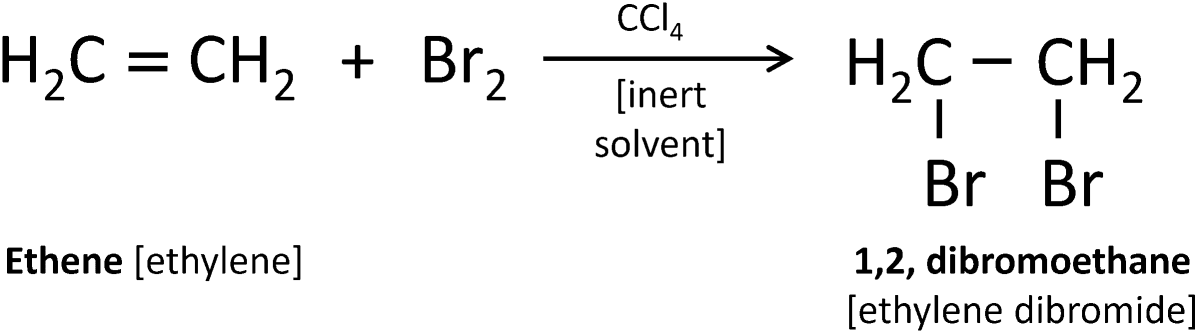
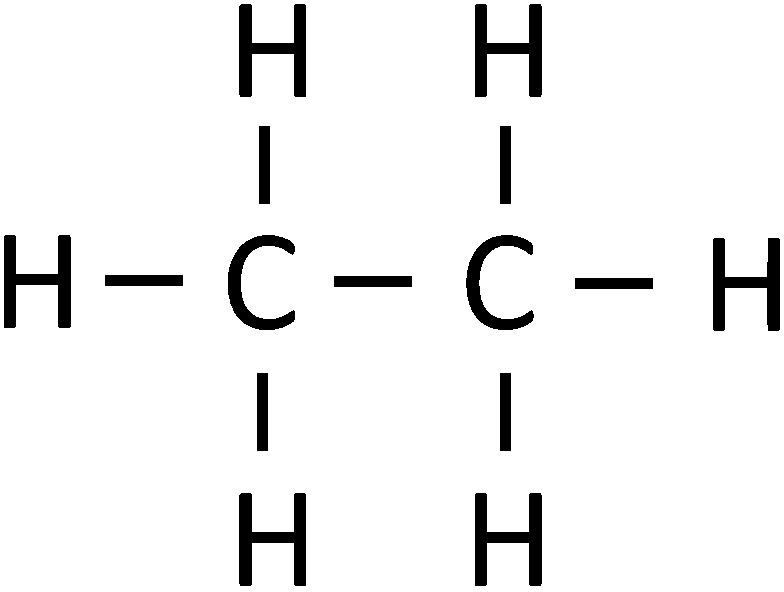
15.2Additional Questions

Give equations for the conversions of – Ethene, Ethyne to:

EtheneEthyne  
(a) Ethane(a) Ethane [2 steps ]by - Catalytic hydrogenation - H2
(b) 1,2 dichloroethane(b) 1,1,2,2 tetrachloroethane [2 steps]by- Halogenation - Cl2
(c) 1,2 dibromoethane(c) 1,1,2,2 tetrabromoethane [2 steps]- Br2
(d) 1,2 diiodoethane(d) 1,2 diiodoethene- I2
(e) Bromoethane/Chloroethane(e) 1,1 -dibromo & 1,1-dichloroethaneby- Halogen acids - HBr/HCl
by - Polymerization
(f) Polyethylene(f) Copper or silver Acetylideby Ammoniacal - CuCl/AgNO3
Show SolutionHide Solution↓

(a) Conversion of Ethene to Ethane by Catalytic hydrogenation (H2):

$\underset{\text{ ethene}}{\text{C}_2\text{H}_4} + \text{H}_2 \xrightarrow[300^{\circ}\text{C}]{\text{Nickle}} \underset{\text{ethane}}{\text{C}_2\text{H}_6}$

(b) Conversion of Ethene to 1,2 dichloroethane by Halogenation (Cl2):

Give equations for the conversions of Ethene to 1,2 dichloroethane by Halogenation. Organic Chemistry, Simplified Chemistry Dalal Solutions ICSE Class 10

(c) Conversion of Ethene to 1,2 dibromoethane by Halogenation (Br2):

Give equation for the conversion of Ethene to 1,2 dibromoethane by Halogenation. Organic Chemistry, Simplified Chemistry Dalal Solutions ICSE Class 10.

(d) Conversion of Ethene to 1,2 diiodoethane by Halogenation (I2):

$\underset{\text{ ethene}}{\text{C}_2\text{H}_4} + \text{I}_2 \xrightarrow[\text{[inert solvent]}]{\text{CCl}_4} \underset{\text{1,2, di iodoethane}}{\text{C}_2\text{H}_4\text{I}_2}$

(e)(i) Conversion of Ethene to Bromoethane by Halogen acids (HBr):

$\underset{\text{ ethene}}{\text{C}_2\text{H}_4} + \text{HBr} \longrightarrow \underset{\text{Bromoethane}}{\text{CH}_3\text{CH}_2\text{Br}}$

(e)(ii) Conversion of Ethene to Chloroethane by Halogen acids (HCl):

$\underset{\text{ethene}}{\text{C}_2\text{H}_4} + \text{HCl} \longrightarrow \underset{\text{Chloroethane}}{\text{CH}_3\text{CH}_2\text{Cl}}$

(f) Conversion of Ethene to Polyethylene by Polymerization:

Ethene polymerises to produce polythene

$\underset{\text{ethene}}{\text{n H}_2\text{C = C}\text{H}_2} \xrightarrow[\text{high pressure catalyst}]{\text{high temperature}} \underset{\text{(Polythene)}}{\Big[\text{H}_2\text{C—C}\text{H}_2\Big]_\text{n}}$

(a) Conversion of Ethyne to Ethane [2 steps] by Catalytic hydrogenation (H2):

Give equation for the conversion of Ethyne to Ethane [2 steps] by Catalytic hydrogenation. Organic Chemistry, Simplified Chemistry Dalal Solutions ICSE Class 10.

(b) Conversion of Ethyne to 1,1,2,2 tetrachloroethane [2 steps] by Halogenation (Cl2):

Give equation for the conversion of Ethyne to 1,1,2,2 tetrachloroethane [2 steps] by Halogenation. Organic Chemistry, Simplified Chemistry Dalal Solutions ICSE Class 10

(c) Conversion of Ethyne to 1,1,2,2 tetrabromoethane [2 steps] by Halogenation (Br2):

Give equation for the conversion of Ethyne to 1,1,2,2 tetrabromoethane [2 steps] by Halogenation. Organic Chemistry, Simplified Chemistry Dalal Solutions ICSE Class 10

(d) Conversion of Ethyne to 1,2 diiodoethene by Halogenation (I2):

$\underset{\text{ ethyne}}{\text{HC ≡ CH}} + \text{I}_2 \xrightarrow{\text{alcohol}} \underset{\text{1,2 di iodoethene}}{\text{H — } \overset{\underset{\normalsize{|}}{\normalsize{I}}}{\text{C}} = \overset{\underset{\normalsize{|}}{\normalsize{I}}}{\text{C}} \text{ — H}}$

(e)(i) Conversion of Ethyne to 1,1 dibromo ethane by Halogen acids (HBr):

Give equation for the conversion of Ethyne to 1,1 dibromo ethane by Halogen acids. Organic Chemistry, Simplified Chemistry Dalal Solutions ICSE Class 10.

(e)(ii) Conversion of Ethyne to 1,1 dichloro ethane by Halogen acids (HCl):

Give equation for the conversion of Ethyne to 1,1 dichloro ethane by Halogen acids. Organic Chemistry, Simplified Chemistry Dalal Solutions ICSE Class 10.

(f)(i) Conversion of Ethyne to Copper Acetylide by Ammoniacal Cuprous Chloride:

$\underset{\text{ ethyne}}{\text{HC ≡ CH}} + 2\text{CuCl} + 2\text{NH}_4\text{OH} \longrightarrow \underset{\text{Copper Acetylide}}{\text{Cu-C ≡ C-Cu}} + 2\text{NH}_4\text{Cl} + 2\text{H}_2\text{O}$

(f)(ii) Conversion of Ethyne to Silver Acetylide by Ammoniacal Silver Nitrate:

$\underset{\text{ ethyne}}{\text{HC ≡ CH}} + 2\text{AgNO}_3 + 2\text{NH}_4\text{OH} \longrightarrow \underset{\text{Silver Acetylide}}{\text{Ag-C ≡ C-Ag}} + 2\text{NH}_4\text{NO}_3 + 2\text{H}_2\text{O}$

15.3Additional Questions

Give equations for the conversions of – Ethanol and Ethanoic Acid to:

Ethanol [ethyl alcohol]Ethanoic Acid [acetic acid]
(a) Carbon dioxide - by burning(a) Sodium acetate - using alkali - NaOH
(b) Ethanal
to
Ethanoic acid - by oxidation using acidified K2Cr2O7
(b) Calcium acetate - using alkali - Ca(OH)2
(c) Sodium ethaoxide - using - sodium(c) Ammonium acetate - using alkali - NH4OH
(d) Ethyl ethanoate - using - ethanoic acid and conc. H2SO4(d) Ethyl ethanoate -using - ethanol and conc. H2SO4 [ethyl acetate]
(e) Ethene - using conc. H2SO4 at 170 °C  
Show SolutionHide Solution↓

(a) Conversion of Ethanol to Carbon dioxide by burning:

$\underset{ \text{ ethanol}}{\text{C}_2\text{H}_5\text{OH}} + 3\text{O}_2 \longrightarrow 2\text{CO}_2 + 3\text{H}_2\text{O}$

(b) Conversion of Ethanol to Ethanal to Ethanoic acid by oxidation using acidified K2Cr2O7:

$\underset{ \text{ethanol}}{\text{C}_2\text{H}_5\text{OH}} \xrightarrow[\underset{\text{[acidified]}}{\text{K}_2\text{Cr}_2\text{O}_7}]{\text{[O]}} \underset{\text{ethanal}}{\text{CH}_3\text{CHO}} \xrightarrow[\underset{\text{[acidified]}}{\text{K}_2\text{Cr}_2\text{O}_7}]{\text{[O]}} \underset{ \text{ethanoic acid} }{\text{CH}_3\text{COOH}}$

(c) Conversion of Ethanol to Sodium ethoxide using sodium:

$\underset{\text{ethanol} }{2\text{C}_2\text{H}_5\text{OH}} + 2\text{Na} \longrightarrow \underset{\text{sodium ethoxide} }{2\text{C}_2\text{H}_5\text{ONa}} + \text{H}_2$
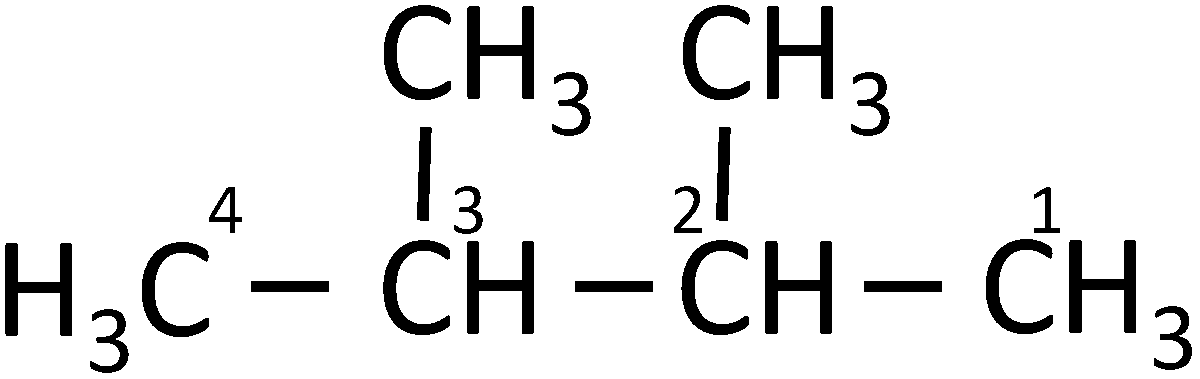
(d) Conversion of Ethanol to Ethyl ethanoate using ethanoic acid and conc. H2SO4:

$\underset{\text{ethanol}}{\text{C}_2\text{H}_5\text{OH}} + \underset{\text{ethanoic acid}}{\text{CH}_3\text{COOH}} \xrightarrow{\text{Conc. H}_2\text{SO}_4} \underset{\text{ethyl ethanoate}}{\text{CH}_3-\text{COO}-\text{C}_2\text{H}_5} + \text{H}_2\text{O}$

(e) Conversion of Ethanol to Ethene using conc. H2SO4 at 170°C:

$\underset{\text{ethanol}}{\text{C}_2\text{H}_5\text{OH}} \xrightarrow[170^{\circ}\text{C}]{\underset{\text{[excess]}}{\text{Conc. H}_2\text{SO}_4}} \underset{ \text{ethene}}{\text{C}_2\text{H}_4} + \text{H}_2\text{O}\$

(a) Conversion of Ethanoic acid [acetic acid] to Sodium acetate using alkali - NaOH:

$\underset{\text{Acetic acid}}{\text{CH}_3\text{COOH}} + \text{NaOH} \longrightarrow \underset{\text{Sodium Acetate}}{\text{CH}_3\text{COONa}} + \text{H}_2\text{O}$

(b) Conversion of Ethanoic acid [acetic acid] to Calcium acetate using alkali - Ca(OH)2:

$2\underset{\text{Acetic acid}}{\text{CH}_3\text{COOH}} + 2\text{Ca(OH)}_2 \longrightarrow \underset{\text{Calcium Acetate}}{\text{(CH}_3\text{COO)}_2\text{Ca}} + 2\text{H}_2\text{O}$

(c) Conversion of Ethanoic acid [acetic acid] to Ammonium acetate using alkali - NH4OH:

$\underset{\text{Acetic acid}}{\text{CH}_3\text{COOH}} + \text{NH}_4\text{OH}\longrightarrow \underset{ \text{Ammonium acetate}}{\text{CH}_3\text{COONH}_4} + \text{H}_2\text{O}\$

(d) Conversion of Ethanoic acid [acetic acid] to Ethyl ethanoate [ethyl acetate] using ethanol and conc. H2SO4:

$\underset{\text{Ethanol}}{\text{C}_2\text{H}_5\text{OH}} + \underset{\text{Acetic acid}}{\text{CH}_3\text{COOH}} \xrightarrow{\text{Conc. H}_2\text{SO}_4} \underset{\text{Ethyl Ethanoate}}{\text{CH}_3-\text{COO}-\text{C}_2\text{H}_5} + \text{H}_2\text{O}$

16Additional Questions

Give reasons for:

(i) alkanes are said to be saturated organic compounds

(ii) alkenes are known as olefins

(iii) alkenes are more reactive than alkanes

(iv) ethanoic acid is known as an aliphatic monocarboxylic acid.

Show SolutionHide Solution↓

(i) In alkanes, all the four valencies of each carbon atom are satisfied by the hydrogen atoms, forming single covalent bond. The non-availability of electrons in the single covalent bond makes them less reactive and therefore they undergo substitution reaction only. Hence, they are called saturated hydrocarbon.

(ii) Alkenes are known as olefins [Oleum = oil; ficare = to make] because they form oily products on treatment with halogens (like chlorine or bromine).

(iii) Alkenes are unsaturated hydrocarbons having carbon atoms forming a double covalent bond as their valencies are not fully satisfied by hydrogen atoms whereas alkanes are saturated hydrocarbons as all the four valencies of its carbon atoms are satisfied by the hydrogen atoms. The availability of electrons in the double bond in case of alkenes makes them more reactive than alkanes which has do not have electrons available in the single covalent bond.

(iv) Ethanoic acid (CH3 – COOH) contains only one – COOH group (carboxylic acid group) that is why it is called a monocarboxylic acid. As ethanoic acid does not contain a benzene ring, so it is an aliphatic monocarboxylic acid.

17Additional Questions

Explain the terms –

(i) Denaturated alcohol

(i) Glacial acetic acid

(iii) Esterification

Show SolutionHide Solution↓

(i) Ethyl alcohol containing pyridine or copper sulphate is termed denaturated alcohol. It is used for industrial applications only and hence made undrinkable.

(ii) Anhydrous acetic acid on cooling below 16.5°C, crystallizes out in the pure form, forming a crystalline mass resembling ice [m.p. around 17°C] . Hence, pure acetic acid is called glacial acetic acid.

(iii) Esterification is the chemical process of heating carboxylic acids with alcohol in the presence of an acid catalyst to produce esters.

18(i)Additional Questions

Give a chemical test to distinguish between Ethane, ethene and ethyne.

Show SolutionHide Solution↓

Chemical tests to distinguish between Ethane, Ethene and Ethyne:

Sl.
No.
TestEthaneEtheneEthyne
1.On adding a few drops of bromine solution in carbon tetrachloride (CCl4) to the hydrocarbonNo change is observed.The reddish brown colour of bromine solution get decolourised.The reddish brown colour of bromine solution get decolourised.
2.On adding a few drops of ammoniacal cuprous chloride (CuCl2) to the hydrocarbonNo change is observed.No change is observed.Red precipitate of copper acetylide is formed.
18(ii)Additional Questions

Give a chemical test to distinguish between Ethanol and ethanoic acid.

Show SolutionHide Solution↓

Add Sodium Carbonate (Na2CO3) / Sodium Hydrogen Carbonate (NaHCO3) solution to Ethanol and ethanoic acid. With Ethanol it will produce brisk effervescence of carbon dioxide (CO2) gas whereas no effervescence is seen with Ethanol.

The chemical equation for reaction between Sodium Carbonate (Na2CO3) / Sodium Hydrogen Carbonate (NaHCO3) and Ethanoic Acid is given below:

2CH3COOH + Na2CO3 ⟶ 2CH3COONa + H2O + CO2↑

CH3COOH + NaHCO3 ⟶ CH3COONa + H2O + CO2↑

19Additional Questions

Give the main uses of –

(i) Methane

(ii) Ethane

(iii) Ethene

(iv) Ethyne

(v) Ethanol

(vi) Ethanoic acid.

Show SolutionHide Solution↓

(i) Uses of Methane:

  1. Methane is used as a domestic fuel.
  2. Methane is used in the preparation of useful compounds like ethyne (acetylene), methanal (formal-dehyde), methanol, chloro-methane and tetrachloro-methane (carbon tetrachloride).
  3. Methane is a source of carbon monoxide and hydrogen.

(ii) Uses of Ethane:

  1. Ethane is used as a gaseous and automobile fuel.
  2. Ethane is used in the preparation of ethene, ethanol, ethanal (acetaldehyde) and ethanoic acid (acetic acid).
  3. It forms ethyl chloride which is used to make tetraethyllead. 1, 1, 1-trichloroethane is one solvent that is used a lot in dry cleaning.

(iii) Uses of Ethene:

  1. Production of oxy-ethylene torch — For welding purposes and cutting metals.
  2. Ripening of green fruits — Artificial ripening and preservation of fruits.
  3. Catalytic hydrogenation — Used in hardening of oils.
  4. Manufacture of —
    1. Synthetic chemicals — Ethylene glycol [anti-freeze], di-ethyl ether [solvent], ethylene oxide [fumigant], mustard gas [chemical warfare],
    2. Polymers — Polyetheylene, polyvinyl chloride [P.V.C.]- used in packaging, insulators, containers, rain coats etc.

(iv) Uses of Ethyne:

  1. Production of oxy-acetylene torch — for welding and cutting metals [flame temp. 3500°C] .
  2. Ripening of green fruits — Artificial ripening and preservation of fruits.
  3. Manufacture of organic compounds — Acetic acid, Acetaldehyde, Acetylene dichloride, Ethyl alcohol, Oxalic acid.
  4. Manufacture of synthetic products — Polymers, synthetic rubbers and fibres.

(v) Uses of Ethanol:

  1. It is a good solvent for gums and resins.
  2. It is used in thermometers and as a preservative for biological specimens due to its low freezing point.
  3. It is used in the manufacture of chemicals such as chloroform, iodoform, ether, acetic acid and synthetic products like dyes, esters (perfumes), antiseptics, preservatives.
  4. Ethyl alcohol is used in alcoholic drinks like whisky, wine and beer.
  5. As a fuel in powdered form and as an antifreeze for automobile radiators.

(vi) Uses of Ethanoic acid:

  1. In manufacture of important organic compounds — Vinyl acetate [used in resins], acetic anhydride [used in aspirin], cellulose acetate [used in synthetic fibres], various dyes, perfumes and medicines.
  2. In the food industry — Vinegar for preserving and flavouring food.
  3. As a solvent — It dissolves phosphorous, sulphur, iodine, resins, cellulose, etc.
  4. As a laboratory reagent — It is used for preparing acetone, esters, etc.
  5. As a coagulant — For coagulating rubber from latex.
1Unit Test Paper — Organic Chemistry

Draw the branched structural formula of the following organic compounds whose IUPAC names are given below.

  1. Pent-1-ene
  2. But-2-yne
  3. 3-methyl pentane
  4. 2-methyl-prop-1-ene
  5. Pentan-3-ol
  6. 1, 1, 2, 2 tetrabromoethane
  7. 2-methyl butan-2-ol
  8. 2, 2 dimethylpropan-1-ol
  9. 2, 2 dimethyl propane
  10. 2-bromo-4-chloro pentane
Show SolutionHide Solution↓

Pent-1-ene

Draw the branched structural formula of Pent-1-ene. Organic Chemistry, Simplified Chemistry Dalal Solutions ICSE Class 10.

But-2-yne

Draw the branched structural formula of But-2-yne. Organic Chemistry, Simplified Chemistry Dalal Solutions ICSE Class 10

3-methyl pentane

Draw the branched structural formula of 3-methyl pentane. Organic Chemistry, Simplified Chemistry Dalal Solutions ICSE Class 10

2-methyl-prop-1-ene

Draw the branched structural formula of 2-methyl-prop-1-ene. Organic Chemistry, Simplified Chemistry Dalal Solutions ICSE Class 10

Pentan-3-ol

Draw the branched structural formula of Pentan-3-ol. Organic Chemistry, Simplified Chemistry Dalal Solutions ICSE Class 10

1, 1, 2, 2 tetrabromoethane

Draw the branched structural formula of 1, 1, 2, 2 tetrabromoethane. Organic Chemistry, Simplified Chemistry Dalal Solutions ICSE Class 10

2-methyl butan-2-ol

Draw the branched structural formula of 2-methyl butan-2-ol. Organic Chemistry, Simplified Chemistry Dalal Solutions ICSE Class 10

2, 2 dimethylpropan-1-ol

Draw the branched structural formula of 2, 2 dimethylpropan-1-ol. Organic Chemistry, Simplified Chemistry Dalal Solutions ICSE Class 10

2, 2 dimethyl propane

Draw the branched structural formula of 2, 2 dimethyl propane. Organic Chemistry, Simplified Chemistry Dalal Solutions ICSE Class 10

2-bromo-4-chloro pentane

Draw the structural formula of 2-bromo-4-chloro pentane. Organic Chemistry, Simplified Chemistry Dalal Solutions ICSE Class 10.
2Unit Test Paper — Organic Chemistry

Select the correct answer from the choice in brackets.

Show SolutionHide Solution↓
  1. 36
  2. neo-pentane
  3. bromoethane
  4. propyne
  5. carboxyl
3Unit Test Paper — Organic Chemistry

Give balanced equations for the following conversions:

Show SolutionHide Solution↓

1. $\text{1,2 dibromoethane} \xrightarrow{\text{A}} \text{Acetylene}$

Write balanced chemical equation for the preparation of Ethyne from 1, 2 – dibromoethane and alcoholic potassium hydroxide. Organic Chemistry, Simplified Chemistry Dalal Solutions ICSE Class 10

$\text{Acetylene} \xrightarrow{\text{B}} \text{Silver acetylide}$

$\underset{\text{ ethyne}}{\text{HC ≡ CH}} + 2\text{AgNO}_3 + 2\text{NH}_4\text{OH} \longrightarrow \underset{\text{Silver Acetylide}}{\text{Ag-C ≡ C-Ag}} + 2\text{NH}_4\text{NO}_3 + 2\text{H}_2\text{O}$

2. $\text{Ethanol} \xrightarrow{\text{C}} \text{Ethene}$

$\underset{\text{ ethyl alcohol}}{\text{C}_2\text{H}_5\text{OH}} \xrightarrow[170^{\circ}\text{C}]{\text{Conc. H}_2\text{SO}_4\text{[excess]}} \underset{ \text{ethene}}{\text{C}_2\text{H}_4} + \text{H}_2\text{O}\$

$\text{Ethyl iodide} \xrightarrow{\text{D}} \text{Ethene}$

$\underset{\text{ ethyl iodide}}{\text{C}_2\text{H}_5\text{I}} + \underset{ \text{ alcoholic}}{\text{KOH}} {\xrightarrow{\text{boil}}} \underset{ \text{ ethene}}{\text{C}_2\text{H}_4} + \text{KI} +\text{H}_2\text{O}$

3. $\text{Bromoethane} \xrightarrow{\text{E}} \text{Ethane}$

$\underset{\text{bromoethane}}{\text{C}_2\text{H}_5\text{Br}} + \underset{\text{nascent hydrogen}}{2\text{[H]}} \xrightarrow[\text{alcohol}]{\text{Zn/Cu couple}} \underset{\text{ethane}}{\text{C}_2\text{H}_6} +\text{HBr}$

$\text{Ethane} \xleftarrow{\text{F}} \text{Sodium propanoate}$

$\underset{\text{sodium propanoate}}{\text{C}_2\text{H}_5\text{COONa}} + \underset{\text{sodalime}}{\text{NaOH}} \xrightarrow[300^{\circ}\text{C}]{\text{CaO}} \underset{\text{ethane}}{\text{C}_2\text{H}_6 \uparrow} + \text{Na}_2\text{CO}_3$

4. $\text{Sodium ethanoate} \xrightarrow{\text{G}} \text{Marsh gas}$

$\underset{\text{ sodium acetate}}{\text{CH}_3\text{COONa}} + \underset{\text{sodalime}}{\text{NaOH}} \xrightarrow[300^{\circ}\text{C}]{\text{CaO}} \underset{\text{methane}}{\text{C}\text{H}_4 \uparrow} + \text{Na}_2\text{CO}_3$

Methane to Methanol to Methanal to Methanoic acid

$\underset{\text{ Methane} }{\text{CH}_4} \xrightarrow[\text{K}_2\text{Cr}_2\text{O}_7]{\text{[O]}} \underset{\text{methanol}}{\text{CH}_3\text{OH}} \xrightarrow[\text{K}_2\text{Cr}_2\text{O}_7]{\text{[O]}} \underset{\text {methanal}}{\text{HCHO}} \xrightarrow[\text{K}_2\text{Cr}_2\text{O}_7]{\text{[O]}} \underset{\text{methanoic acid}}{\text{HCOOH}}$

5. $\text{Sodium acetate + H}_2 \xleftarrow{\text{H}} \text{Acetic acid}$

$2\underset{\text{Acetic acid}}{\text{CH}_3\text{COOH}} + 2\text{Na} \longrightarrow \underset{\text{sodium acetate}}{2\text{CH}_3\text{COONa}} + \text{H}_2$
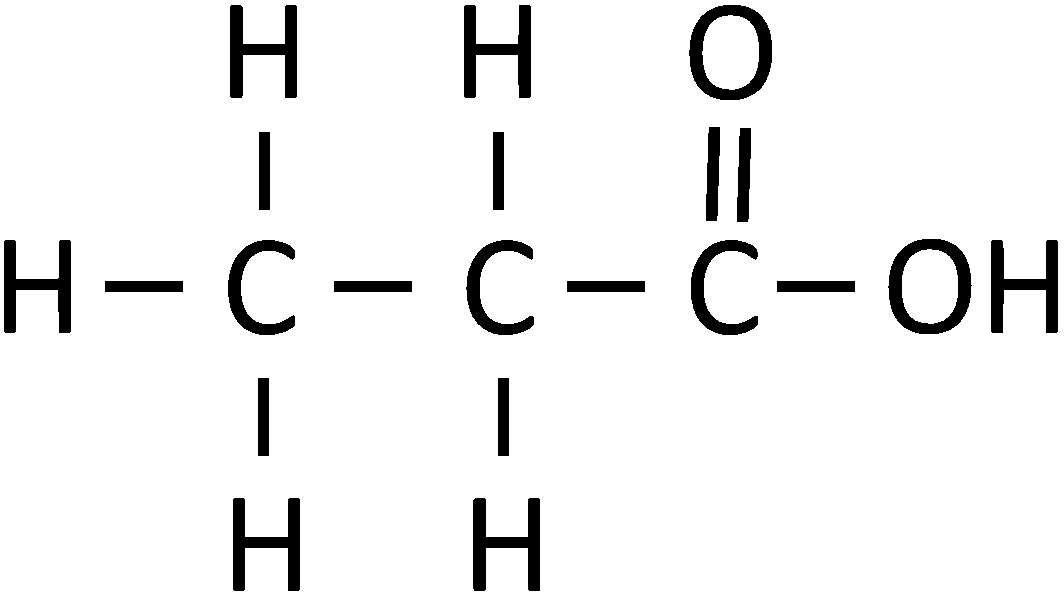
$\text{Acetic acid}\xrightarrow{\text{H}_1} \text{Ethyl ethanoate}$
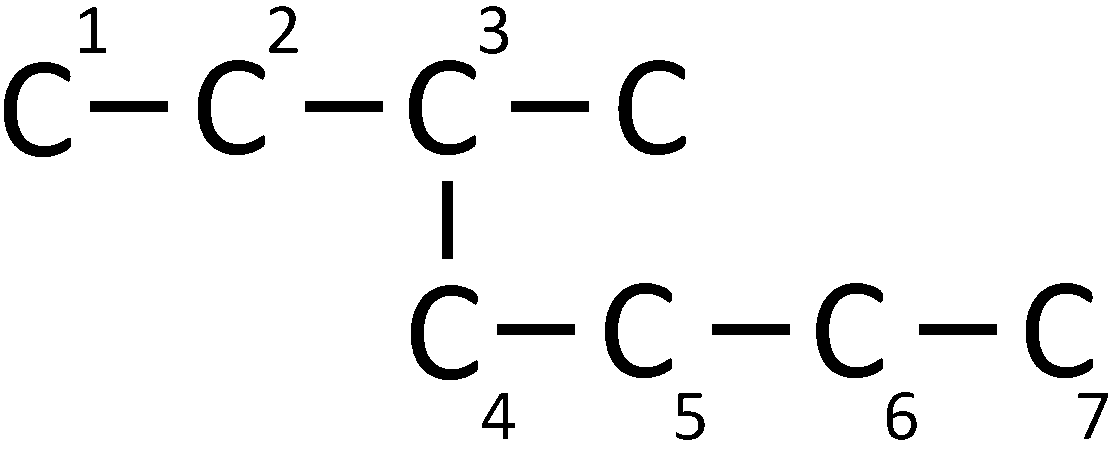
$\underset{\text{ethyl alcohol}}{\text{C}_2\text{H}_5\text{OH}} + \underset{\text{Acetic acid}}{\text{CH}_3\text{COOH}} \xrightarrow{\text{Conc. H}_2\text{SO}_4} \underset{\text{ethyl ethanoate}}{\text{CH}_3-\text{COO}-\text{C}_2\text{H}_5} + \text{H}_2\text{O}$
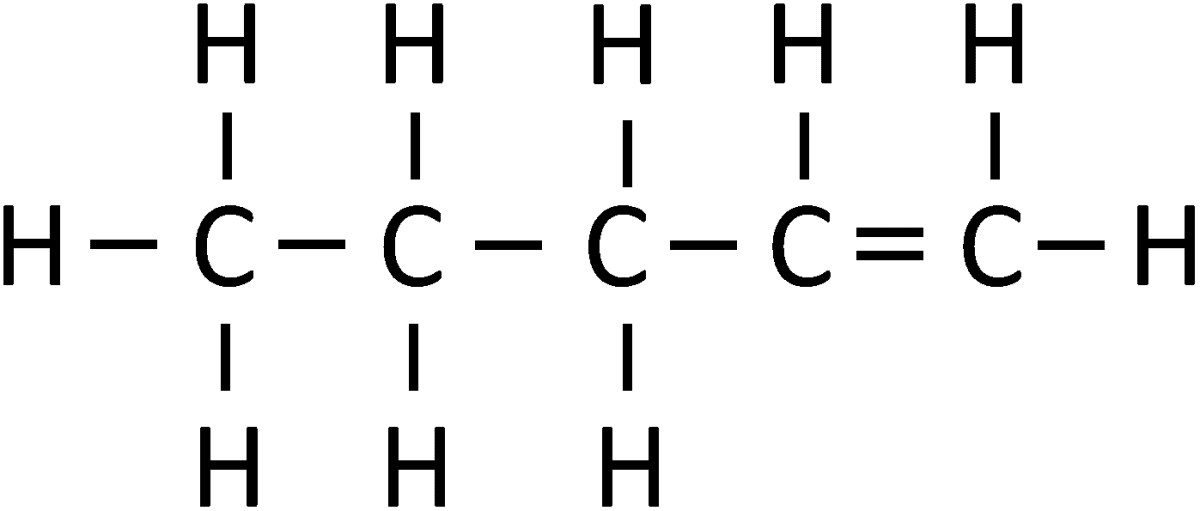
4Unit Test Paper — Organic Chemistry

Select from the letters A to G the correct answer corresponding to the statements from 1 to 5 :

   A : Ammoniacal CuCl2
   B : Trichloromethane
   C : Trichloroethane
   D : Bromine soln.
   E : Aqueous KOH
   F : Ethene
   G : Sodalime
   H : Ethanol
   I : Ethyne

Show SolutionHide Solution↓
  1. The organic compound which forms carbon tetrachloride on reaction with chlorine. — B : Trichloromethane
  2. The reagent which can distinguish between ethene and ethyne. — A : Ammoniacal CuCl2
  3. The substance which reacts with bromoethane to give ethanol. — E : Aqueous KOH
  4. The substance which gives bromoethane on reaction with hydrogen bromide. — F : Ethene
  5. The substance which reacts with acetic acid to give CH3COOC2H5 — H : Ethanol
5Unit Test Paper — Organic Chemistry

Give balanced equations for the following conversions.

Show SolutionHide Solution↓

1. An alkyne to an alkene:

$\underset{\text{ ethyne [acetylene]}}{\text{H}_2\text{C}_2} + \text{H}_2 \xrightarrow[300^{\circ}\text{C}]{\text{Nickle}} \underset{\text{ethene}}{\text{C}_2\text{H}_4}$

2. An alkene to an alkane:

$\underset{\text{ethene}}{\text{C}_2\text{H}_4} + \text{H}_2 \xrightarrow[300^{\circ}\text{C}]{\text{Nickle}} \underset{\text{ethane}}{\text{C}_2\text{H}_6}$

3. An alkane to an alcohol:

$\underset{\text{ ethane}}{2\text{C}_2\text{H}_6} + \text{O}_2 \xrightarrow[200 \text{^{\circ} C}]{\text{Cu tube}} \underset{\text{ethanol}}{2\text{C}_2\text{H}_5\text{OH}}$

4. An alcohol to an alkene:

$\underset{\text{ ethyl alcohol}}{\text{C}_2\text{H}_5\text{OH}} \xrightarrow[170^{\circ}\text{C}]{\text{Conc. H}_2\text{SO}_4\text{[excess]}} \underset{ \text{ethene}}{\text{C}_2\text{H}_4} + \text{H}_2\text{O}\$

5. A carboxylic acid to an ammonium salt :

$\underset{\text{ acetic acid}}{\text{CH}_3\text{COOH}} + \text{NH}_4\text{OH}\longrightarrow \underset{ \text{Ammonium acetate}}{\text{CH}_3\text{COONH}_4} + \text{H}_2\text{O}\$

6.1Unit Test Paper — Organic Chemistry

Give reasons for the following :

Concentrated sulphuric acid may be added during esterification of acetic acid.

Show SolutionHide Solution↓

Reversible reaction may be prevented by using conc. H2SO4 when the reaction is about to complete by removing H2O.

$\underset{\text{ethyl alcohol}}{\text{C}_2\text{H}_5\text{OH}} + \underset{\text{acetic acid}}{\text{CH}_3\text{COOH}} \xrightarrow{\text{Conc. H}_2\text{SO}_4} \underset{\text{ethyl ethanoate}}{\text{CH}_3-\text{COO}-\text{C}_2\text{H}_5} + \text{H}_2\text{O}$

6.2Unit Test Paper — Organic Chemistry

Give reasons for the following :

Isomers belonging to the same homologous series may differ in physical properties but not in chemical properties.

Show SolutionHide Solution↓

As isomers have same general molecular formula and functional group (if any) and only differ in structural formula, hence, they show same chemical properties and differ in physical properties.

6.3Unit Test Paper — Organic Chemistry

Give reasons for the following :

A given organic compound can be assigned only one name on the basis of the IUPAC system.

Show SolutionHide Solution↓

IUPAC is a systematic way of nomenclature of organic compounds that takes into account only one molecular structure of the compound. Hence, it assigns only one name to the compound.

6.4Unit Test Paper — Organic Chemistry

Give reasons for the following :

Substitution reactions are characteristic reactions of saturated organic compounds only.

Show SolutionHide Solution↓

In saturated hydrocarbons, all the four valencies of each carbon are satisfied by the hydrogen atoms, forming single covalent bond. The non-availability of electrons in the single covalent bond makes them less reactive and therefore undergo characteristic substitution reaction only. Addition reactions are not possible in case of saturated organic compounds.

6.5Unit Test Paper — Organic Chemistry

Give reasons for the following :

Acetic acid is considered an aliphatic monocarboxylic acid.

Show SolutionHide Solution↓

Acetic acid (CH3 – COOH) contains only one – COOH group (carboxylic acid group) that is why it is called a monocarboxylic acid. As acetic acid does not contain a benzene ring, so it is an aliphatic monocarboxylic acid.

Press ↓ to reveal a solution and move to the next question. Back to Viraf J Dalal Chemistry.

Free sample bank