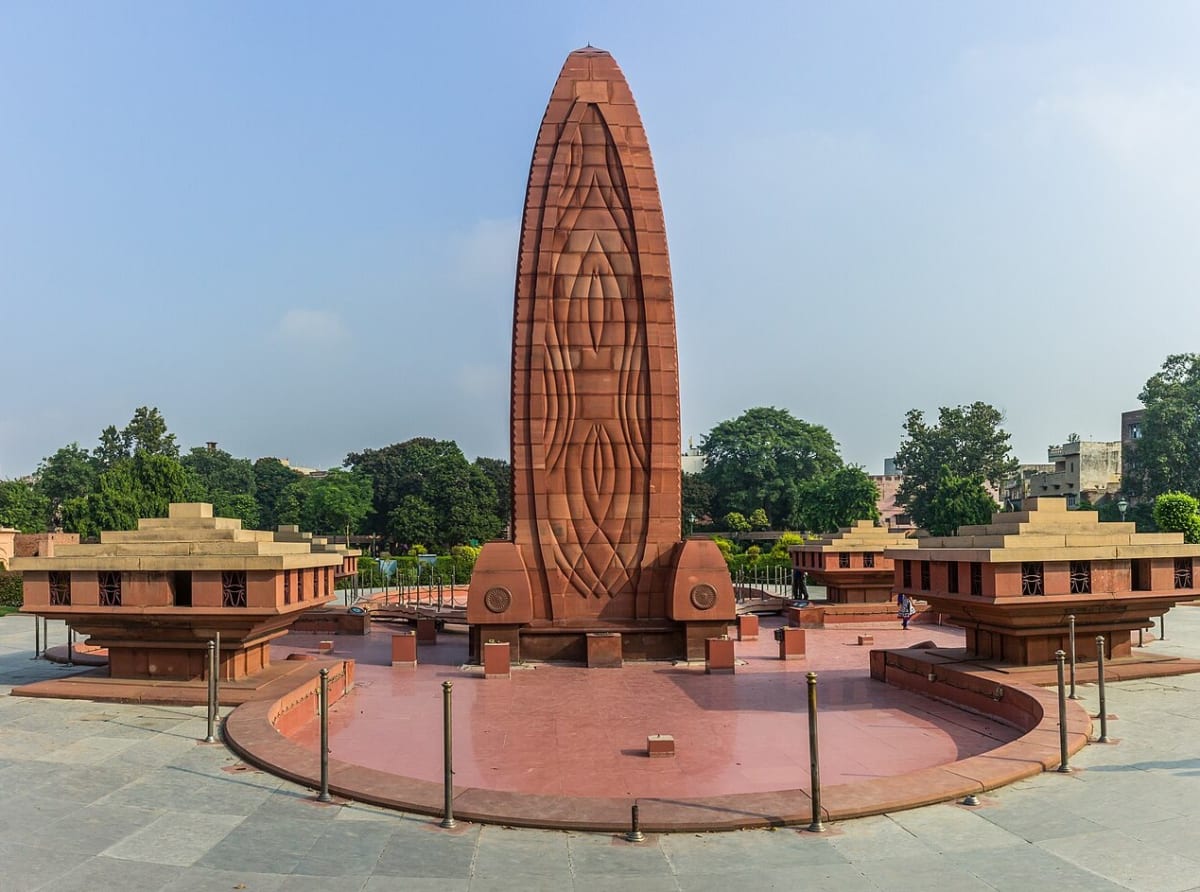
(a) (i) The memorial shown in the picture is the Jallianwala Bagh Memorial.
(ii) This incident took place at Jallianwala Bagh in Amritsar (Punjab).
(iii) The movement launched by Gandhi in 1920 as a consequence was the Non-Cooperation Movement.
(b) Mahatma Gandhi suspended the Non-Cooperation Movement in 1922 because of the Chauri Chaura incident (February 4, 1922). About 3,000 peasants organised a procession at Chauri Chaura, a village in the Gorakhpur district of UP. When the police opened fire, the angry crowd attacked and burnt the police station, killing 22 policemen. This incident shocked Gandhiji so much that he at once suspended the movement, as he could not tolerate his followers indulging in violence.
(c) Four impacts of the Non-Cooperation Movement are given below:
- It inspired the people with new confidence and made them courageous and fearless in facing the British power.
- The Indian National Congress became a mass organisation and the leader of the masses in their national struggle.
- It strengthened Hindu-Muslim unity, as the Khilafat and the Non-Cooperation Movements were amalgamated.
- It promoted many social reforms — national schools and colleges were founded, Khadi became the symbol of the National Movement, and steps were taken towards prohibition and the removal of untouchability.